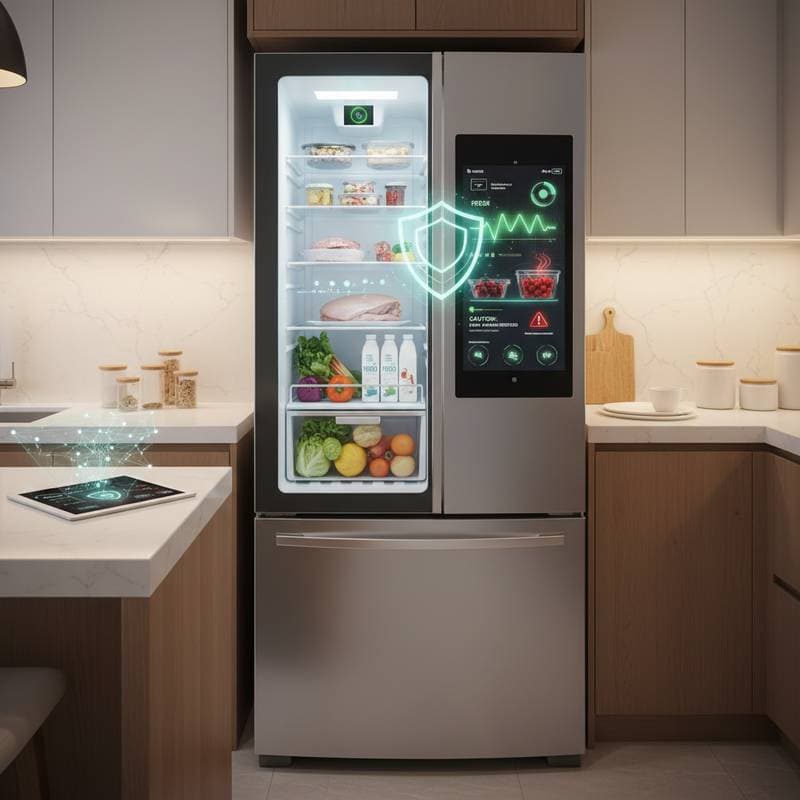
Smart Fridges Detect Food Poisoning Risks Before Consumption
Picture this: You open the refrigerator door, and an alert appears on your smartphone, notifying you that the poultry stored inside shows signs of potential spoilage. This capability moves beyond imagination into reality. Advanced smart refrigerators employ sophisticated sensors and artificial intelligence to identify early indicators of food contamination, enabling households to sidestep foodborne illnesses proactively. Such innovations reshape home food safety practices.
Addressing Gaps in Traditional Food Storage
Food safety remains a core concern in every kitchen, yet refrigerators often serve as unintended breeding grounds for pathogens. Leftovers that spoil unnoticed, overlooked expiration dates, and inadvertent cross-contamination contribute to many cases of food poisoning. Conventional refrigerators maintain low temperatures effectively, but they lack mechanisms to verify the ongoing safety of contents.
Market research indicates that consumers prioritize features enhancing food freshness and security when selecting appliances. Households seek appliances that extend beyond basic cooling to provide vigilant oversight. This preference accelerates the development of smart refrigerators capable of pinpointing spoilage cues prior to visible changes.
Core Technologies Enabling Food Safety Monitoring
Modern smart refrigerators integrate multiple sensors, high-resolution cameras, and machine learning algorithms to oversee internal conditions continuously. These components evaluate elements such as humidity levels, emitted gases, and temperature fluctuations. Ethylene gas from ripening produce or ammonia from protein breakdown serve as detectable markers of decomposition or bacterial activity. Upon sensing elevated levels, the refrigerator issues notifications via mobile applications or audible alerts.
Visual analysis forms another pillar of this system. Built-in cameras capture images of stored items and cross-reference them against databases of ideal appearances. For example, if leafy greens exhibit wilting or milk develops unusual separation, the appliance highlights the item for immediate attention. Paired with automated expiration tracking, this approach establishes comprehensive safeguards against hazardous intake.
One innovative prototype from a prominent appliance brand demonstrates these principles through chemical sensors and image recognition software. The device scans packaged meats for volatile compounds indicative of decay. In response to detected anomalies, it prompts users to discard the item or prepare it promptly to minimize health risks.
Mechanisms Behind Contamination Detection
Detection hinges on identifying subtle chemical changes in food as spoilage initiates. Sensors measure trace gases in concentrations as low as parts per million, embedded seamlessly within the refrigerator's interior panels. Exceeding predefined safety thresholds triggers the central processor to classify the event as a contamination hazard.
Artificial intelligence enhances accuracy by drawing on extensive datasets from food science research. The system refines its predictions over time, learning to differentiate benign processes like fruit maturation from dangerous bacterial proliferation. It also identifies toxin buildup in sealed leftovers, a precision once confined to professional labs but now accessible in domestic settings.
Practical Advantages for Household Health
This technology delivers reassurance by mitigating the risks and expenses associated with foodborne diseases. Medical expenses and discarded groceries represent significant burdens that proactive monitoring alleviates. Households benefit from reduced waste, as the refrigerator provides precise assessments of item viability rather than conservative guesses.
Automation suits demanding schedules, eliminating the need for routine manual checks. The appliance generates timely alerts for approaching expirations, proposes recipes utilizing at-risk ingredients, and facilitates automatic restocking of staples. Consequently, the kitchen operates with foresight, streamlining daily routines.
Integration Through Smart Home Networks
Seamless connectivity unifies these features across devices. A smart refrigerator can interface with ovens to recommend precise cooking durations that eliminate pathogens in suspect foods. Similarly, it updates shopping lists on connected devices by flagging compromised items for replacement.
Security protocols underpin these interactions, with manufacturers implementing end-to-end encryption and user-controlled privacy options. As interconnected home systems proliferate, safeguarding personal data on eating patterns proves vital for user confidence.
Market Trends and Consumer Adoption
Industry leaders collaborate with biotechnology firms and sensor specialists to perfect these capabilities. Projections suggest that contamination detection will feature in high-end models soon, eventually reaching broader markets as production scales.
Retail trends reveal enthusiasm among buyers integrating health monitoring into daily life. Comparable to fitness trackers that log exercise, these refrigerators position themselves as culinary wellness tools. This evolution underscores a societal emphasis on anticipation over response in health management.
Emerging Innovations on the Horizon
Advancements will surpass current detection limits. Experimental designs incorporate UV sterilization cycles that activate upon identifying threats, purifying surfaces automatically. Antimicrobial linings further inhibit bacterial adhesion within the unit.
Future iterations may dissect risks at the ingredient level, pinpointing issues like tainted produce in mixed packages. Linking to supplier databases could enable recall verifications, fostering greater accountability in food sourcing and enhancing overall trust in household provisions.
Navigating Implementation Hurdles
Precision in sensor tuning presents a key challenge to prevent erroneous alerts. Excessive sensitivity risks prompting avoidable discards, whereas insufficient responsiveness could overlook genuine dangers. Initial costs elevate appliance prices, although economies of scale should lower them over time.
Standardization across brands ensures compatibility in diverse smart homes. Collaborative standards will facilitate smoother integrations, promoting universal accessibility.
Enhancing Home Safety Through Intelligent Appliances
Adopting a refrigerator with contamination detection elevates kitchen functionality to protective levels. Families experience empowered decision-making, backed by reliable technology that prioritizes well-being.
When upgrading appliances, prioritize models offering these safeguards. This choice integrates laboratory-grade insights into everyday use, transforming the refrigerator into a vigilant ally for healthier living.