How AI Enables Automatic Grocery Ordering in Smart Fridges
Smart homes evolve toward comprehensive assistance. The latest advancement resides in the kitchen, adjacent to the oven. This is the smart refrigerator, an appliance that extends beyond cooling food. Connected models monitor consumption, detect shortages, and initiate replacement orders. A concept once confined to science fiction now integrates into household routines.
Demand for effortless living drives this development. Individuals seek to minimize time on routine tasks such as grocery procurement and maximize opportunities for significant activities. Artificial intelligence powers this change, enabling devices to analyze behaviors, foresee requirements, and execute actions independently.
Challenges in Conventional Grocery Management
Depletion of essentials like milk disrupts daily patterns. Families balance professional obligations, meal preparation, and miscellaneous tasks, often neglecting grocery inventories. Digital applications for shopping demand manual entries, requiring recall of depleted items. Smart refrigerators eliminate this inefficiency.
Standard refrigerators function passively. They preserve perishables without insight into contents or usage rates. Shoppers frequently purchase excess or overlook concealed items such as condiments or remnants. This oversight contributes to substantial food loss, imposing financial and ecological costs. An informed refrigerator alters this dynamic by maintaining awareness of stock levels and necessities.
Mechanisms Enhancing Fridge Intelligence
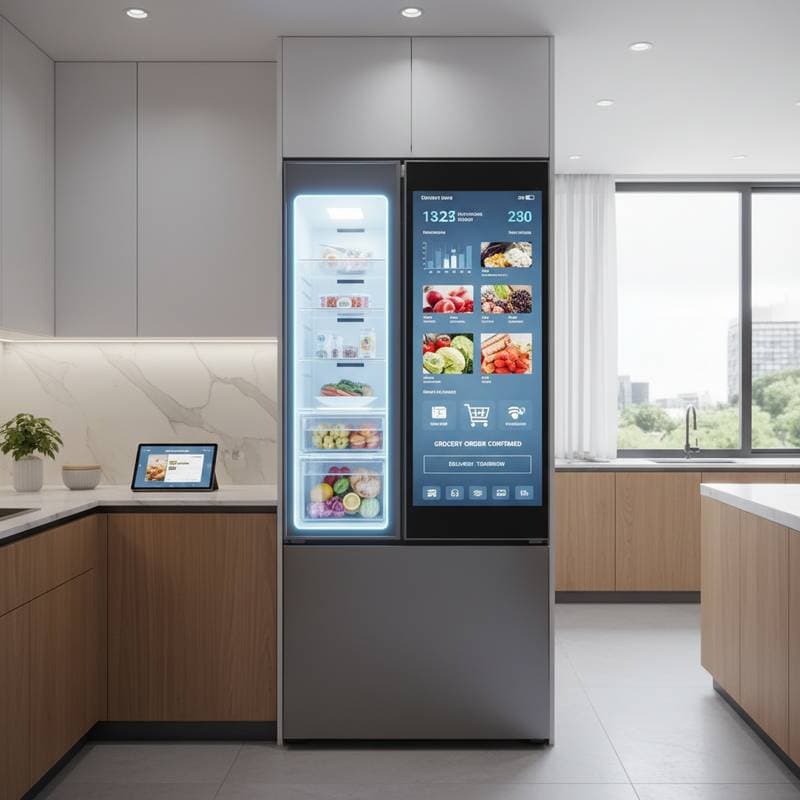
Equipped with sensors and cameras, a smart refrigerator identifies inserted items. Computer vision distinguishes packaging or typical food forms, complemented by weight sensors that register volume reductions. An AI framework processes this information to discern usage trends.
Consider a scenario where the device observes weekly depletion of an egg carton. It then arranges delivery timed to precede exhaustion. The system accommodates individual rhythms; during travel periods with reduced activity, it suspends procurement. Rather than adhering to rigid timelines, the AI evolves, forecasts, and modifies accordingly.
Manufacturers collaborate with delivery services. Alliances with prominent retailers permit direct online placements via linked profiles. Certain variants incorporate voice verification, allowing users to authorize or alter orders prior to dispatch.
Impacts on Daily Household Operations
This innovation transcends mere operational efficiency. It reconfigures everyday practices. Envision mornings where breakfast staples arrive replenished, or evenings where meal components await after detecting produce shortages.
For demanding families, automation conserves hours and cognitive load. It diminishes spontaneous store visits, which frequently result in extraneous acquisitions. Individuals with limited mobility or age-related constraints gain autonomy and assurance through consistent supply maintenance.
Environmental benefits emerge prominently. Precise monitoring curtails spoilage. Research indicates significant household discards stem from overlooked provisions. Enhanced tracking fosters judicious purchasing and diminishes waste.
Core Technologies Driving Functionality
Within elegant exteriors operates an interconnected array. Smart fridges depend on sensors, networks, and forecasting models.
Essential elements comprise:
- Cameras paired with image analysis to catalog insertions.
- Weight detectors to gauge remaining volumes.
- Barcode readers or user-applied labels for accurate logging.
- Learning algorithms to interpret patterns and project demands.
- Cloud links for synchronization with procurement networks.
These features collaborate to map inventory comprehensively. The AI assimilates personal data, benchmarks against peer aggregates, and hones forecasts progressively. Eventually, the unit serves as a customized procurement aide.
Practical Implementations from Leading Brands
Prominent manufacturers deploy these capabilities. Samsung's Family Hub model interfaces with retail allies, facilitating remote content views and automated list generation. LG's ThinQ platform merges device insights with culinary ideas and ordering functions. Whirlpool and Bosch advance comparable frameworks, embedding them within broader home networks.
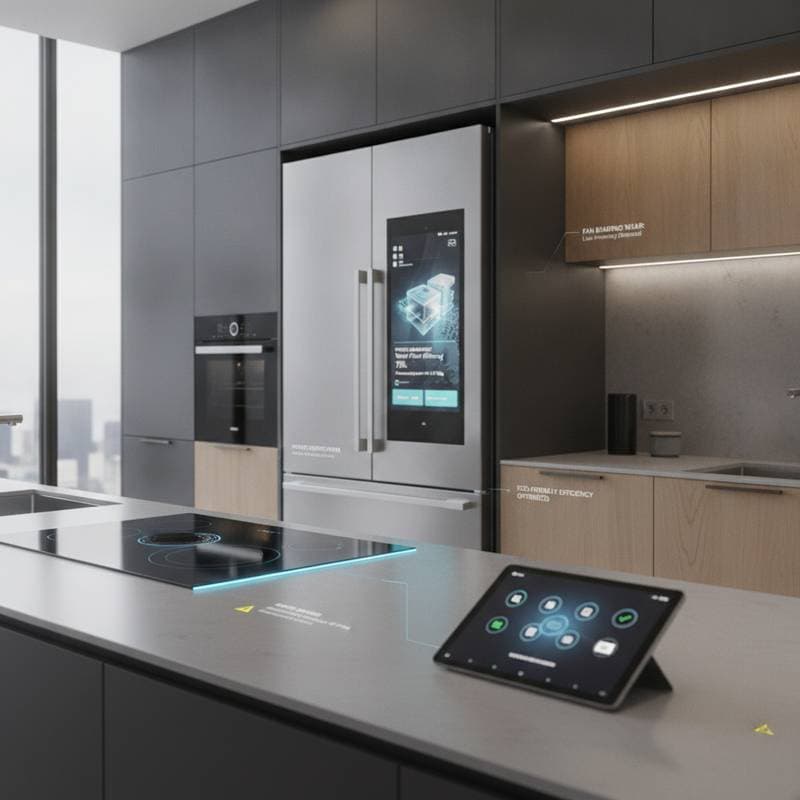
Such progress illustrates the kitchen's transformation into an integrated center. Devices like refrigerators, ovens, and storage units exchange information, yielding a harmonious setup that aligns with user needs rather than impeding them.
Mitigating User Hesitations
Although compelling, relinquishing procurement oversight to devices raises valid apprehensions. Data privacy and protection warrant attention. Concerns arise regarding captured visuals or usage records. Producers counter with robust safeguards, encrypted storage, and transparent protocols.
Initial costs pose another hurdle. Advanced units command premium prices over basic counterparts. However, technological maturation and market expansion anticipate affordability gains. Buyers often offset expenses through efficiency, waste reduction, and ease.
A balanced method appeals to many: the fridge proposes options while users validate manually. This preserves oversight amid automation advantages. System versatility accommodates varied adoption paces.
Integration into Connected Kitchen Ecosystems
Smart refrigerators contribute to expansive networked kitchens. Standardized protocols enable device interoperability. In unified setups, the refrigerator informs the oven of cooking intentions, illumination adapts for preparation, and assistants orchestrate workflows.
Grocery facilitation forms one facet of this framework. The objective streamlines all culinary processes, from planning to tidying. Advancing AI propels systems toward anticipation, preempting directives with foresight.
Steps to Implement in Your Residence
Interested parties should assess integration potential first. Contemporary units mesh with prevalent home platforms. Select variants compatible with favored delivery providers or applications. Initialization entails account association, payment setup, and pattern observation over weeks.
Commence modestly. Permit advisory functions before activating autonomous procurement. Examine proposals and refine settings. Accuracy improves with use, mirroring brand loyalties and portion preferences.
Existing smart devices like audio units, illuminators, or climate controls enhance cohesion upon fridge addition. Query assistants for supply gaps or alerts on recipe-compatible ingredients.
Advantages of an Anticipatory Kitchen Environment
Progression from handwritten lists to foresight-driven orders signifies profound domestic evolution. Devices transcend inert utilities, becoming collaborative entities. The refrigerator, formerly a mere repository, now foresees requirements, harmonizes with routines, and bolsters ecological responsibility.
This trajectory envisions kitchens as adaptive spaces prioritizing well-being and simplicity. As intelligent fridges deepen lifestyle comprehension, their roles expand beyond replenishment.