Imagine Your Fridge Handling the Shopping
Picture a scenario where you return home after a demanding day and open the refrigerator to find all essentials for dinner in place. The milk has been replenished the previous day, fresh eggs arrived that morning, and the produce section appears freshly stocked from a market visit you did not undertake. This scenario represents the capability of a smart refrigerator equipped with auto-grocery ordering, which reshapes household food management practices.
Grocery shopping often involves repetitive tasks: creating lists, overlooking items, exceeding budgets, and discarding spoiled produce or dairy. Smart refrigerators address these issues by monitoring inventory, usage patterns, and shortages, then automatically placing orders. Households can achieve savings of up to $200 per month while significantly reducing food waste.
The Benefits: Enhanced Efficiency and Reduced Waste
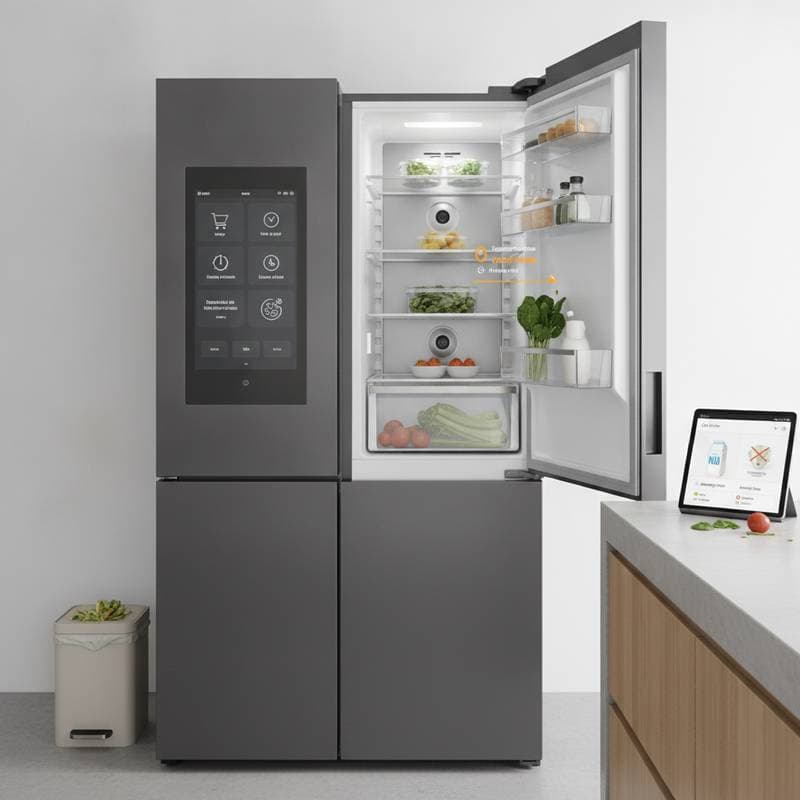
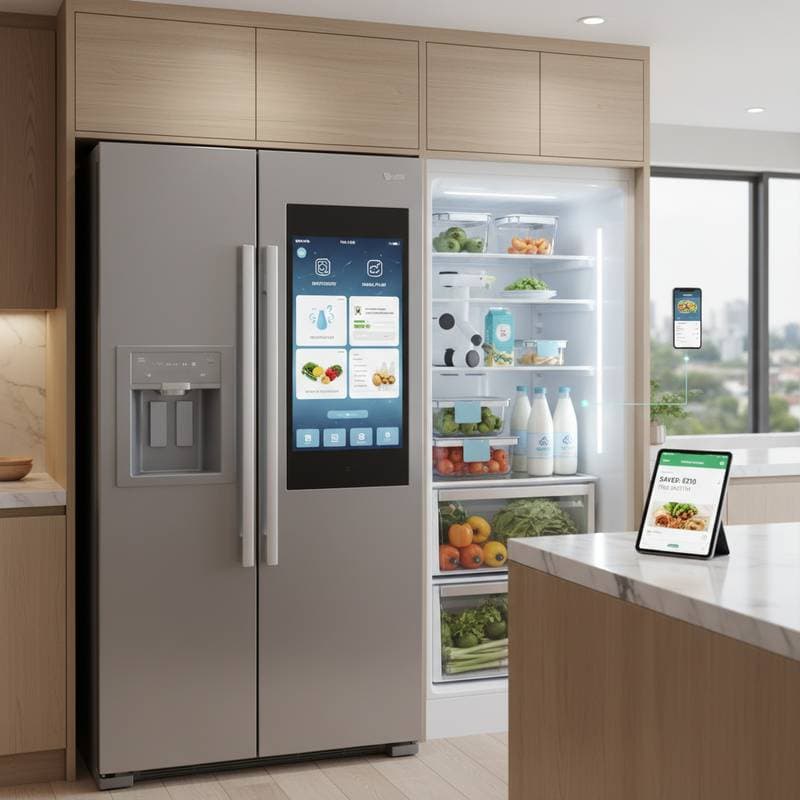
Conventional refrigerators maintain low temperatures but offer no assistance in organizing contents. Smart models incorporate sensors, cameras, and cloud software to link the kitchen directly with grocery providers. These devices monitor expiration dates, recommend recipes, and alert users to impending spoilage.
Automation stands out as the primary benefit. When the refrigerator detects low levels of milk or butter, it initiates orders via services such as Amazon Fresh, Walmart+, or Instacart. This system minimizes emergency shopping trips and eliminates redundant buys.
Convenience and oversight define the value. Users devote less effort to grocery planning, and less food reaches the waste bin. For families, this translates to streamlined budgeting and consistent meal preparation.
Technology Behind Smart Fridges
The functionality may appear advanced, yet the mechanics prove accessible. The following outlines the standard operation.
- Internal cameras record images upon door closure, employing object recognition to catalog contents.
- Weight sensors on shelves or compartments signal diminishing item weights, prompting reorder alerts.
- Inventory software maintains a digital log of stock levels, quantities, and expiration timelines.
- Integrations with grocery platforms construct shopping carts aligned with user routines.
- Orders require user approval via app or proceed automatically for staple items.
Machine learning refines these processes by analyzing consumption trends, improving reorder accuracy over time.
Calibration for Precision
Premium smart refrigerators include a calibration function to adapt to household patterns. For example, if a family consumes a gallon of milk every four days, the system schedules deliveries to coincide with depletion. Activate this during initial setup to optimize timing and minimize excess orders or waste, despite the brief additional effort.
Top Recommendations for Auto-Ordering Smart Fridges
Numerous brands provide connected refrigerators, but select models excel in performance and integration.
1. Budget-Friendly: LG Smart InstaView Refrigerator ($1,799)
This unit features internal cameras, Alexa voice control, and app-driven inventory tracking. Although automatic ordering requires Amazon Dash integration, it delivers essential smart capabilities at an accessible price. It serves as an effective entry point for budget-conscious users exploring connected appliances.
2. Mid-Range: Samsung Family Hub Side-by-Side ($2,499)
The Family Hub line leads in smart refrigerator innovation. Its external touchscreen displays interior views without door access, conserving energy. Direct connections to Instacart and Amazon Fresh enable automated list building or order placement, with the app integrating via Samsung SmartThings for voice and home automation compatibility.
3. High-End: LG Signature Smart Refrigerator with InstaView and SmartThinQ ($4,999)
This advanced option elevates automation through freshness tracking, zoned temperature control, and seamless auto-ordering with major platforms. Motion-activated door opening and high-resolution cameras distinguish brands and items precisely. It suits users seeking comprehensive self-management features.
Step-by-Step Auto-Ordering Setup
Advanced automation demands initial configuration for optimal results.
- Establish a Wi-Fi connection with reliable kitchen coverage.
- Install the manufacturer's app, such as Samsung SmartThings or LG ThinQ.
- Register accounts with delivery services like Amazon Fresh or Walmart+.
- Enable auto-ordering and select eligible items, incorporating spending thresholds.
- Configure notifications for pre-checkout approvals to retain oversight.
- Monitor and adjust based on initial usage data over several weeks.
Completion typically requires under one hour, allowing users to relinquish routine grocery oversight thereafter.
Cost Analysis and Return on Investment
Smart refrigerators represent a significant purchase, yet savings often offset expenses. Consider this overview.
- Initial purchase: $1,500 to $5,000, varying by model and capabilities.
- Delivery and setup: $100 to $300.
- Energy efficiency: Contemporary designs reduce annual electricity costs by $50 to $100.
- Waste and spending savings: Users commonly realize $150 to $200 monthly from minimized spoilage and unplanned purchases.
Overall, recovery occurs within a few years via enhanced control and efficiency.
Maximizing Savings with Integrations
Pair the refrigerator with meal-planning applications like Yummly or Whisk for amplified benefits. These tools access inventory data to suggest recipes from available ingredients, potentially lowering grocery expenses by an additional 10 percent while diversifying meal options.
Maintenance and Security Essentials
These appliances depend on consistent connectivity and updates for reliability.
- Update firmware monthly via the app.
- Fortify Wi-Fi with robust passwords and encryption to safeguard data.
- Clean camera lenses regularly to ensure precise recognition.
- Position items to avoid obstructing sensors.
For multi-device setups, utilize a dedicated network or hub like Samsung SmartThings to maintain stability and mitigate disruptions.
Embracing Automated Kitchen Management
Adopting a smart refrigerator for grocery ordering proves straightforward. Selection based on budget and needs presents the main challenge, followed by configuration.
View it as an unobtrusive aide that ensures staple availability and preserves freshness. Benefits emerge rapidly through reduced store visits and stabilized expenses.
Professional installation aids compatibility with existing systems; platforms for contractor matching simplify this without added fees.
Beyond ease, smart refrigerators promote sustainability by curbing waste, optimizing expenditures, and emphasizing meal enjoyment. They enable automated kitchens or alleviate shopping burdens, realizing efficient home operations.
Frequently Asked Questions
How does a smart fridge determine reorder needs?
Internal cameras and weight sensors monitor contents, integrating with grocery apps to replenish low-stock items.
Are automatic orders always secure?
Yes, provided Wi-Fi employs strong encryption; apps require approval steps to prevent unauthorized purchases, and spending limits add protection.
Can smart fridges integrate with all grocery services?
Most support major platforms like Amazon Fresh and Instacart, though compatibility varies by model; verify during setup.
What if the fridge misidentifies an item?
Manual app adjustments correct errors; regular calibration and cleaning enhance accuracy over time.