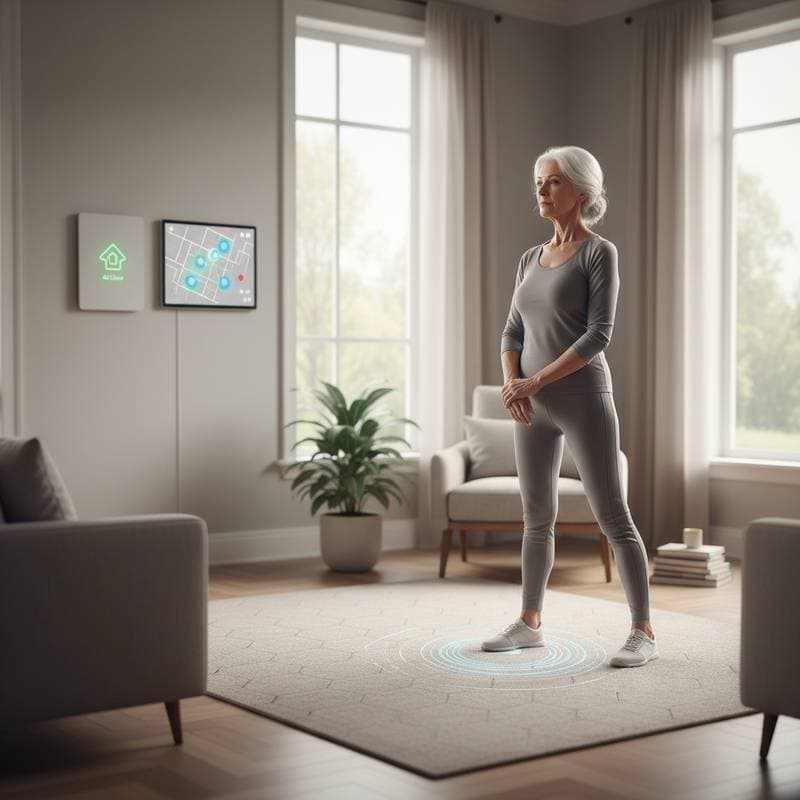
The Quiet Revolution Beneath Your Feet: Smart Floors That Detect Falls
Imagine your parent or grandparent living independently and moving confidently through their home. Then one day, you receive that call, the one every family dreads: a fall. The fear extends beyond the injury itself; it concerns the delay in discovery. Smart flooring changes this reality by integrating technology directly into the surfaces people walk on daily.
Recognizing the Challenge
Falls rank among the leading causes of injury for older adults, with most incidents occurring at home. Traditional fall detection devices, such as wristbands or pendants, provide assistance, but they rely on consistent wear. Many individuals forget to use them or find them uncomfortable. This creates a significant protection gap with potentially severe outcomes.
The Solution Hidden in Plain Sight
Smart floors address this gap through embedded pressure and motion sensors placed beneath flooring materials. These components monitor movement patterns discreetly, identify anomalies, and issue alerts upon detecting a suspected fall. The system notifies caregivers, family members, or emergency services immediately, even if the individual cannot access a phone.
This technology falls within the Smart Safety category of home automation. It merges safety sensors with data analytics to foster a home environment that proactively safeguards its occupants.
How Smart Flooring Works
Under the flooring surface, smart systems deploy a network of thin pressure sensors to track variations in weight distribution. As a person walks, the sensors generate a unique pattern. If this pattern halts abruptly or alters significantly, the system flags it as a potential fall and triggers an alert.
Advanced versions incorporate machine learning to distinguish routine actions, such as sitting down rapidly, from genuine falls. The collected data also reveals gradual shifts in gait or balance over time, enabling early identification of mobility concerns. This predictive capability enhances preventive care alongside reactive responses.
Product Options to Consider
When evaluating smart flooring, consider options that align with various budgets and requirements.
-
Budget choice: The CareMat Lite, priced at approximately $799 for a small room kit, employs pressure-sensitive mats linked to a smartphone application. It suits bedrooms or bathrooms and installs easily under current flooring.
-
Mid-range choice: The SoleGuard Smart Floor System, starting at around $2,200 for a moderate area, features thin sensor sheets compatible with Wi-Fi and voice assistants like Alexa or Google Home. It delivers tailored alerts and connects with smart lighting to activate illumination automatically following a detected fall.
-
Premium choice: The SensFloor ProCare, beginning near $5,000 for full-room installation, integrates sensors into the subfloor for thorough monitoring. It includes cloud-based analytics and caregiver dashboards, plus direct links to home security systems for professional oversight.
Insider Tip
Installers frequently neglect subfloor calibration. Allocating additional time for precise sensor alignment can decrease false alerts by over half. Furthermore, combining smart flooring with low-level night lighting aids in fall prevention, addressing risks before detection becomes necessary.
Practical Considerations
Prior to installation, evaluate the home's structural conditions and flooring types. Most systems function effectively under vinyl, laminate, or engineered wood. Carpet might reduce sensor sensitivity, so review manufacturer guidelines.
For confined spaces like bathrooms or hallways, installation typically requires a few hours. Extensive retrofits could demand several days, along with professional wiring for power and network integration. Engage licensed electricians for any electrical modifications or connections to home automation hubs.
Expenses vary based on the monitored area's size, sensor quantity, and connectivity features. Anticipate total installation costs ranging from $1,000 to $7,000. Although this represents a substantial investment, it may mitigate expenses related to extended care or medical crises.
Compatibility and Long-Term Planning
Select systems that mesh with your current smart home setup. Platforms like Samsung SmartThings or Apple HomeKit enable automation sequences, such as activating lights or issuing voice notifications via smart speakers.
For future expansions with additional smart safety tools, opt for systems offering open API support. This facilitates upgrades without necessitating a complete flooring overhaul, ensuring scalability as needs evolve.
Implementing Smart Floors for Enhanced Safety
Smart floors extend beyond accident response; they cultivate a secure, adaptive living space that supports aging in place. Whether assisting a loved one or future-proofing your residence, these systems deliver unmatched security compared to conventional alarms.
Begin by equipping one room, verifying alert functionality, and adjusting configurations. As familiarity increases, extend coverage to additional zones. In this way, the home evolves into a vigilant guardian, preserving every step while upholding independence.