The Daily Challenge of Food Waste
Households frequently discard spoiled food without fully appreciating the cumulative expense. Busy routines and fluctuating meal preferences make it simple to overlook fridge contents. Even careful shoppers who outline weekly menus often overestimate portions or disregard use-by dates, leading to discarded items, financial loss, and environmental impact.
Conventional methods like date labels or manual lists provide limited support, as they depend on consistent human effort. AI-enhanced smart refrigerators address this issue through automation, analytical insights, and automated monitoring. These devices operate seamlessly to maintain order in the kitchen.
Mechanisms of AI in Smart Refrigerators
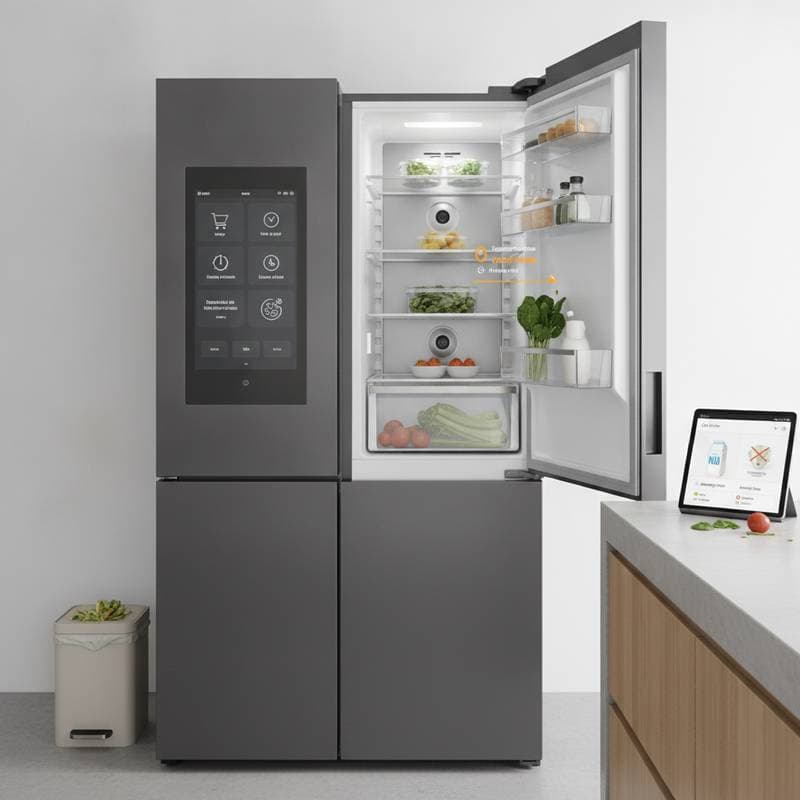
AI smart fridges incorporate image recognition, barcode detection, and environmental sensors to oversee internal contents. Certain models detect items upon placement, while others link to shopping applications to record acquisitions and estimate shelf life. The system leverages this data to propose recipes, issue timely notifications about nearing expirations, and automate restocking of essentials.
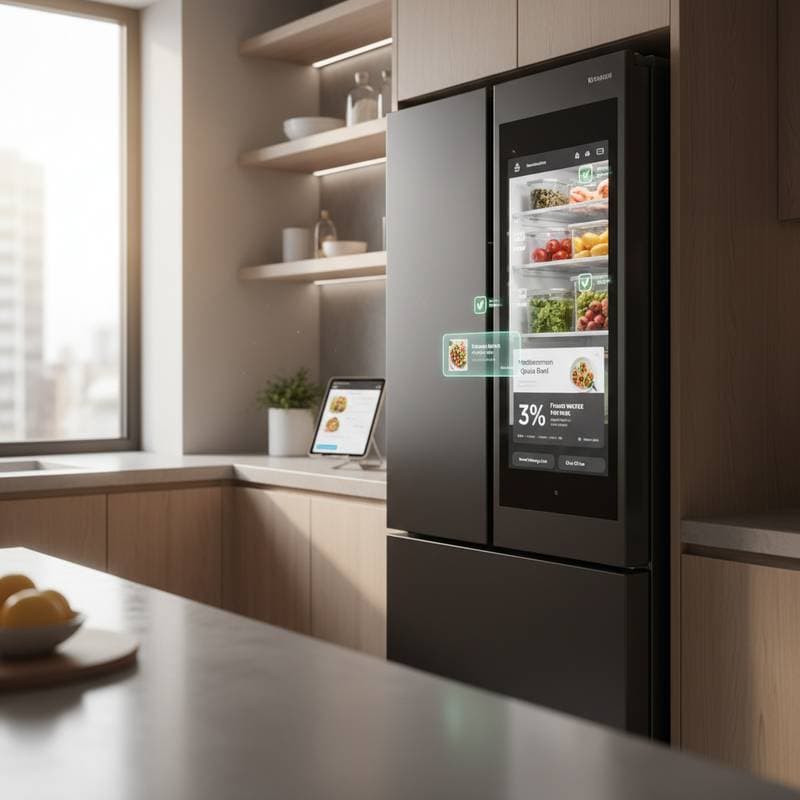
Precision defines their value. Rather than depending on estimates, the refrigerator functions as an intelligent aide familiar with stock levels. For instance, it alerts users to prepare chicken purchased over the weekend or anticipates milk depletion the following day. Additionally, it prioritizes recipes featuring soon-to-expire components, ensuring comprehensive utilization.
Available Models in Action
-
Affordable Entry: LG InstaView ThinQ Smart Refrigerator ($1,999)
This unit features a knock-activated transparent window that illuminates the interior without releasing cold air. Integration with the LG ThinQ application enables remote access and elementary inventory logging. Users input expiration dates manually, receiving app-based alerts to prompt timely consumption and avert spoilage. -
Balanced Selection: Samsung Family Hub Smart Refrigerator ($2,899)
Popular for tech-savvy kitchens, this refrigerator employs internal cameras to capture contents upon door closure. Remote viewing via smartphone aids in-store decisions. Compatibility with SmartThings supports shared shopping lists, meal scheduling, and synchronization with linked ovens, while AI analyzes visuals to identify staples and recommend inventory-aligned dishes. -
High-End Solution: LG Signature Smart InstaView with AI Vision ($5,999)
Equipped with sophisticated AI Vision, this model autonomously categorizes diverse foods and monitors usage trends. It optimizes compartment temperatures to extend produce viability. Voice activation and robust ties to digital assistants position it as the core of an interconnected culinary setup.
Enhancing Efficiency Through Pantry Synchronization
A key insight for users involves linking smart fridges to pantry tracking applications via accessible APIs or external tools. This connection yields a comprehensive view of household provisions, incorporating both refrigerated and shelf-stable items. Meal planning then accounts for the entire stock, preventing redundant purchases and overlooked supplies.
Implementing this integration typically reduces waste by 15 to 20 percent. Users achieve it by selecting compatible apps during initial setup and granting permissions for data exchange. Such coordination elevates the refrigerator from a storage unit to a holistic nutrition overseer.
Evaluating Expenses and Long-Term Value
Although smart refrigerators represent a significant upfront cost, they deliver returns through waste reduction and efficiency gains. An average household recoups several hundred dollars annually from minimized discards alone. Advanced insulation and energy-saving mechanisms further decrease utility bills.
When selecting a model, prioritize enduring benefits over sticker prices. Verify kitchen compatibility for power and plumbing needs prior to purchase. Professional assistance ensures secure installation of features like water lines for dispensers or ice producers. Reliable Wi-Fi coverage in the kitchen area facilitates seamless connectivity.
Upkeep and Security Practices
Connected devices require periodic software refreshes to sustain performance and protection. Activate auto-updates within the associated application to align with emerging technologies and expanded functionalities. Clean internal lenses routinely to preserve detection reliability, and distribute items evenly to avoid obstructing monitoring components.
Seek models with adjustable interior illumination, which some luxury versions offer to enhance color accuracy for assessing ripeness. This feature aids quick identification of items requiring prompt use, complementing the AI's alerts.
Steps to Optimize Food Tracking
To maximize an AI smart fridge's potential, adopt these structured practices:
- Conduct an initial comprehensive scan or manual entry of all provisions upon restocking.
- Configure personalized notifications for commonly neglected items, such as dairy or greens.
- Incorporate suggested recipes into weekly routines to cycle through stock effectively.
- Integrate preferred shopping or delivery platforms where supported by the device.
- Analyze monthly usage reports to identify and address recurring waste sources.
Consistent application of these steps fosters adaptive learning within the system. Over time, predictions refine based on household patterns, streamlining procurement and preparation.
Building a Unified Kitchen Network
For owners of additional intelligent appliances like programmable ovens or digital aides, the refrigerator integrates into a broader framework. Picture a scenario where the fridge proposes a dish, the oven initiates preheating, and an assistant vocalizes steps. This orchestration transcends mere ease, rendering meal creation fluid and collaborative.
Platforms such as Samsung SmartThings or LG ThinQ provide centralized control over diverse gadgets. Adopting a cohesive ecosystem safeguards future-proofing, ensuring sustained relevance amid technological progress.
Advancing Household Nutrition Strategies
Integrating an AI smart fridge marks a pivotal shift toward intentional food management. By curbing waste and refining routines, it fosters fiscal prudence and sustainability. Users gain not only convenience but also confidence in sustaining balanced, waste-free kitchens for the long term.