Smart Appliances Integrate with Utilities for Cost Savings
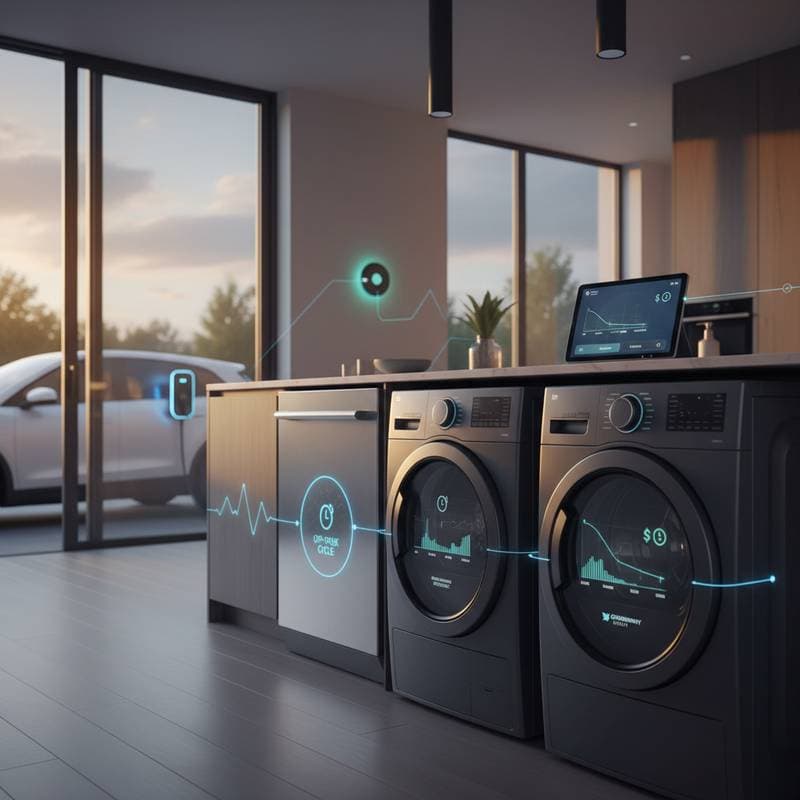
Picture completing your evening meal to find the dishwasher already operating at a low hum during the utility's most affordable energy slot. Or rising in the morning to discover the dryer has concluded its cycle overnight, aligned precisely with the lowest power rates. These scenarios represent the reality of smart appliances that connect directly to the utility grid, optimizing energy use and costs.
Homeowners often overlook the significant impact of timing on electricity expenses. As utilities adopt dynamic pricing models, the gap between peak and off-peak rates grows substantial. Grid-interactive smart appliances respond to these fluctuations automatically, enabling reduced spending while preserving convenience and comfort.
The Importance of Utility-Connected Appliances
Conventional appliances function solely upon user activation, disregarding grid conditions. Smart appliances advance this capability by interfacing with utility providers, modulating their performance according to live information on pricing, demand levels, and renewable energy availability. This integration forms a key element of demand response initiatives, in which residential and commercial users assist in grid equilibrium by relocating consumption to optimal periods.
Automation drives the primary benefit. After initial configuration, these devices independently determine operational timing to fulfill household requirements. Participants enjoy decreased utility bills, lessened ecological footprint, and the assurance that their residence supports a more reliable energy infrastructure.
Operational Mechanics of the System
Upon receiving a utility alert indicating elevated electricity demand, linked appliances may postpone or curtail their power draw. For instance, a smart water heater could temporarily halt its heating process, while a washing machine reschedules its operation for later when rates decline. Such minor modifications accumulate rapidly when implemented across numerous households.
Data exchange occurs via the home Wi-Fi or a utility-sanctioned hub. Certain manufacturers employ universal protocols like Wi-Fi or Zigbee, whereas others utilize brand-specific links. A majority of prominent utilities now facilitate programs that provide bill reductions or rebates to participants who register qualifying equipment.
Guide to Implementing Grid-Interactive Appliances
- Review utility offerings. Search for initiatives labeled demand response or time-of-use pricing. Utilities typically detail supported devices and include enrollment incentives.
- Select compatible models. Verify that chosen smart appliances feature grid communication; seek designations such as ENERGY STAR Connected or Utility Compatible.
- Set up connections. Adhere to manufacturer guidelines to attach the appliance to home Wi-Fi and the utility profile. Dedicated utility applications often simplify this coordination.
- Define operational boundaries. Adjust response sensitivity to pricing variations; for example, permit a dishwasher delay of up to four hours but restrict longer pauses.
- Track performance metrics. Access utility portals or appliance applications to observe current consumption and financial benefits, allowing ongoing adjustments.
Practical Examples and Cost Considerations
Affordable Entry: The GE Profile Smart Dishwasher, priced at approximately $800, incorporates demand response via the SmartHQ application. It initiates cycles during economical energy windows or accommodates scheduling through voice systems like Alexa or Google Assistant.
Intermediate Option: The LG ThinQ Smart Dryer, at about $1,200, accommodates utility signals for load shifting. Integrated AI sensors assess fabric dryness, conserving energy and extending garment longevity.
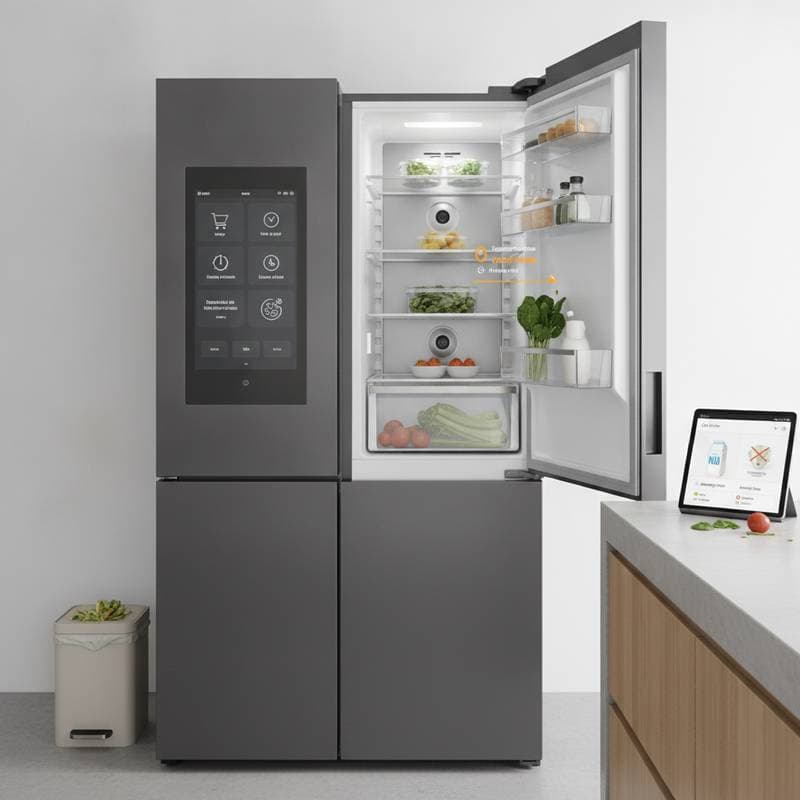
High-End Model: The Samsung Bespoke Refrigerator with SmartThings Energy, costing around $2,800, regulates compressor functions using utility-provided data. In solar-equipped homes, it prioritizes operations during peak sunlight to optimize self-use of generated power.
These selections illustrate options from basic scheduling to sophisticated multi-device management.
Essential Consideration: OpenADR Compatibility
For sustained investments, prioritize appliances certified under OpenADR, an interoperable protocol for demand response employed by various utilities. This choice safeguards adaptability amid evolving programs and avoids vendor dependency. Models from GE, LG, and Carrier in premium tiers already incorporate this feature, ensuring longevity as energy policies advance.
Financial Aspects, Rebates, and Return on Investment
Utility-connected smart appliances command a 10 to 20 percent premium over basic versions. However, available rebates mitigate this difference swiftly, with utilities providing $50 to $200 per unit alongside continuous credits for engagement. Annual household savings range from $100 to $300, influenced by consumption habits and regional tariffs.
Regions with time-of-use structures amplify these gains. Shifting intensive tasks, such as water heating or drying, away from peak intervals can diminish costs by 20 percent or greater. This approach delivers equivalent functionality through strategic scheduling.
Installation Safety and Expert Assistance
Linking appliances to utility networks entails software and electrical evaluations. Although many setups prove straightforward, substantial installations like those for water heaters or HVAC require certified professionals. Improper setup risks warranty invalidation or operational faults; confirm electrical infrastructure adequacy prior to multi-device expansions.
For comprehensive overhauls, certified specialists can consolidate smart appliances within a unified management interface. Platforms such as EnergyHub or Sense aggregate controls into a central view. Homeowners may source qualified experts through specialized directories focused on utility-integrated solutions.
Broader Implications of Grid-Interactive Technology
Beyond monthly savings, smart appliances contribute to grid reliability by mitigating demand surges that risk outages or escalated production expenses. Collective shifts in usage patterns across communities enable utilities to decrease reliance on costly supplemental generators and increase incorporation of renewables like wind and solar.
This extends past economics to foster harmony between household routines and a sustainable energy framework. Such innovations render this synergy intuitive and accessible.
Strategies for Optimal Performance
- Integrate with smart thermostats. Devices like the ecobee Premium ($250) react to utility cues, synchronizing climate control for amplified savings.
- Employ monitoring applications. Tools such as Emporia Energy or Sense display instantaneous usage data, confirming operational timing and expenses.
- Align with renewable systems. In setups featuring solar panels or batteries, appliances can favor internally produced energy over grid imports.
- Leverage periodic incentives. Utilities frequently introduce rebate drives during peak seasons; strategic timing enhances financial returns.
Steps to Integrate and Expand
Elevate everyday spaces like kitchens or laundry areas into active components of the energy network. Initiate with a single appliance to master its functions, then scale methodically. The adaptation period remains brief, yielding enduring advantages in reliability, ease, and economy.
Grid-interactive appliances provide a viable route to automated efficiency, whether pursuing comprehensive home synchronization or targeted bill reductions. They demonstrate that effective energy management requires intelligence in timing and seamless device-utility dialogue.
Frequently Asked Questions
Does grid-interactive appliance use require a special meter? Most utilities mandate a smart meter to enable bidirectional data flow.
Can all smart appliances connect to the grid? Only those with specific compatibility features participate; review ENERGY STAR or utility listings for verification.
What savings can I expect initially? New users often see 10 to 15 percent reductions on bills, scaling with device count and participation.