Robotic Furniture Transforms Homes with Simple Voice Commands
Smart homes are evolving from connected gadgets to adaptive environments that respond to human needs. The latest leap in this transformation is robotic furniture. This new category of modular, motorized furnishings moves, expands, and retracts on command.
These systems turn static spaces into dynamic living areas. Compact apartments feel spacious while large homes become more efficient. What once sounded like science fiction is now becoming an attainable reality.
The Rise of Intelligent Furniture
For years, smart home technology focused on devices like thermostats and speakers. Attention is now shifting toward the physical elements of a home. Furniture can change shape or position to serve multiple purposes.
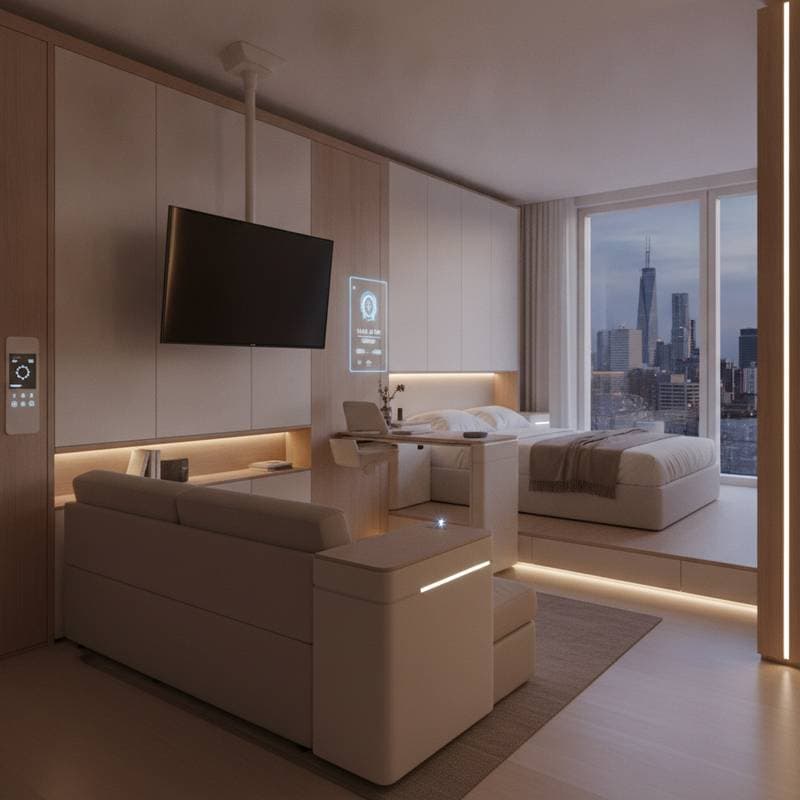
Robotic furniture integrates sensors, motors, and software to transform rooms at the push of a button or a simple voice command. Users say phrases such as open bedroom mode and watch a wall unit glide forward to reveal a bed from behind a desk. Companies like Ori Living and Bumblebee Spaces deliver this seamless adaptability.
Why Adaptable Spaces Matter
Urban living is becoming more compact. People seek smarter ways to use limited space. A robotic furniture system can make a 400 square foot apartment function like a 700 square foot one by allowing one area to serve multiple roles throughout the day.
This efficiency supports sustainable living by reducing the need for larger homes and excessive materials. Surveys show that convenience remains the top reason people invest in smart home devices. Robotic furniture combines automation with tangible benefits like flexibility and comfort.
How Voice Control Brings It to Life
Voice control serves as the natural interface for robotic furniture. Homeowners speak commands instead of adjusting sliders on an app. Phrases such as open wardrobe, lower bed, or slide table make living spaces feel intuitive and responsive.
Integration with existing assistants such as Alexa, Google Assistant, and Siri makes adoption easy. This layer of control also enhances accessibility for individuals with mobility challenges. Voice controlled furniture provides independence and ease of use.
Modular Design Meets Robotics
The beauty of robotic furniture lies in its modular approach. Each piece moves independently or as part of a coordinated system. One module might handle vertical movement for a bed while another handles horizontal motion for a closet wall.
Brands experiment with configurations that adapt to different lifestyles. Some systems focus on single room apartments while others work within open plan homes. The modular nature allows homeowners to start small with a robotic bed and expand later.
Real World Examples Leading the Shift
Ori Living offers systems that let users transform a studio into a bedroom, office, or lounge with a single command. Their Cloud Bed retracts into the ceiling when not in use and reveals a spacious living area beneath. Bumblebee Spaces uses ceiling mounted storage units that descend when needed.
These examples show how robotics blend into furniture design without appearing mechanical. The focus remains on design harmony and lifestyle improvement.
The Technology Behind the Movement
Compact motors, linear actuators, and intelligent sensors form the core of robotic furniture. These components detect obstacles, ensure safety, and move smoothly. Motion tracking systems monitor positions and speeds.
Software manages routines, voice inputs, and environmental data. The systems learn from user behavior over time. They can anticipate preferences such as automatically lowering the bed when evening routines begin.
Lifestyle Benefits Beyond Space Saving
Robotic furniture brings broader lifestyle benefits beyond maximizing space. It can enhance wellness by creating environments that adjust to natural rhythms. Lighting integrated into moving furniture can gradually brighten in the morning and dim at night.
Automated motion encourages tidiness as furniture resets to a default layout. Families with children or guests can reconfigure rooms instantly. Renters benefit as modular units can be relocated or reprogrammed for new spaces.
Challenges on the Path to Mainstream Adoption
Cost remains the main barrier as early systems tend to be premium products. Installation can require structural considerations such as ceiling mounts or reinforced walls. Compatibility across smart home platforms is improving but not yet universal.
Manufacturers address these issues through standardized connections and simplified setup processes. As production scales and materials evolve, prices are expected to drop.
The Role of Design in Adoption
A key reason robotic furniture gains traction is its design aesthetic. Modern models hide the mechanics behind elegant finishes so they look like regular furniture. Designers collaborate closely with robotics engineers to ensure movement feels natural.
This focus on design integration helps overcome skepticism. When technology feels invisible, users embrace it more readily.
A Glimpse Into the Future of Living Spaces
As robotic furniture matures, it will connect more deeply with other smart systems. Homes will know when residents arrive and prepare the layout accordingly. The sofa extends, lights adjust, and the dining table lowers automatically.
Developers explore sustainability as well. Robotic systems could optimize energy use by repositioning furniture to improve airflow or natural light exposure.
Living with Responsive Design
Homeowners can explore how robotic furniture fits into daily life by starting with one transformable piece such as a bed or desk. Early adopters report that adaptable design enhances comfort and saves time. The shift toward robotic furniture represents a rethinking of what a home can do for its occupants.