From Recipe Stress to Button-Press Cooking
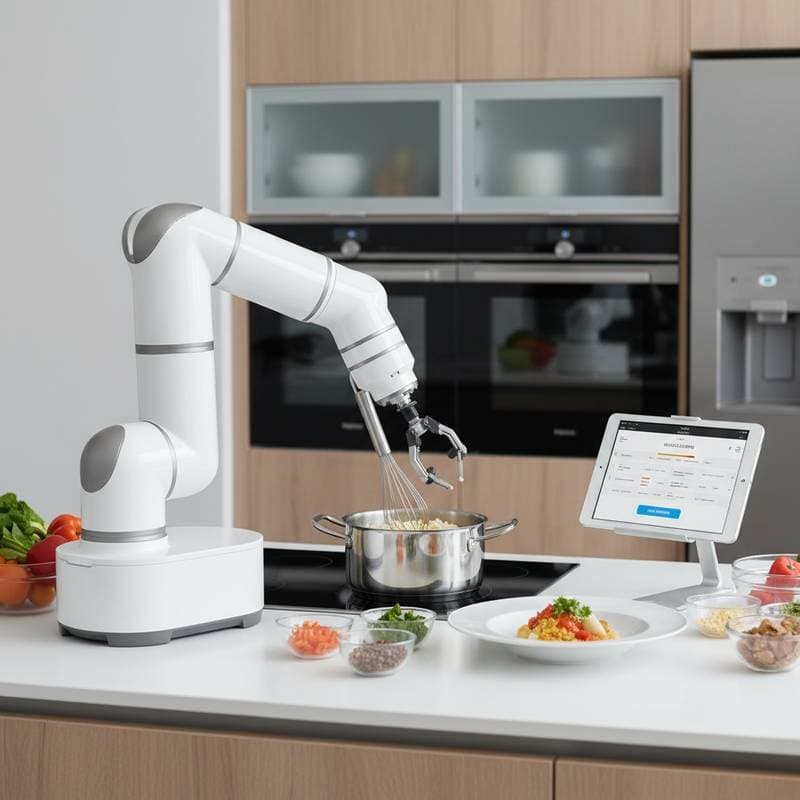
Picture arriving home after a demanding day, feeling fatigued yet eager for a nourishing meal. The refrigerator stands ready with fresh ingredients, but the thought of preparing dinner overwhelms. Consider a streamlined robotic arm positioned above the stovetop, methodically stirring a sauce, turning fish fillets, and arranging the finished dish with exactness. This eliminates uncertainty, avoids damaged cookware, and delivers a warm meal precisely when needed.
Such scenarios extend beyond futuristic tales or elite professional setups. Robotic kitchen arms available for under three thousand dollars now reach ordinary households, delivering expert-level accuracy to routine meal preparation. Food enthusiasts seeking reliable outcomes, time-strapped families aiming to streamline routines, or individuals prioritizing ease of access all benefit from this advancement in kitchen technology.
The Opportunity: Making Automation Truly Accessible
Previously, automated cooking solutions carried prices comparable to vehicles. Comprehensive robotic kitchens, complete with adjustable stove mechanisms and overhead manipulators, often surpassed tens of thousands of dollars. Today, adaptable robotic kitchen arms appear at significantly lower costs, typically ranging from one thousand to three thousand dollars based on manufacturer and capabilities.
These units install without necessitating kitchen renovations or appliance replacements. They secure to countertops or adjacent to current equipment. Equipped with imaging devices, detectors, and online recipe databases, they measure portions, agitate mixtures, invert foods, and monitor durations with high precision.
The primary advantages include ease and reliability. Perfection in intricate dishes like risotto demands ongoing attention, yet the arm maintains steady action without fatigue. This setup permits handling other responsibilities, such as resting, tidying, or assisting with family tasks, while the meal advances independently.
How Robotic Kitchen Arms Work
A robotic kitchen arm serves as a mechanical cook and perceptive aide. It merges exact movement guidance with recipe information accessed via application or remote server. The following outlines the core sequence:
- Setup and Calibration: Secure the arm to the counter or a supporting frame. Integrated tools guide the device in recognizing pots, pans, and the operational zone.
- Recipe Selection: Choose a dish through a mobile application or spoken directive. The interface supplies detailed guidance and required components.
- Ingredient Preparation: Perform initial cuts and flavor additions manually, although certain models dispense fluids or condiments autonomously.
- Cooking Execution: The arm executes actions such as mixing, turning, or quick-frying, while tracking heat levels via built-in sensors or linked vessels.
- Serving and Cleaning: Upon completion, select models shift tools to a wash area or notify for hands-on maintenance.
Early users often miss a key element for optimal results: consistent cookware positioning. These arms depend on area scanning, where minor displacements in pan placement disrupt intended paths. Apply subtle, temperature-tolerant markers to fix pan spots, guaranteeing precise replication across sessions.
The Market Leaders and What You Get Under $3000
Although high-end models capture much publicity, practical alternatives for domestic application earn widespread recognition. Three notable choices follow:
1. Budget Option: CookingPal Multo Smart Kitchen Robot ($1,099)
This unit integrates a processor, automated mixer, and directed formulas into a single compact form. It lacks a traditional arm but replicates automation via internal fixtures for dicing, heating, and vapor cooking. It suits compact spaces or urban residences desiring intelligent features minus complex assembly.
- Pros: Unified structure, display-based operation, application-driven formulas.
- Cons: Confined to its enclosed vessel, limiting engagement with standard ranges.
- Compatibility: Supports Android and iOS platforms.
2. Mid-Range Option: Suvie 3.0 Smart Meal Station with Robotic Lifter ($1,799)
Suvie employs a segmented design with a compact lifter to shift containers across zones for refrigeration, heating, and grilling. It maintains an expanding collection of formulas and assembles full courses with slight oversight.
- Pros: Zoned preparation, timed activation, wireless linkage.
- Cons: Demands proprietary containers and add-ons.
- Compatibility: Integrates with home automation via network connection.
3. Premium Option: Chef Robotics Home Arm Kit ($2,950)
This surface-mounted arm includes flexible connectors, image recognition, and alignment with conventional utensils. It manages tasks from batter turning to mixture blending and dish arrangement. The accompanying application refreshes formulas periodically, drawing on remote heat and action templates developed by culinary experts.
- Pros: Comprehensive mobility with evolving artificial intelligence, optical detectors, and software assistance.
- Cons: Demands meticulous initial adjustment and adequate area.
- Compatibility: Pairs with voice systems and compatible electric surfaces.
These selections demonstrate category maturation. Modular additions allow gradual enhancement without full overhauls, commencing below three thousand dollars.
Insider Insights: What Industry Pros Know
Beyond promotional materials, advancements in robotic kitchen technology stem from combined sensing and accessible interfaces. These enable fluid interaction with additional intelligent devices, surpassing prior generations.
For instance, a Chef Robotics arm gathers instant heat data from a compatible electric surface like the Duxtop 9600LS. This linkage prompts automatic pace modifications in mixing to avert burning. Such interconnected functionality previously confined to professional environments now enters homes.
Professionals emphasize regular software enhancements alongside formula expansions. Establish a stable network connection prior to use. Providers issue ongoing revisions that refine action accuracy, broaden dish options, and strengthen safeguards. Overlooking them risks variable performance or obsolete features.
Practical Setup and Safety Considerations
Designed for residential settings, these systems demand proper installation for secure and enduring operation. Essential guidelines include:
- Surface Stability: Anchor the arm to a firm, flame-resistant base. Maintain distance from direct heat sources or fuel flames.
- Power Supply: Units typically require 500 to 900 watts. Verify outlet capacity to prevent circuit interruptions.
- Clearance Space: Provide a minimum of 18 inches surrounding the arm's operational sweep.
- Child Safety: Regard the device as any motorized tool. Supervise young ones during function.
- Maintenance: Clean connectors and detectors softly using a soft fabric. Avoid liquid immersion of parts.
For linkage with further smart tools, employ a unified controller such as an Amazon Echo Show 15 or Samsung SmartThings unit. This facilitates synchronized warming, supply notifications, and sequence management across equipment.
Budgeting and Long-Term Value
Upfront expenses for a robotic kitchen arm appear substantial, yet they frequently supplant multiple minor devices. One unit addresses mixing, pureeing, and pan-frying duties that demand varied implements otherwise.
- Entry-level systems (under $1500): Suited for individuals or pairs. Anticipate primary automation in agitation and heat regulation.
- Mid-range systems ($1500–$2200): Handle sequential formulas with embedded warming or chilling.
- Premium systems ($2200–$3000): Offer complete flexibility, visual analysis, and programmed timelines.
Ongoing expenses remain low. Cleaning involves common detergents, and energy use falls below that of conventional ovens. Accumulating benefits from minimized waste, decreased external dining, and efficient durations gradually recoup the investment.
Cooking with Confidence: What You Can Actually Make
These tools transcend basic functions. With accurate configuration, they manage elaborate preparations including:
- Risotto demanding uninterrupted blending.
- Steaks browned to exact specifications.
- Batter cakes inverted flawlessly.
- Pasta courses aligned in sauce and strand coordination.
Success hinges on formula adaptation. Providers supply curated selections, while proficient operators capture bespoke sequences for preferred recipes. Program the arm to replicate specific blending patterns or inversion techniques, retaining individual flair amid reduced physical demand.
Expanding the Smart Kitchen Ecosystem
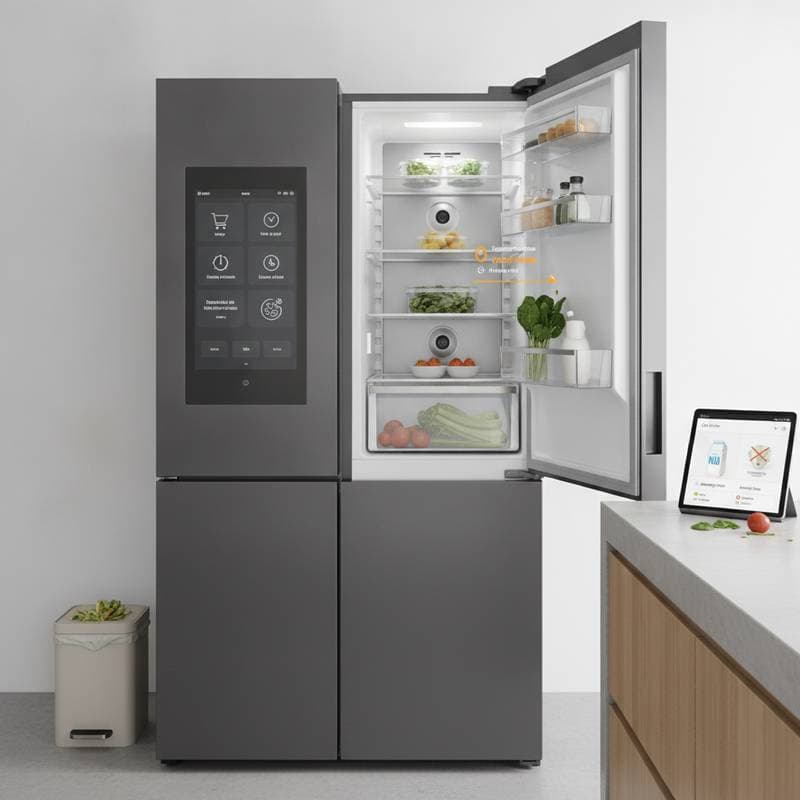
Pairing a robotic arm with complementary intelligent devices amplifies utility. Envision a refrigerator monitoring stocks, the arm assembling the course, and an auditory aide overseeing schedules and post-meal cues.
A straightforward integrated process appears as:
- Inventory Check: The refrigerator identifies remaining poultry and produce.
- Recipe Suggestion: The arm's software proposes a vegetable medley.
- Preparation: The arm warms the vessel, ingredients join, and it oversees blending.
- Finishing Touches: Ambient illumination shifts to meal setting as the arm arranges the dish.
This synergy forms a cohesive intelligent environment over isolated components.
Making It Happen
To introduce automation, commence modestly and assess practically. Gauge available surfaces, inspect electrical access, and determine desired involvement levels.
- Beginner Tip: Opt for a combined unit like the Suvie 3.0 to automate areas prior to advancing to articulated arms.
- Intermediate Tip: Incorporate detection tools and matched vessels for uninterrupted device dialogue.
- Advanced Tip: Document personalized formulas and exchange within digital forums. Operators frequently share action templates and adjustments for enhanced outcomes.
For expert assistance, consult automation specialists offering kitchen integrations. Submit requirements to reliable platforms for complimentary estimates from qualified technicians. This secures proper wiring and tuning, particularly for advanced units.
Frequently Asked Questions
What level of cooking experience do I need?
Basic familiarity suffices; the systems guide through applications and provide visual aids for novices.
Can these arms work with my existing pots and pans?
Most models adapt to standard cookware, though optimal performance arises with compatible, sensor-enabled items.
How much time do they save per meal?
Users report 20 to 40 minutes reduction in active supervision, varying by recipe complexity.
Are updates free?
Yes, manufacturers deliver firmware and recipe enhancements at no additional cost via network connection.