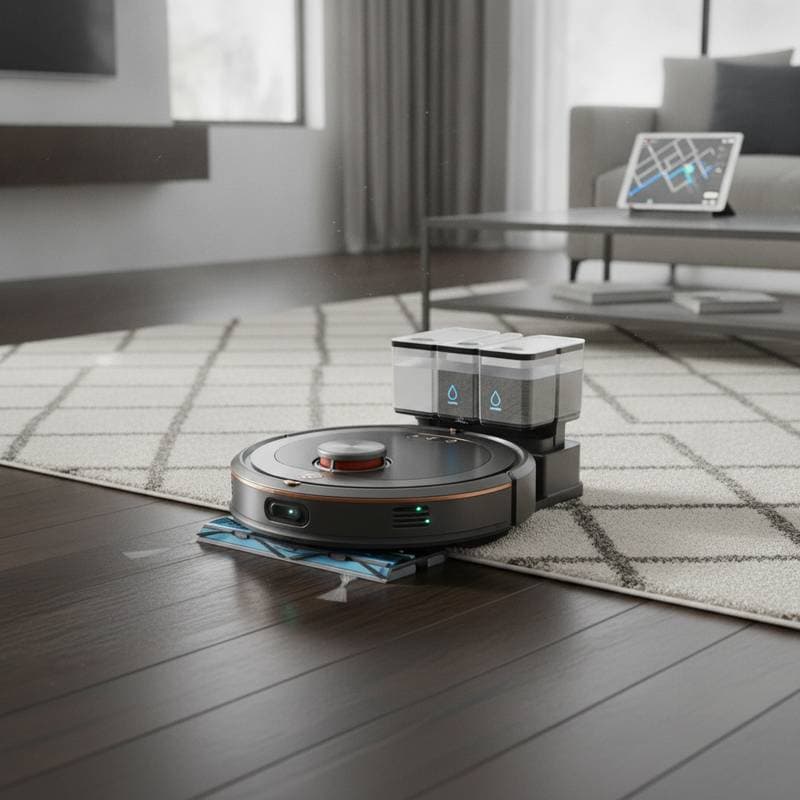
The Challenge with Carpet Mopping
Mopping and vacuuming require opposite actions. Carpets need suction and agitation, not water. Earlier hybrid robots often relied on simple moisture sensors, which could misfire on dark flooring or low-pile rugs. The result was frustrating: soggy carpets or half-clean floors.
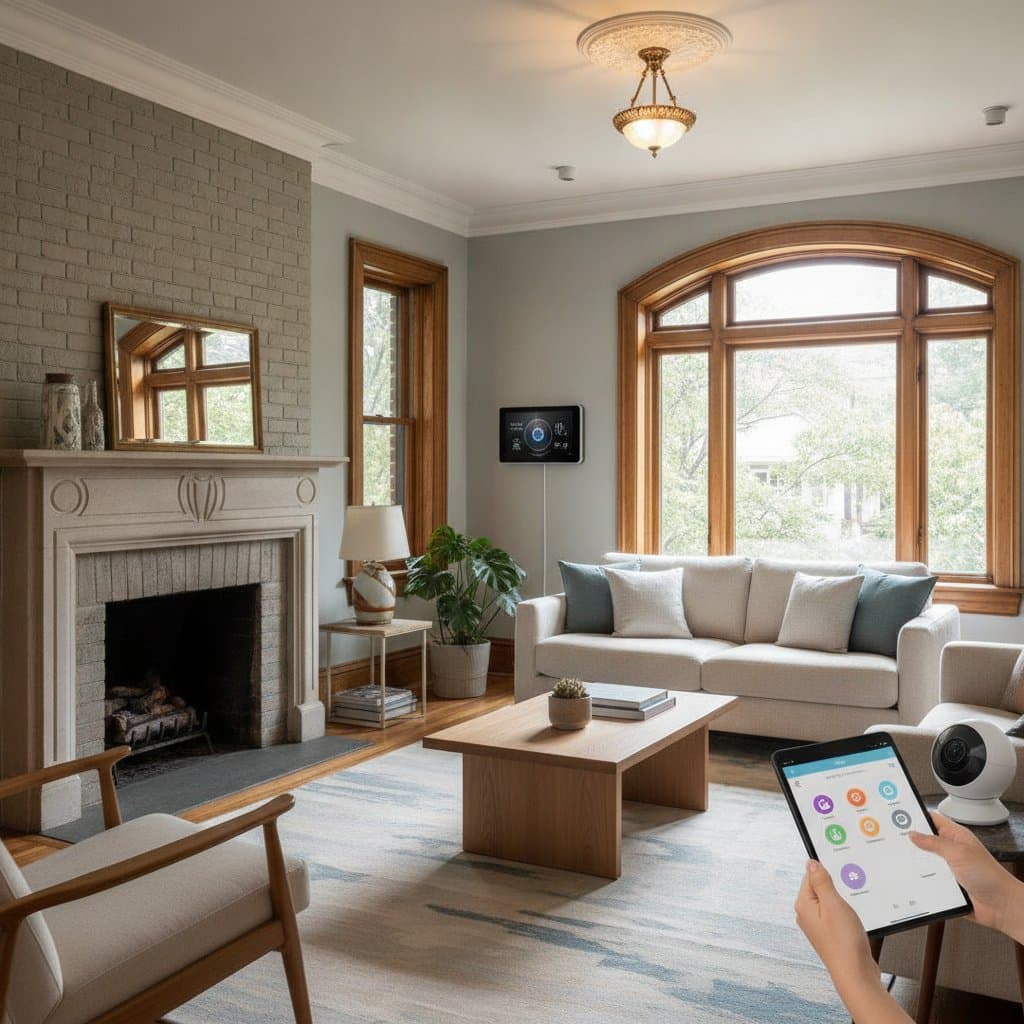
Modern models solve this through smarter sensors, motorized mop lifts, and dynamic mapping. These improvements no longer require premium pricing. Even mid-range models now offer dry-zone mapping that lets you mark carpeted areas in the app so the robot automatically avoids or lifts the mop when crossing them.
Smarter Technology for Mixed Surfaces
The key advancement is auto mop lifting, which raises the mop pads when the robot detects carpet. Some models go even further with vibration-assisted scrubbing and ultrasonic carpet recognition. These features allow seamless transitions between tile, wood, and rug surfaces without manual input.
Another practical feature appears in models that use dual water tanks. One tank holds clean water and the other collects dirty water. This design prevents residue buildup, keeps mop pads cleaner longer, and extends the lifespan of carpets by avoiding re-deposited grime.
Top Picks for Carpet-Friendly Robot Vacuums That Mop
-
Budget Option: Eufy X10 Pro Omni. This model costs approximately 800 dollars. It offers good suction and a mop lift of up to 12 millimeters. It recognizes carpets well, though its water management remains basic. The unit suits small apartments with light rugs.
-
Mid-Range Choice: Roborock Q Revo. This model costs approximately 900 dollars. It includes mop lifting, decent mapping, and a self-cleaning dock. It handles low to medium pile carpets without moisture issues. The app allows you to set no-mop zones with a few taps.
-
Premium Selection: Ecovacs Deebot X2 Omni. This model costs approximately 1500 dollars. It features advanced carpet detection and hot-water mop pad washing. It also dries mop heads automatically to prevent odor. The slim rectangular design reaches corners efficiently.
Each of these models supports smart assistants like Alexa and Google Home. Voice commands allow quick start or stop actions. Check compatibility with platforms like IFTTT or Apple Home if you plan to expand your smart cleaning system.
Practical Considerations Before You Buy
Expect to spend about an hour setting up your robot and mapping your home. For homes with mixed flooring, spend extra time labeling rooms correctly in the app. You achieve the best results by washing mop pads weekly and replacing filters every few months.
Avoid using strong detergents in the water tank. Manufacturers design these reservoirs for plain water or specialized solutions approved for the device. The wrong cleaner can damage pumps or sensors.
If you have thick carpets or shag rugs, consider a robot with automatic mop detachment. Some high-end bases can remove and store mop pads during carpet cleaning cycles.
Selecting the Right Model
Assess your flooring mix, room layout, and cleaning frequency. Choose a model that balances suction power, water control, and app intelligence. Once set up, the robot maintains spotless floors without risking damage to rugs. Your carpets stay dry while hard floors receive consistent attention.