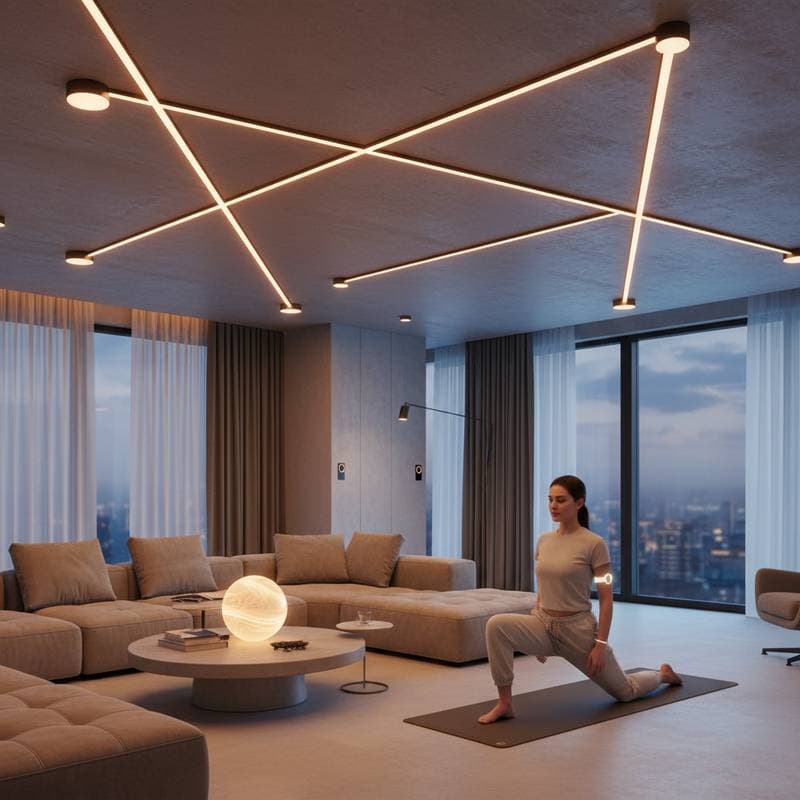
Envision Lighting That Responds to Your Needs
You return home after a long day, and the lights transition seamlessly from stark white to a soothing amber hue. The room immediately fosters relaxation. Without flipping switches or opening applications, the illumination detects your state and supports your decompression. This capability defines mood-responsive lighting, a leading advancement in smart home technology.
Homeowners often initiate lighting enhancements for basic convenience. However, once they encounter systems that adapt to emotional states, energy fluctuations, and sleep cycles, the experience evolves into a deeply personal one. Beyond mere bulbs and color options, these solutions craft living spaces that intuitively nurture health and comfort.
The Impact of Adaptive Lighting on Daily Life
Illumination profoundly influences mood and physiology. Factors such as intensity, color temperature, and timing regulate the circadian rhythm, which governs wakefulness and sleep quality. Individuals frequently resort to manual adjustments or preset schedules to manage these elements, yet mood-responsive lighting elevates automation to sophisticated heights.
These setups employ sensors or data from wearable gadgets to monitor heart rate, movement, and ambient conditions. Based on this input, they modify lighting dynamically. Elevated stress might prompt warmer tones for calming effects, while tasks requiring concentration could activate brighter, cooler lights resembling natural daylight. Although it appears advanced, the underlying technology proves reliable and widely available.
The Mechanics of Mood-Responsive Illumination
Mood-responsive lighting integrates three essential components:
- LED smart bulbs equipped with adjustable white tones and full RGB spectrums.
- Sensors or biometric interfaces that capture environmental and physiological signals.
- A central hub or controller that analyzes information and executes real-time changes.
Consider a smartwatch monitoring heart rate and rest patterns. The lighting system accesses this data to synchronize with your biological clock. Certain configurations incorporate occupancy detectors and ambient light sensors to fine-tune intensity and hues instantaneously.
Experts in installation advise positioning ambient sensors at eye level instead of on ceilings. This placement captures perceptions more accurately, leading to precise mood-aligned modifications.
Essential Components for an Effective System
Smart Bulbs and Fixtures
Contemporary LED bulbs form the foundation of adaptive lighting networks. They deliver high efficiency and vast color ranges. Beginners may begin with the Wyze Bulb Color, priced at approximately $14 per unit, which provides robust output and straightforward app integration.
Intermediate users benefit from the Philips Hue White and Color Ambiance bulbs, costing about $45 each. These integrate effortlessly with ecosystems such as Alexa, Google Home, and Apple HomeKit, enabling complex automations and routines.
For high-end applications, the Nanoleaf Shapes Starter Kit, around $200, transforms walls into responsive displays that react to audio and gestures. Such panels create engaging, evolving light displays.
Sensors and Control Units
Reliable data collection drives mood-responsive functionality. Devices like motion detectors, illuminance gauges, and climate sensors collaborate to assess the space. The Aqara Motion and Light Sensor, at roughly $25, serves as an economical choice for Zigbee-compatible hubs.
Advanced systems utilize the Nanoleaf Sense+ Controls, which connect natively to lighting setups and employ on-device learning to anticipate user preferences. A bundle including a controller and sensors typically costs about $100.
Biometric Connectivity
Integration with wearables marks a pivotal innovation. Linking a Fitbit or Apple Watch enables lighting responses to physiological metrics like pulse or movement. For example, a raised heart rate in a professional setting might initiate crisp white light for enhanced concentration, whereas reduced evening activity could introduce soft warms to promote unwinding.
Professionals note that optimal performance arises from wearables with data refresh rates of at least one per minute. This frequency ensures fluid shifts that integrate naturally into routines.
Designing a Tailored Lighting Strategy
To build your system, assess desired atmospheres across daily segments. Segment your home into zones: productive areas, relaxation spots, and pathways. Tailor each to specific emotional and functional needs.
- Morning activation: Employ cool whites from 5000K to 6500K to stimulate alertness.
- Midday maintenance: Use neutral shades near 4000K to sustain attention without fatigue.
- Evening transition: Apply warms between 2200K and 2700K to cue relaxation and sleep preparation.
Automation handles these shifts autonomously. As the system accumulates data, its adaptations grow more refined and personalized.
Key Factors for Implementation
Cost and Setup Demands
A foundational single-room configuration ranges from $150 to $250, covering bulbs and a hub. Whole-home expansions with biometric features may total $800 to $1500, varying by zone count and sophistication.
Most installations prove simple, but older electrical systems or fixed fixtures necessitate a certified electrician's involvement. Prioritize safety in all electrical and networked modifications.
Integration and Platform Alignment
Favor devices within a unified ecosystem for simplicity. Philips Hue and Nanoleaf provide extensive cross-platform support, whereas Wyze and Govee optimize within their dedicated applications. Verify compatibility with existing assistants like Alexa or Google Home.
Data Security and Privacy
Biometric reliance introduces valid privacy questions. Examine data processing protocols to confirm local retention over cloud transmission. Select hubs supporting on-premises storage to minimize risks while preserving efficiency.
Professional Tips for Optimal Results
Installers stress the value of initial calibration. During the system's acclimation to your habits, refrain from frequent overrides. Allow one week of observation to enable effective pattern recognition and response optimization.
Additionally, synchronize lighting with audio environments. Coordinated light and sound amplify sensory impacts. Smart speakers often facilitate triggers that align illumination with music or guided sessions, fostering immersive experiences.
Experiencing the Benefits Daily
With the system operational, enhancements emerge gradually. Mornings gain vitality, and nights offer inherent tranquility. Visitors frequently praise the inviting ambiance, unaware of the intelligent underpinnings. Long-term, improvements in sleep quality and work efficiency become evident.
The true strength resides in seamless integration. When technology operates invisibly, anticipating requirements, it embodies intelligent habitation at its finest.
Steps to Launch Your System
To initiate mood-responsive lighting, select a pivotal area like a bedroom or office. Test with essential bulbs and detectors, then scale based on observed mood influences.
Self-install basic elements, but engage specialists for extensive networks or wearable syncs. Explore XavageTech Marketplace to find qualified experts in smart illumination at no initial cost.
Illumination has long defined environments; now it refines the emotions within them. Prepare to cultivate a dynamic, attuned home that evolves with you.