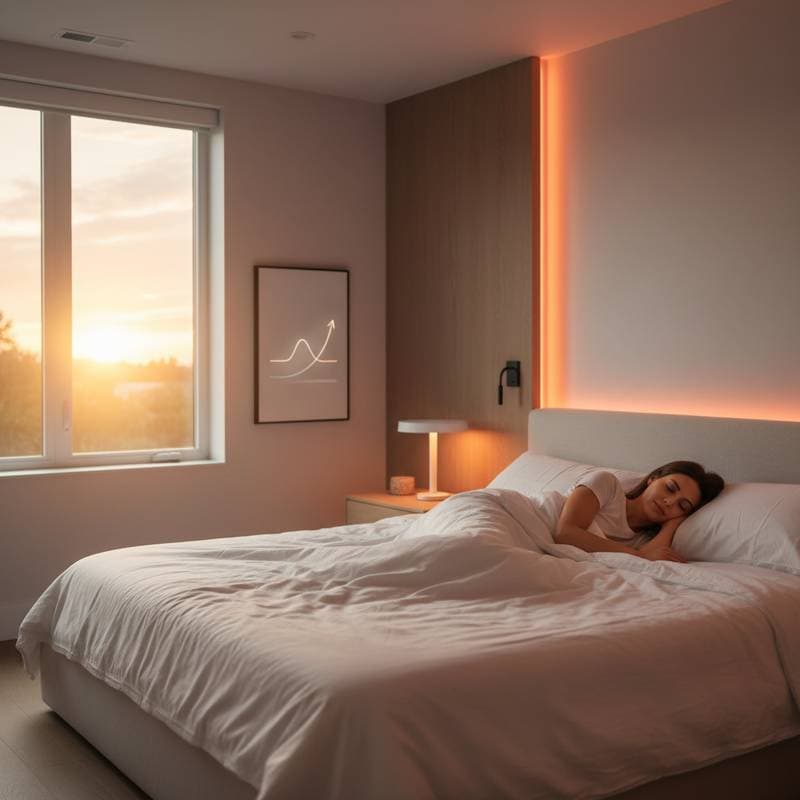
Boost Sleep Quality by 47 Percent with Circadian Smart Lighting
Nearly half of adults report difficulty achieving sufficient quality sleep, despite using comfortable mattresses and ensuring darkened rooms. Light exposure often serves as the underlying issue. Emissions from screens, intense overhead fixtures, and inconsistent lighting disrupt internal biological clocks. Circadian smart lighting addresses this challenge by aligning illumination with the body's natural rhythms, fostering deeper and more restorative rest.
Advanced smart lighting systems that adapt to circadian cycles demonstrate potential to enhance sleep quality by up to 47 percent, based on findings from consumer studies and wellness technology evaluations. These innovations position themselves as essential elements in contemporary smart homes, promoting heightened alertness in the morning and greater relaxation in the evening.
Understanding Circadian Smart Lighting
Circadian smart lighting employs dynamic adjustments in color temperature and intensity to replicate the progression of natural sunlight. During morning hours, fixtures gradually increase brightness while adopting cooler tones to stimulate wakefulness. Toward evening, they transition to warmer, subdued shades that encourage melatonin production, the hormone essential for initiating sleep.
This alignment supports the circadian rhythm, the body's inherent 24-hour cycle governing sleep patterns, mood regulation, and energy distribution. When environmental lighting harmonizes with this cycle, individuals experience optimized sleep onset, sustained daytime vigilance, and elevated overall health.
The Impact of Lighting on Sleep Patterns
Light directly communicates with the brain to dictate periods of activity or repose. Prolonged exposure to bright, cool-toned light in the evening misleads the body into perceiving daytime conditions, thereby inhibiting melatonin secretion and postponing sleep. Such interference commonly arises from evening television viewing or smartphone use, resulting in prolonged wakefulness and fragmented rest.
Conventional lighting systems overlook these physiological responses. In contrast, circadian smart bulbs introduce illumination informed by biology. They automate adaptations through predefined schedules or integrated sensors, maintaining synchronization with external daylight variations. Consequently, the brain encounters reduced conflicting signals, facilitating seamless entry into restorative sleep phases.
Scientific Basis for the 47 Percent Improvement in Sleep
Analyses from wellness technology experts indicate that individuals adopting circadian-responsive lighting report quantifiable gains in sleep regularity and profundity. By emulating sunlight cycles, these systems stabilize core body temperature, hormonal fluctuations, and cognitive alertness. Such equilibrium frequently yields extended durations of uninterrupted, high-quality sleep.
Research involving smart home users revealed that approximately half observed enhanced sleep metrics within weeks of implementing adaptive lighting solutions. Benefits extended beyond quicker sleep initiation to include fewer nocturnal awakenings and a heightened sense of refreshment upon rising.
Designing Personalized Sleep Environments with Smart Lighting
Contemporary circadian lighting platforms surpass basic timers by incorporating sensors, sophisticated algorithms, and personalized input to tailor illumination sequences to individual lifestyles. For example, systems detect variations in wake times between weekdays and weekends, automatically recalibrating light transitions accordingly.
Many users initiate integration with smart bulbs compatible with established home automation networks. Alternatively, dedicated smart panels or fixtures optimized for circadian effects provide comprehensive coverage. These components interface with voice-activated assistants or mobile applications, enabling effortless management of intensity, hue, and timing via voice commands or taps.
Certain advanced setups incorporate data from wearable devices, such as smartwatches monitoring sleep stages. Lighting responds in real time to bolster recovery periods, enhance focus, or induce tranquility. This feedback-driven refinement elevates smart lighting from an optional feature to an indispensable tool for well-being.
Practical Applications of Circadian Lighting
- Philips Hue White Ambiance implements automated routines shifting from invigorating cool daylight simulations in the morning to soothing amber glows at night, often leading to improved morning vitality and serene evenings.
- Nanoleaf Lines and Shapes allow configuration for dynamic brightness aligned with local sunrise and sunset times, appealing to those seeking both practical and visually striking installations.
- Casambi and LIFX provide mobile app-driven circadian protocols that synchronize with personal calendars, ensuring seamless adjustments without user intervention.
- Human-centric lighting installations in professional and educational settings yield comparable advantages, underscoring the universal applicability of these biological alignments outside residential spaces.
These implementations reflect an evolving paradigm where lighting assumes a dynamic, responsive role. Homes transition from passive environments illuminated by fixed sources to adaptive spaces that evolve in tandem with human physiology.
Implementing Circadian Smart Lighting in Your Home
Establishing a circadian system requires no extensive overhaul. Begin by upgrading bulbs in key areas like bedrooms or living rooms to models supporting color temperature modulation. Expansion to corridors, kitchens, or workspaces follows naturally as familiarity grows.
Follow this structured plan:
- Prioritize the bedroom. Select bulbs capable of automatic color shifts; program them to soften in the evening and rise gradually at dawn.
- Enable smart controls. Link devices to platforms such as Google Home, Amazon Alexa, or Apple HomeKit for intuitive adjustments that preserve daily routines.
- Test various schedules. Adjust wake and relaxation light profiles iteratively to identify sequences that align intuitively with your energy levels.
- Incorporate automation elements. Deploy motion detectors to activate gentle illumination during nighttime movements, minimizing disorientation from sudden brightness.
- Monitor sleep metrics. Pair lighting with compatible tracking applications to evaluate outcomes and refine settings for optimal results.
This phased methodology delivers observable enhancements with minimal disruption.
Addressing Adoption Challenges
Potential hurdles like expense or interoperability deter some prospective users. However, circadian options have grown affordable, with introductory smart bulbs priced comparably to legacy alternatives while offering extended lifespans and energy efficiency.
Interoperability advances through universal protocols enable seamless integration across brands, avoiding ecosystem silos. Users benefit from flexible combinations tailored to specific needs.
Data security concerns persist for connected devices. Reputable manufacturers provide on-device processing capabilities, allowing schedules to function offline and safeguarding personal routines against external access.
Enhancing Daily Life Through Improved Rest
The profound shift arises from how circadian lighting reshapes routines. Envision fixtures subtly intensifying prior to your alarm, promoting a gentle emergence from sleep rather than abrupt arousal. Consider living spaces softening into inviting warmth as evening unfolds, naturally guiding the body toward repose.
These integrations cultivate enduring sleep discipline effortlessly. Enhanced rest cascades into broader gains, including sustained vitality, bolstered immunity, and sharpened concentration. Circadian lighting nurtures these by fostering an ambiance conducive to balance and serenity.