Budget Smart Fridges Auto-Order Groceries at $500
Smart homes evolve from optional enhancements to essential components of daily life, with the kitchen serving as the focal point of this change. Recent advancements in affordable smart refrigerators introduce capabilities previously limited to high-end models, now available at prices around $500. These devices track inventory, assess freshness levels, and initiate automatic reorders for depleted items.
This development extends beyond mere technological progress. It represents a shift toward automation that prioritizes user convenience by handling routine tasks seamlessly. Manufacturers achieve this by incorporating sensors, imaging technology, and networked services into cost-effective designs, making intelligent kitchen solutions widely attainable.
The Rise of the Budget Smart Fridge
Smart refrigerators once functioned primarily as luxury items, equipped with advanced interfaces and integrated shopping features that elevated costs to thousands of dollars. Advances in component efficiency, reduced manufacturing expenses, and widespread smart device adoption have altered this landscape significantly.
Consumer research indicates rising demand for interconnected kitchen tools, especially among millennials and urban dwellers who view appliances as extensions of their digital lifestyles. In response, companies like Hisense, TCL, and Insignia develop entry-level options that emphasize practical intelligence over extravagance. These units prioritize inventory management, recipe recommendations, and replenishment automation, leveraging existing smartphones and voice systems for interaction.
How Auto-Ordering Works
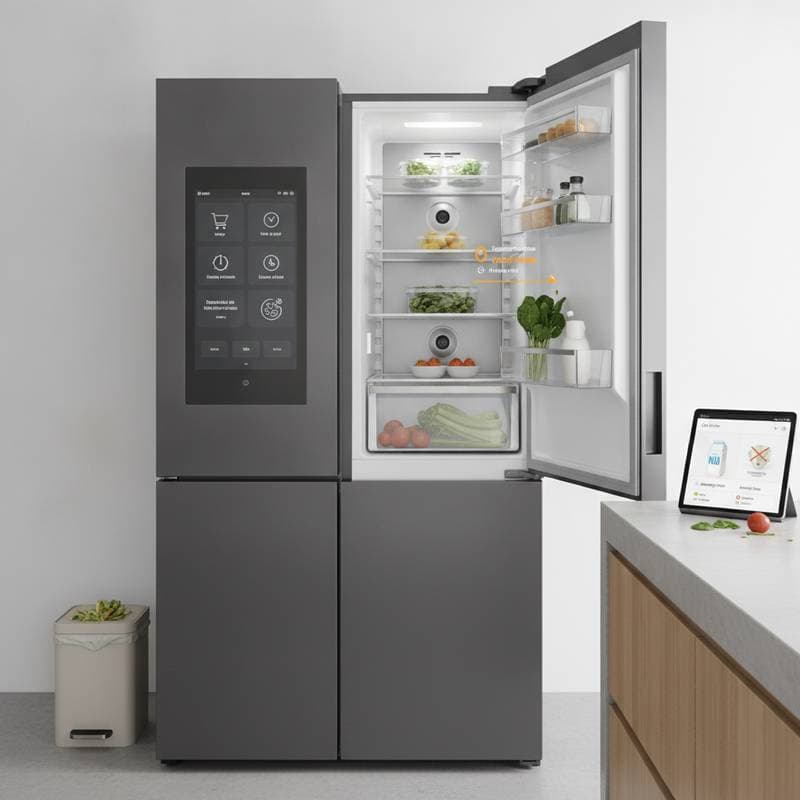
Auto-ordering in these fridges operates through a combination of embedded sensors, optical scanners, and basic machine learning algorithms that monitor contents. Certain models employ door-mounted cameras to photograph shelves upon closure, while others require users to input data via a dedicated application for item logging and date tracking.
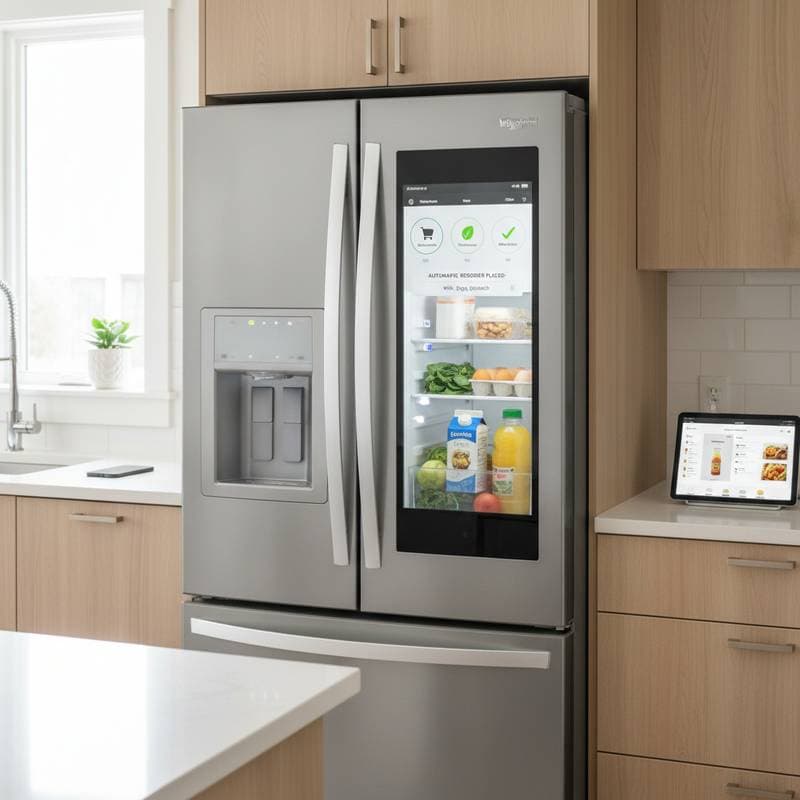
Upon detecting low stock or impending expiration, the system alerts the user's mobile device and, with permission, submits orders to partnered platforms such as Amazon Fresh or Walmart Grocery. Users customize settings to review purchases prior to execution or authorize recurring restocks for essentials like dairy or produce.
This mechanism fosters efficiency by bridging usage patterns with supply chains. Households benefit from uninterrupted access to necessities without the burden of manual oversight.
Why It Matters
Auto-ordering transcends gimmickry by alleviating cognitive demands on grocery planning for time-strapped individuals. It minimizes waste through timely alerts on perishable goods, encouraging consumption before spoilage occurs.
Practically, these features aid financial oversight by logging expenditure patterns and integrating with deal-finding algorithms to secure optimal pricing. For parents managing multiple schedules, the system acts as a reliable coordinator, transforming the fridge into an unobtrusive aide for household logistics.
The Technology Behind the Trend
Affordability stems from efficient networking and remote computation strategies. Appliances feature minimal onboard processors, instead transmitting data via Wi-Fi to cloud platforms that perform analytics and ordering tasks.
This design controls expenses while enabling over-the-air updates and scalability. Partnerships with established retailers further streamline operations, avoiding the need for custom infrastructures.
Voice compatibility enhances usability, as integration with assistants like Alexa or Google enables queries on stock levels or list additions through spoken commands. Such features deliver intuitive control without demanding sophisticated built-in displays.
Real-World Examples
Hisense offers a space-saving model that syncs with an app for real-time stock monitoring and list generation. TCL provides a unit linked to a personalized marketplace, which analyzes contents to propose tailored meal ideas.
Insignia's latest release utilizes a compact camera for staple recognition and direct retailer connections, emphasizing straightforward navigation for practical users. Emerging brands supplement traditional fridges with retrofit kits, including attachable sensors and connectivity hubs, to add smart capabilities affordably.
The Consumer Advantage
These fridges level the playing field by extending advanced automation to broader audiences without prohibitive costs. Renters and new buyers gain an accessible gateway to interconnected living, fostering experimentation with minimal investment.
Families experience streamlined procurement and planning, while those facing physical limitations appreciate reduced shopping frequency. Widespread use generates insights that drive iterative improvements in design and functionality.
Challenges and Considerations
Data security poses a primary hurdle, given the collection of personal consumption details. Providers implement robust encryption and compliance measures to safeguard information.
Network dependence introduces risks during outages, prompting inclusion of standalone modes for basic tracking. Regional service variations necessitate verifying retailer compatibility pre-purchase.
While upfront prices align with budgets, evaluate potential fees for enhanced services. Opt for units with core features included at no extra charge to maximize value.
The Broader Smart Kitchen Ecosystem
Budget smart fridges integrate into an expanding array of networked appliances, including adaptive ovens and efficient dishwashers. Cohesive operation across devices enhances routines, such as a fridge signaling an oven for meal preparation.
Industry efforts toward protocols like Matter promote interoperability, simplifying multi-brand setups. This connectivity elevates kitchens into coordinated environments that anticipate user needs.
Environmental and Economic Benefits
Sustainability improves as fridges flag expiring items and suggest utilization recipes, curbing discard rates. Energy monitoring guides adjustments for balanced operation, yielding utility savings.
Cumulative effects include lower grocery and power expenses. Design innovations, like upgradable modules and sustainable materials, prolong usability and lessen replacement impacts.
Integrating Automation into Daily Routines
Envision a fridge dispatching orders en route home or highlighting promotions on preferred products. These efficiencies compound to refine household workflows subtly.
At $500, such innovations render intelligent assistance commonplace. They embed seamlessly into habits, enhancing life without complexity.
Selecting and Implementing Your Smart Fridge
The kitchen emerges as both emotional and operational core, now augmented by accessible intelligence. Affordable smart refrigerators demonstrate that effective tools need not carry luxury premiums.
Prospective buyers should seek devices prioritizing utility, broad compatibility, and ethical data handling. As integration deepens, these appliances will orchestrate comprehensive kitchen management, starting with effortless provisioning.