AI Smart Homes Predict and Prevent Senior Falls
Smart homes evolve from conveniences to essential tools, particularly for families supporting older relatives. Beyond basic functions like remote lighting control or temperature adjustments, these systems now detect risks, respond with precision, and safeguard vulnerable individuals. A key advancement lies in fall prevention for seniors, where sensors, algorithms, and integrated networks enable homes to forecast and avert incidents.
The Growing Concern Around Senior Safety
Falls rank as a leading cause of injury for older adults, often resulting in extended recovery periods or diminished independence. Families face the challenge of ensuring protection while preserving dignity, avoiding environments that feel overly medicalized. While devices such as emergency buttons or basic motion sensors activate post-event, proactive systems identify early warning signs through unobtrusive monitoring.
How Predictive Smart Home Systems Work
These systems integrate continuous sensing, behavioral pattern recognition, and targeted interventions. Devices including motion detectors, privacy-respecting cameras, pressure-sensitive floors, and compatible wearables collect data on movement velocity, gait steadiness, and postural shifts. The platform establishes baselines for each user's routines; deviations like reduced pace, instability, or irregular steps prompt actions such as illuminating pathways or notifying caregivers.
Developers emphasize ambient intelligence, where technology operates seamlessly within the living space. Pressure mats identify weight imbalances, while automated lighting illuminates corridors during nighttime movements. Interventions occur subtly, fostering a sense of support rather than oversight.
Why Predictive Prevention Matters
Reactive detection notifies responders only after a fall occurs. In contrast, predictive approaches emphasize foresight, enhancing security and reducing anxiety for seniors and relatives alike. Surveys indicate that most older individuals value prolonged independent living; these systems facilitate that by minimizing risks without compromising autonomy.
Prevention also proves economically advantageous. Post-fall medical expenses mount quickly, whereas ongoing monitoring incurs minimal costs and yields long-term savings. The result extends to emotional benefits, alleviating the burden of perpetual concern.
Real-World Examples of Intelligent Fall Prevention
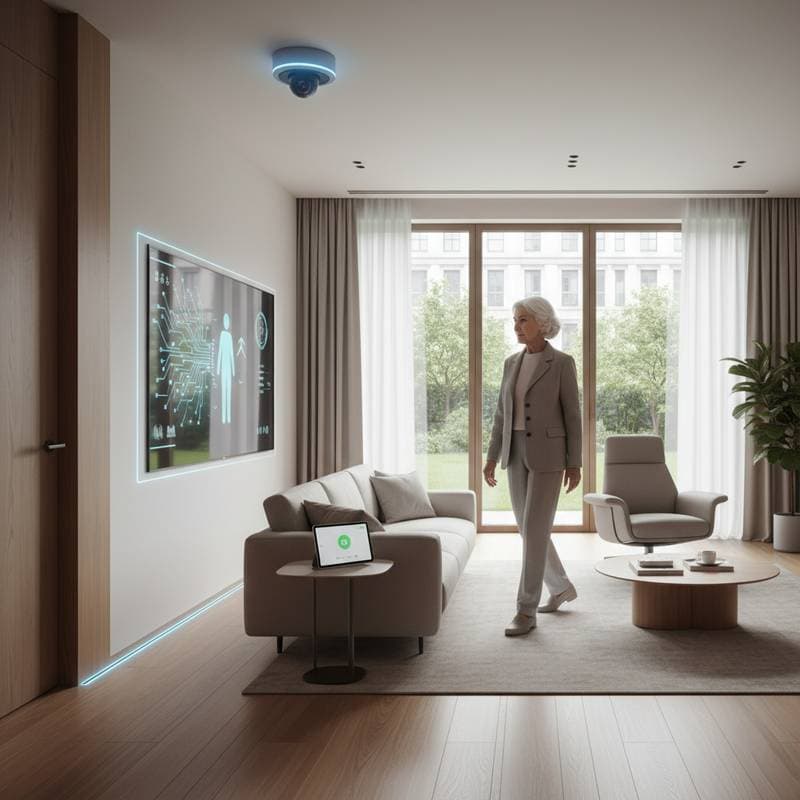
Consider ceiling-based sensors that track mobility without capturing personal images, thus upholding privacy. These units detect slowdowns in walking speed or increased pauses, then dispatch wellness prompts to designated contacts.
Smart flooring represents another innovation, analyzing foot pressure and distribution to spot asymmetries. Upon identifying potential issues, it activates soft visual signals or rest suggestions. Health-oriented wearables sync with central hubs to contribute comprehensive activity profiles, illustrating the shift toward cohesive networks.
The Human Side of Smart Home Care
Elder care technologies sometimes encounter resistance due to privacy fears or perceived complexity. Modern designs prioritize user-centered features, such as voice prompts delivered in comforting cadences and screen-based cues accessible to those with mobility or visual limitations. The emphasis remains on enabling self-reliance over constant observation.
Caregivers gain from enhanced visibility without exhaustive vigilance. A relative in a distant location receives pattern-based updates, while professionals oversee groups via centralized interfaces, addressing precursors to crises rather than crises themselves. Such tools complement, rather than supplant, personal involvement.
Overcoming Barriers to Adoption
Adoption hurdles include expense, data security worries, and installation demands. Solutions emerge through scalable setups compatible with current devices, alongside on-site data encryption that retains information within the household. Simplified connections via common Wi-Fi networks ease integration.
Building confidence requires addressing user hesitancy toward unfamiliar tools. Intuitive interfaces and educational resources encourage uptake; for instance, automatic environmental adjustments blend into routines more readily than frequent notifications. The objective centers on seamless incorporation, transforming potential aids into everyday allies.
The Future of Predictive Home Safety
Upcoming developments will incorporate broader contextual analysis, merging wearable biometrics, sensor environmental reads, and interactive furnishings. Envision seating that monitors alignment and encourages posture corrections, or adjustable bedding that eases sleep disruptions based on movement.
Aggregated data supports tailored medical strategies, shifting from sporadic evaluations to persistent tracking of real-life behaviors. This evolution connects domestic settings with professional health services more fluidly.
Interconnected platforms promise greater compatibility, allowing cross-brand devices to exchange safety metrics effortlessly. A unified fall prevention framework might synchronize with climate controls and audio systems to optimize wellness proactively.
Implementing Smart Fall Prevention
Families interested in these solutions should initiate with foundational elements, such as activity-responsive illumination or alert-capable audio units. Progress to advanced monitoring by incorporating gait-tracking tools, selecting options with localized storage and customizable privacy settings. Engage seniors in discussions to align choices with their preferences.
Healthcare providers might launch trials integrating sensors with expert oversight, refining protocols through observed outcomes. Each step advances toward residences that intuitively nurture occupants.
Living Safely and Independently
Intelligent prevention extends beyond incident avoidance to enriched daily experiences. Seniors equipped with reliable environments pursue activities like meal preparation or leisurely strolls with renewed assurance. Adaptive smart homes reshape aging at home, promoting vitality and security.