Embracing Off-Grid Living
Picture a morning where birdsong replaces the hum of an electricity meter. Coffee brews steadily, lights illuminate gently, and climate controls maintain ideal conditions. No utility bill arrives at month's end. For homeowners weary of escalating costs and erratic service, this vision of autonomy becomes achievable through a solar-powered off-grid smart home.
Full energy independence demands more than solar panels on a roof. It requires integrated clean energy production, smart storage solutions, and automated management to ensure seamless operation.
Core Principles of Energy Autonomy
At the center of an off-grid smart home stands its capacity to handle power independently. Solar panels generate electricity, batteries store surplus energy, and intelligent systems allocate resources efficiently. When implemented correctly, reliance on utilities ends entirely.
Balancing energy supply and demand presents the primary hurdle. Household consumption fluctuates; appliances like air conditioners or cooktops create surges. Smart oversight prevents shortages during low-sun periods or excess waste during peak production.
Components of the Intelligent Energy Network
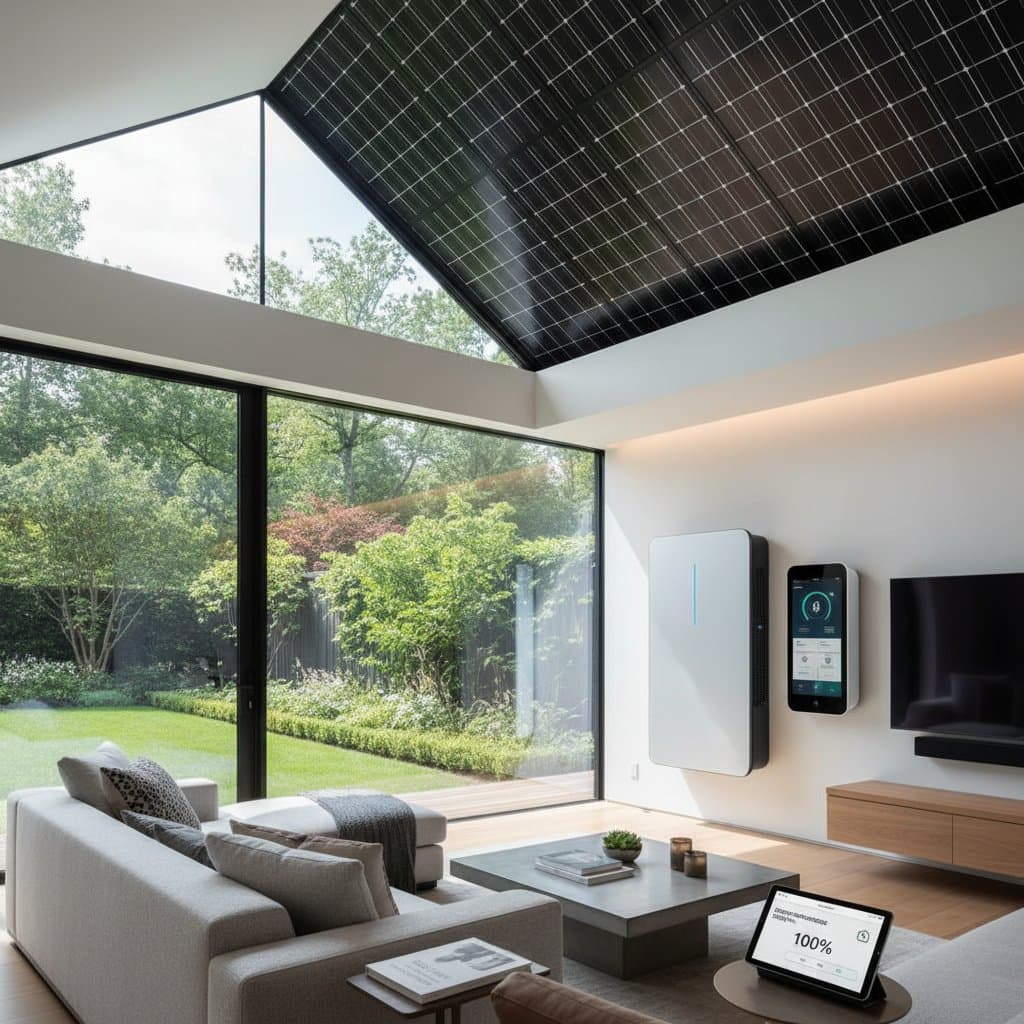
An effective off-grid system extends beyond panels and batteries. It forms a networked array of devices that analyze usage patterns and respond dynamically.
-
Solar Generation: Contemporary panels achieve superior sunlight conversion. Monocrystalline options from manufacturers such as Qcells or REC reach efficiencies of 22 percent. A 10-kilowatt setup suffices for a typical home when combined with adequate storage.
-
Battery Storage: Reliable storage underpins self-sufficiency. Lithium iron phosphate batteries prevail for their durability and safety profile. Homes often require 20 to 40 kilowatt-hours to cover nights or overcast days.
-
Inverters and Controllers: These devices regulate energy transfer from panels to batteries and loads. Hybrid models like the Sol-Ark 15K or SMA Sunny Boy Storage support battery charging, home powering, and optional grid export.
-
Monitoring and Automation Tools: Systems such as Sense Energy Monitor or Emporia Vue provide granular usage insights. Paired with smart thermostats, plugs, and lights, they optimize operations to align with solar output.
This integration creates a responsive home environment. Evening lighting adjusts to preserve reserves, while water heating activates during maximum solar yield. Daily routines proceed without interruption.
Selecting Appropriate Equipment
Equipment choices hinge on financial constraints, regional weather, and daily habits. Consider these tiers for guidance.
Entry-Level Configuration:
- Panels: Rich Solar 200W monocrystalline units at approximately $180 per panel.
- Battery: EcoFlow Delta Pro station for about $2,700, scalable to 3.6 kilowatt-hours.
- Inverter: Growatt 5k hybrid model at around $1,000.
Such an arrangement powers basics like lights, refrigerators, and devices in a compact dwelling.
Intermediate Configuration:
- Panels: REC Alpha Pure Series panels at roughly $320 each.
- Battery: Tesla Powerwall 2, installed for about $9,000 with 13.5 kilowatt-hours.
- Inverter: Enphase IQ8 microinverters at $150 per unit for enhanced reliability.
This setup accommodates a three-bedroom household with mindful consumption.
Advanced Configuration:
- Panels: SunPower Maxeon 6 units from $400 to $450 per panel, yielding 22.8 percent efficiency.
- Battery: LG Chem RESU 16H Prime at approximately $11,000 installed, delivering 16 kilowatt-hours with expansion options.
- Integration: Schneider Home or Savant systems for comprehensive control of lighting, heating, and power.
Premium installations support demanding appliances and extended outage resilience.
Essential Sizing Strategies
Homeowners often err by underestimating storage needs. Systems must anticipate increased demands from emerging technologies like electric vehicles and efficient heating.
Plan battery capacity for 25 percent above current usage. Expansion proves costlier post-installation, so initial foresight pays dividends.
Additionally, select inverters with slight oversizing. Operation at 70 to 80 percent load boosts longevity and reduces heat buildup in warmer regions.
Investment and Setup Essentials
Off-grid transitions represent significant commitments, with costs ranging from $25,000 to $70,000 based on scope and quality. Modest setups for cabins may total under $15,000, while sophisticated homes surpass $100,000.
Engage certified professionals for installation to safeguard electrical integrity and compliance. Faulty connections risk fires or equipment failure. Seek installers experienced in off-grid designs; many provide complimentary assessments.
Contractor platforms focused on renewables facilitate connections with qualified local specialists who navigate permitting processes.
Enhancing Comfort with Smart Integration
With core power infrastructure in place, intelligent controls elevate usability.
- Thermostats: Ecobee Smart Thermostat Premium models sync with solar peaks to precondition spaces efficiently.
- Plugs and Switches: TP-Link Kasa HS300 or Lutron Caseta units deactivate secondary loads when reserves dwindle.
- Central Hubs: Emporia Vue or Schneider controllers aggregate data for at-a-glance oversight of generation, usage, and storage.
These features harmonize living with natural energy cycles, minimizing manual intervention.
Key Planning Factors
Assess roof alignment, shade patterns, and available space prior to commitment. South-oriented surfaces maximize capture, though east-west placements supplement during transitional hours. Tilt mechanisms benefit flat roofs.
Review municipal regulations and codes. Battery installations may necessitate approvals for larger scales. Experts manage documentation while ensuring adherence to safety standards.
Upkeep remains straightforward: clean panels periodically, balance battery charges, and apply software updates. Remote alerts via built-in diagnostics simplify troubleshooting.
Experiencing Self-Sufficient Living
Operational systems reveal subtle efficiencies, from daylight-driven adjustments to unwavering reliability. Self-reliance fosters security against disruptions and price volatility.
Residents often report heightened tranquility from this control. Monthly battery checks and firmware maintenance sustain optimal function. Remote access suits frequent travelers.
Steps to Energy Autonomy
Accessible technology democratizes off-grid living for diverse households. Efficient panels, resilient batteries, and adaptive controls make sustainability attainable.
Audit existing consumption to define goals. Collaborate with installers for tailored designs. Refine automations to personal preferences, and embrace the assurance of a self-powered residence.
Frequently Asked Questions
What is the typical lifespan of off-grid solar components?
Panels endure 25 to 30 years, batteries 10 to 15 years, and inverters 10 years with proper care.
Can off-grid systems support electric vehicle charging?
Yes, with sufficient storage and panel capacity, though planning for added load is essential.
How do cloudy days affect performance?
Batteries buffer shortfalls; oversized systems minimize impacts, and hybrid options allow grid fallback if desired.
Are incentives available for off-grid installations?
Federal tax credits often apply to solar and storage; consult local programs for additional support.