Imagine Dinner Prepared by a Robot in Your Kitchen
You enter your kitchen after a demanding day, set down your belongings, and inhale the scent of flawlessly seared salmon. You did not prepare it. A robot chef, unaffected by the pressures of your schedule, managed every detail. From vegetable slicing to final plating, your kitchen operates as a personal dining establishment.
The concept of robotic meal preparation may seem advanced or indulgent. However, the technology has advanced steadily. Intelligent appliances and robotic mechanisms now produce professional-grade dishes in domestic settings, merging efficiency with culinary innovation. This combination delivers reliability, saves time, and maintains high-quality results.
Challenges in Home Cooking: Time, Expertise, and Daily Demands
Preparing meals offers satisfaction yet requires significant effort. Busy routines, ingredient preparation, and subsequent cleaning transform cooking into an obligation for many. Even simplified meal delivery services demand active involvement, such as dicing and monitoring progress. Individuals seeking refined outcomes without hands-on work face a persistent divide between desire and feasibility.
Robotic cooking solutions address these issues directly. These devices go beyond warming prepared foods. They perform precise cutting, mixing, flavoring, and presentation. The goal remains to preserve the pleasure of dining while removing tedious elements that deter participation.
Robotic Solutions: Precision in Smart Kitchens
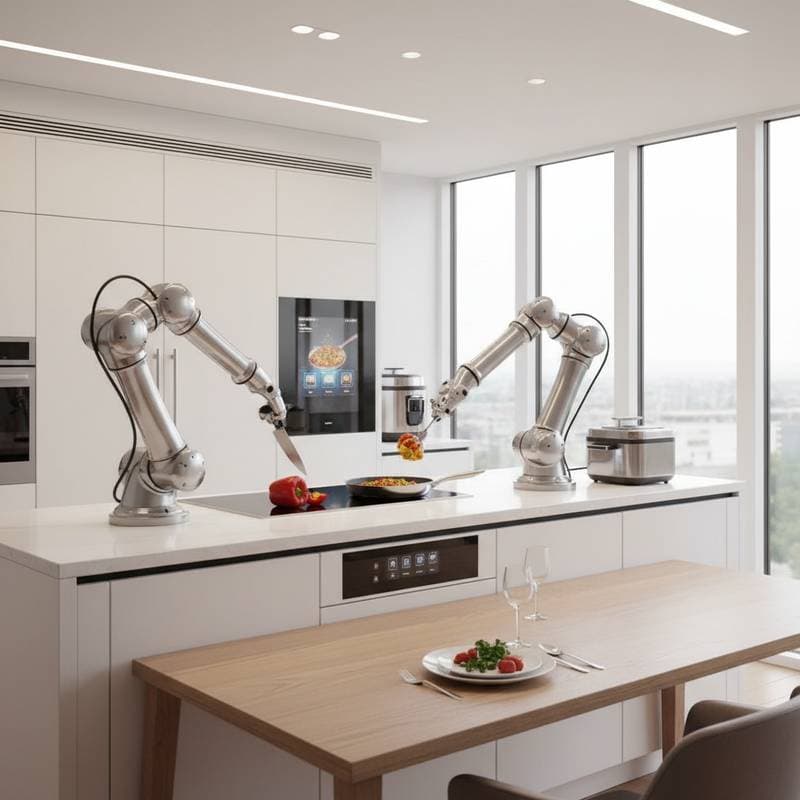
Contemporary robot chefs employ advanced sensors, interconnected devices, and articulated arms to manage almost all cooking phases. These platforms adapt to preferred dishes, accommodate nutritional requirements, and link with delivery services for automatic replenishment.
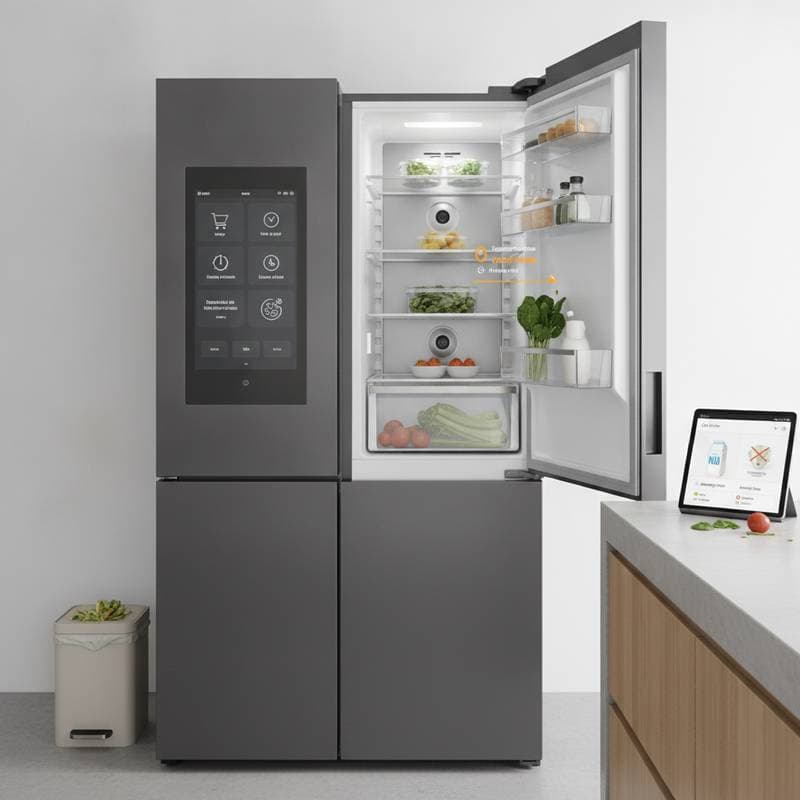
Consider issuing a command such as "Prepare chicken stir-fry for two." The system retrieves components from an intelligent refrigerator, follows established protocols, and applies exact heat levels. Personalization arises through adjustments for preferences, sensitivities, and serving sizes, creating a tailored experience.
Core Technology Behind Robotic Chefs
Robot chefs rely on three essential elements:
- Articulated Arms and Motion Systems: These replicate manual actions for operations like mixing, turning, or arranging food. Safety features enable operation alongside people, with immediate halting upon detecting barriers.
- Integrated Appliance Ecosystem: Cooking surfaces, heating units, and blending tools connect via a control center. They exchange data on temperature, duration, and status to achieve seamless coordination.
- Artificial Intelligence Recipe Processor and Imaging Sensors: Visual and detection tools monitor attributes such as consistency, hue, and completion. The platform refines performance through iterative learning from prior preparations.
An important detail for users involves the origins of the controlling software, often derived from factory automation. This industrial foundation guarantees that elements like sauces maintain ideal consistency without scorching.
Selecting Products Across Budget Levels
Robotic cooking options vary by investment level. Selection hinges on desired autonomy and integration.
Entry-Level: CookingPal Multo (Approximately $1,000)
This compact unit handles chopping, blending, steaming, and frying via preset instructions. It pairs with a mobile application for guidance and remote management. View it as an efficient assistant that streamlines preparation without dominating space.
Intermediate: Suvie 3.0 Smart Meal Station (Approximately $1,200)
This device oversees several cooking areas at once. Load ingredients in the morning for automated evening readiness. Features include timed execution and recipe integration, balancing ease with superior output.
High-End: Moley Robotic Kitchen (Approximately $300,000)
This comprehensive setup employs twin arms to emulate expert techniques. It executes extensive recipe repertoires, performs self-maintenance, and captures custom demonstrations. Though costly, it embodies advanced domestic culinary automation.
Integration plays a key role. Intermediate models connect with voice assistants like Alexa or Google Home. Advanced units use dedicated interfaces yet align with overall home networks for commands and planning.
Planning Installation and Layout
Assess your kitchen configuration prior to acquiring a robotic system. Extensive units like Moley demand overhead rails or sturdy storage modifications. Compact devices occupy standard surfaces but require adequate airflow and electrical outlets.
Professional assistance proves vital for intricate setups. Providers often conduct evaluations to confirm alignment with current utilities. Installation durations range from hours for basic models to days for embedded systems.
Safety standards demand attention. Systems incorporate obstacle recognition and rapid shutdown capabilities. Confirm adherence to local regulations for power and mechanics.
Unlocking Value Through Recipe Databases
Recipe collections represent a hidden strength of these technologies. Far from fixed references, they progress via updates that introduce new selections or refine methods based on collective input. Collaborations with culinary experts enable direct access to specialized formulas.
For creative users, seek systems supporting adaptable formats. This capability permits customization and evolution, aligning the device with shifting preferences.
Evaluating Costs and Long-Term Benefits
Upfront expenses may appear substantial, yet ongoing advantages merit consideration. Precise portioning curbs excess usage, efficient cycles lower utility bills, and reduced external ordering accumulates savings.
Begin with versatile units for cost-effective entry, then expand modularly. This strategy distributes expenditures over time.
Typical ranges include:
- Basic Intelligent Devices: $800 to $1,500
- Advanced Cooking Hubs: $2,000 to $5,000
- Complete Robotic Installations: $50,000 to $300,000
Subscriptions for maintenance and enhancements vary from minimal monthly fees to annual premiums for elite features.
Setup Timeline and Upkeep
Portable devices activate immediately upon unboxing. Extensive projects, particularly during renovations, involve extended preparation. Custom configurations span weeks from planning to testing.
Routine care entails sensor wiping, software refreshing, and part lubrication. Built-in cycles handle sanitization, with affordable replacements for wear items like cutters.
Opt for service agreements with premium purchases to secure inspections and coverage extensions.
Addressing Privacy and Network Integration
Internet connectivity raises security concerns. Prioritize vendors employing secure protocols and optional offline modes. Deactivate imaging when idle and apply patches promptly.
In connected homes, allocate resources to avoid disruptions. Isolated networks or extenders maintain performance across devices.
Everyday Strategies for Optimal Use
- Initiate with Basic Dishes: Familiarize yourself with timing and material responses.
- Select Quality Produce: Systems excel with uniform inputs.
- Maintain Order: Designate tools for specific functions.
- Employ Voice Commands: Enable effortless directives like "Prepare pasta for two" or "Set oven to 375 degrees."
- Utilize Timers: Align completion with your arrival.
Gradually, integrate these into routines, delegating basics to focus on enhancements.
Sustainability Through Automation
Precision control minimizes energy loss by regulating temperatures and preventing excess. Adaptive sensors match output to needs, reducing surplus.
Select models with efficient idle modes and renewable compatibility to support eco-friendly practices.
Experiencing Robotic Culinary Assistance
Beyond initial excitement, reliability endures. Consistent results simplify post-meal tasks. The process resembles professional service within familiar surroundings.
Households report improved nutrition. Controlled elements facilitate portion accuracy and restriction adherence, easing health management.
Steps to Implement Robotic Cooking
Define objectives first: full automation or targeted aid? This clarifies selections.
Investigate manufacturers and ecosystem fit. Attend demonstrations or consultations for hands-on insight. Engage specialists for elaborate projects to ensure secure, effective deployment.
Frequently Asked Questions
What is the simplest way to start with robotic cooking? Begin with a multi-function appliance like the CookingPal Multo, which requires minimal space and offers guided recipes.
How do these systems handle custom recipes? Premium models like Moley allow demonstration recording, while others support app-based imports for personalization.
Are robotic kitchens safe for families with children? Yes, they include sensors for immediate stops and comply with safety certifications to prevent accidents.
What maintenance is required? Regular cleaning and firmware updates suffice; self-cleaning features reduce effort, with parts easily replaceable.
Can they accommodate dietary needs? Absolutely, through adjustable settings for allergies, portions, and nutritional profiles in the AI engine.