Next-Gen Robot Vacuums: Self-Cleaning and Self-Refilling
Smart homes transition from novelty to essential components of daily life. Robot vacuums exemplify this progression, evolving from simple floor cleaners into comprehensive systems that operate with minimal intervention. The latest models empty their dustbins, wash mop pads, and refill water tanks autonomously. These advancements render cleaning processes nearly invisible in modern households.
The Emergence of Self-Maintaining Robot Vacuums
Earlier robot vacuums relieved users of manual sweeping tasks, but they demanded regular maintenance. Tasks such as emptying bins, clearing brush tangles, or replenishing water interrupted the user experience. Current designs eliminate these requirements through integrated docking stations that manage debris removal and component care.
Manufacturers respond to demands for genuine automation with features that prioritize ease. Research indicates that smart home users seek devices with low maintenance needs. These systems deliver superior cleaning alongside effortless operation.
1. Self-Emptying Dustbins
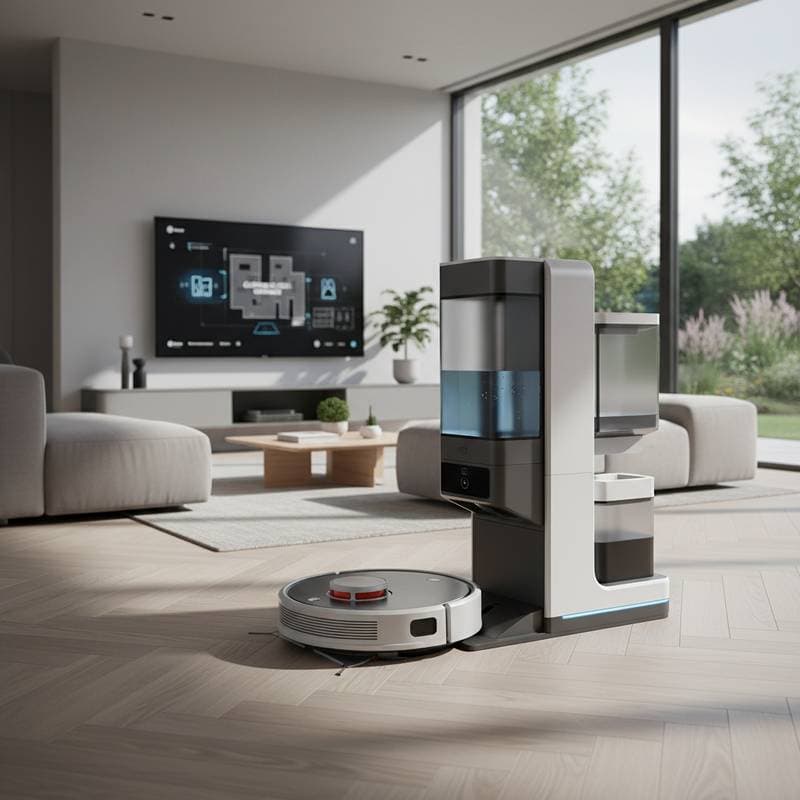
Self-emptying mechanisms mark a significant advancement in robot vacuum technology. Upon completing a cycle, the unit returns to its base, where a powerful suction transfers debris into a larger, disposable or reusable bag. This setup supports extended operation, often spanning weeks without user involvement.
Such functionality proves invaluable for households with high traffic or pets. Daily cleaning sessions proceed without concern for bin capacity. The Roborock S8 Pro Ultra exemplifies this capability, combining robust suction with an efficient auto-empty base that handles multiple runs seamlessly.
2. Self-Washing Mop Pads
Hybrid vacuum-mop units gain practicality through automated pad maintenance. After mopping, the robot docks for a cleaning cycle where the station scrubs the pads, rinses away soiled water, and applies warm air for drying. This process inhibits bacterial growth and odor development.
Reliable mop hygiene elevates mopping from occasional use to a consistent practice. Floors receive thorough sanitation with each session. Brands like Ecovacs and Dreame pioneer these stations, integrating washing and drying into a streamlined workflow.
3. Automatic Water Refills
Beyond washing, select models incorporate water management systems. The docking station maintains a reservoir that replenishes the robot's internal tank, enabling uninterrupted mopping across expansive areas. Dirty water drains separately to preserve cleanliness.
This feature addresses a key limitation in mopping automation. Users achieve continuous performance without manual refills. The Dreame L20 Ultra illustrates comprehensive automation, handling clean water supply, waste disposal, and detergent distribution in one efficient process.
4. Advanced Navigation and Zone Management
Effective navigation underpins the reliability of self-maintaining robots. Modern units employ LiDAR, cameras, and AI to map environments, detect obstacles, and customize cleaning intensity for different surfaces. They store room layouts and adapt to changes over time.
Precision ensures targeted cleaning, such as focusing on high-traffic zones or avoiding sensitive areas. Voice integration allows commands like scheduling spot cleans. iRobot models leverage visual recognition for object avoidance, while Roborock systems maintain accuracy in varied lighting conditions.
5. Seamless Smart Home Integration
Contemporary robot vacuums extend beyond standalone operation by connecting to broader ecosystems. They synchronize with devices like lights, climate controls, and security sensors via unified apps. Schedules adjust dynamically to user routines, and real-time alerts notify of maintenance needs.
This connectivity amplifies usability through contextual actions. For instance, cleaning initiates upon departure or pauses during detected activity. Pairing with air quality monitors triggers sessions as needed, fostering a coordinated home environment.
6. Energy Efficiency and Eco-Friendly Design
Sustainability complements automation in these devices. Efficient motors and optimized paths minimize power usage, while sensors modulate suction based on debris levels. Docking stations recycle rinse water and employ compostable bags for waste.
These elements align with preferences for environmentally responsible technology. Performance remains high without excess resource consumption. Manufacturers prioritize durable components to extend product life and reduce electronic waste.
7. Predictive Maintenance Through Machine Learning
Intelligence extends to self-monitoring in advanced models. Sensors track wear on filters, brushes, and pads, issuing timely replacement notifications. Algorithms analyze usage patterns to preemptively adjust operations and sustain efficiency.
This foresight prevents performance declines and extends longevity. Cleaning adapts to specific home layouts for optimal results. Over time, the robot refines its approach based on accumulated data.
Selecting and Implementing Your System
Self-maintaining robot vacuums redefine household hygiene by prioritizing user freedom. Evaluate options based on space size and needs: compact units suit apartments with basic emptying, while full-featured docks benefit larger properties.
Prices decline as technology matures, enhancing accessibility. Setup involves simple app pairing and initial mapping, leading to intuitive daily use. These devices integrate cleaning into the fabric of self-regulating homes, allowing focus on priorities beyond maintenance.