Robotics Integration Creates Self-Cleaning Smart Homes
Smart homes are moving from collections of connected devices to intelligent ecosystems that handle everyday chores without constant human input. The newest wave of this transformation is driven by robotics integration. Cleaning devices, sensors, and automation platforms now work together to create homes that clean themselves.
The Vision of a Self-Cleaning Home
A homeowner can wake to a space that has already vacuumed, mopped, sanitized surfaces, and emptied waste containers. These outcomes result from shared mapping data, environmental sensors, and adaptive software that direct robots to act at the right moments. Convenience and time savings rank as leading reasons consumers adopt smart home technology, and automated cleaning directly addresses one of the least popular household tasks.
Coordinated Cleaning Ecosystems
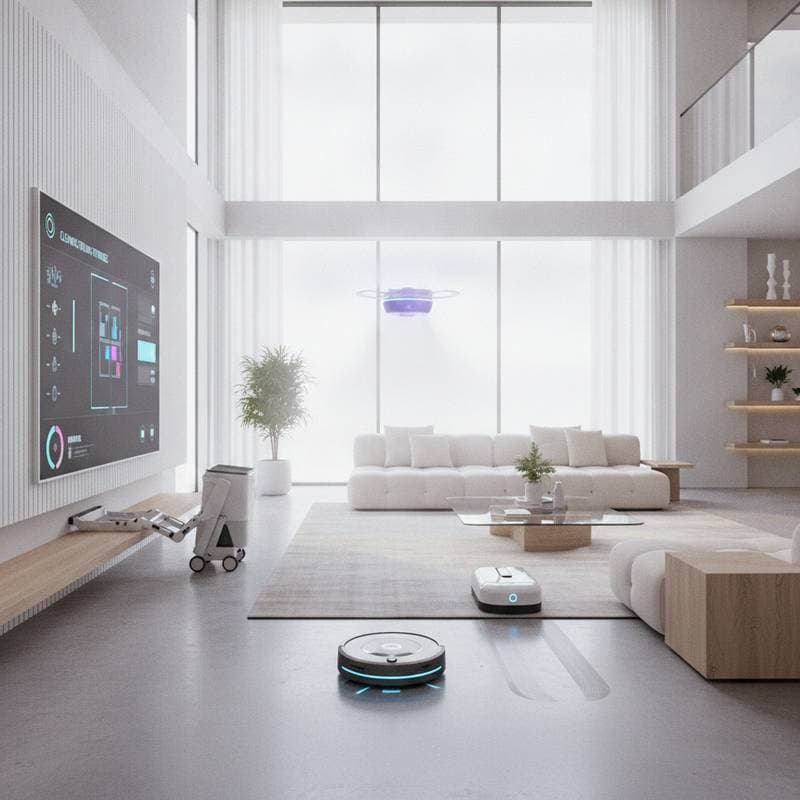
Early robotic vacuums operated alone with random navigation. Current platforms allow vacuums, mops, and air purifiers to exchange information through a common hub. A vacuum can signal a mop to treat a wet area, and an air purifier can increase filtration once dust is disturbed. Systems from iRobot and Roborock demonstrate this teamwork under unified voice or app control.
Robotic Maintenance Beyond Floors
Window cleaning robots reach exterior glass without ladders. Pool robots maintain water clarity on a schedule. Compact robotic arms rinse dishes before loading dishwashers, and small drones clear vents. Once linked to a central hub, these units stagger their cycles to conserve power and avoid conflicts. Humidity and air quality readings further trigger activation only when conditions require it.
Smart Waste Management
Automatic bins seal liners, control odors, and report fill levels to the home system. A transport robot can then move full bags outdoors. Sorting models separate recyclables from compost and landfill waste at the point of disposal, which reduces contamination and supports consistent household recycling habits.
Learning Through Data and Adaptation
Sensors record foot traffic, pet movement, and spill patterns. The robots adjust routes and timing after several days of observation. A unit may learn to focus on the dining area after evening meals and to pause during video calls. Households that connect these devices to scheduling apps report smoother alignment with family routines.
The Rise of Self-Maintaining Robots
Base stations empty dust bins, wash mop pads, and refill water tanks without user intervention. Modular docks now service several robots at once across multiple floors. These features shift daily oversight from active participation to occasional supervision.
Integration Through Unified Platforms
Standards such as Matter enable devices from separate manufacturers to exchange commands. A vacuum from one brand can activate an air purifier from another while lights dim during operation. Consumers increasingly expect this level of compatibility rather than separate apps for each product.
Challenges and Consumer Realities
High equipment costs and occasional communication gaps remain practical limits. Continuous camera use also raises privacy questions that manufacturers address through local processing and stronger encryption. Filters still require periodic replacement, yet the reduction in daily cleaning effort outweighs these remaining tasks for most users.
Daily Advantages of Integrated Robotics
Residents experience fewer visible messes, reduced pet hair accumulation, and consistently fresh air. Parents spend less time chasing spills. Professionals return to spaces that require no immediate attention. As compatibility improves, the same systems will anticipate needs and adjust without manual prompts.