Imagine Waking Up Truly Rested
You open your eyes to soft, amber light that mimics a sunrise. The air feels cool yet comfortable, and a favorite playlist hums gently in the background. As you swing your legs out of bed, the floor warms beneath your feet, and the lights brighten gradually to support a natural wake-up process. This scene describes your own home, orchestrated by whole-home smart technology designed to enhance sleep quality.
Many individuals struggle to achieve restorative sleep despite owning high-quality mattresses and blackout curtains. The issue frequently stems from surrounding environmental factors such as light, temperature, noise, and their timing. Smart home technology provides precise control over these elements, combining comfort with scientific principles to foster deeper rest.
The Opportunity: Turning Your House Into a Sleep Ally
Better sleep emerges not from isolated devices but from environmental synchronization. The human body operates on a circadian rhythm, an internal cycle that regulates alertness and fatigue. Disruptions occur when homes counteract this rhythm through evening exposure to bright blue light or fluctuating temperatures, which degrade sleep quality.
Smart lighting, integrated climate systems, and unobtrusive trackers address these imbalances. Such technologies align the home environment with bodily needs, yielding improved sleep efficiency and smoother morning transitions. The outcome extends beyond increased sleep duration to enhanced overall well-being.
The Big Picture: A Whole-Home Sleep Ecosystem
Sleep technology often evokes images of wearable devices or standalone white noise machines, which offer value but represent only part of the solution. The evolving landscape focuses on interconnected systems that extend influence across multiple rooms, initiating sleep preparation well before bedtime.
This ecosystem coordinates various components for cohesive operation:
- Smart lighting transitions color temperatures throughout the evening, moving from cool daylight shades to warm amber tones that signal relaxation.
- Climate control systems reduce room temperature as bedtime nears and introduce a slight increase near wake-up time.
- Smart shades seal out external light in alignment with sunrise and sunset patterns.
- Sleep tracking sensors monitor patterns discreetly, without requiring wearables, and refine environmental adjustments over time.
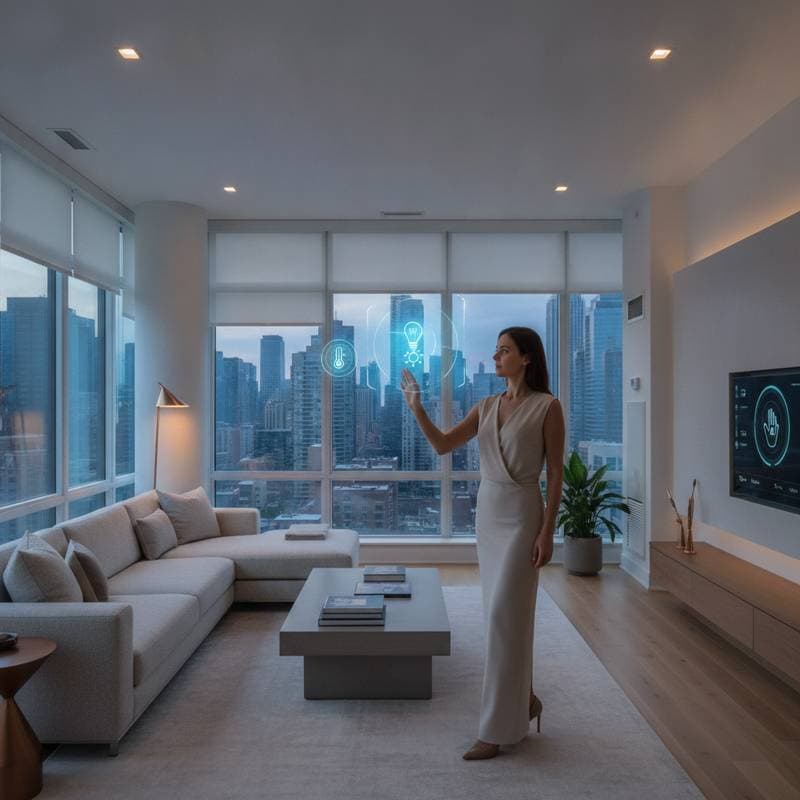
- Whole-home integration links these features via a central platform, ensuring fluid progression through evening activities.
The system operates intuitively, learning user habits without constant manual input. This seamless responsiveness creates an environment that feels supportive rather than intrusive.
Step-by-Step: Building a Smarter Sleep Environment
1. Start With Smart Lighting
Light exerts the most profound effect on the circadian rhythm. Daytime exposure to bright, cool-toned illumination promotes alertness, while evening light should adopt softer, warmer hues to encourage winding down.
Budget option: Wyze Bulb Color costs about $15 per bulb and provides app-controlled tunable white and color settings, suitable for outfitting a full bedroom affordably.
Mid-range choice: Philips Hue White Ambiance bulbs, priced at roughly $25 each, require a hub for advanced scheduling and seamless color temperature shifts.
Premium selection: Ketra smart lighting begins at around $150 per bulb, featuring sophisticated circadian algorithms and compatibility with Lutron systems for comprehensive home control.
For optimal results with smart bulbs, rely on app-based dimming rather than traditional wall switches, which may cause electronic interference and flickering.
2. Calibrate Temperature and Air Quality
Room temperature directly affects sleep onset and maintenance. Ideal conditions involve a gradual pre-bedtime cooling followed by a modest morning warmup, aligning with natural body temperature fluctuations.
Budget option: The Amazon Smart Thermostat, at approximately $70, integrates with Alexa to automate cooling routines.
Mid-range choice: Ecobee Smart Thermostat Premium, around $250, incorporates air quality monitoring and remote sensors to address uneven room temperatures.
Premium selection: Nest Learning Thermostat, also about $250, learns household patterns and connects with Google Home for automated adjustments.
In arid regions, pair these with a smart humidifier or air purifier such as the Levoit Core 600S, priced near $150, which automatically adjusts based on particulate detection to ensure clean, quiet air.
3. Optimize Sound and Silence
Ambient noise subtly influences sleep depth, with interruptions like barking dogs or passing vehicles fragmenting rest cycles. Intelligent audio solutions mask such disturbances while preserving a calming atmosphere.
Budget option: Anker Soundcore Sleep A10 earbuds, at about $130, deliver soothing soundscapes that permit awareness of critical alerts such as alarms.
Mid-range choice: Hatch Restore 2, roughly $200, merges sunrise simulation with adaptive audio and light features to guide entry and exit from sleep.
Premium selection: Sonos Era 100 speakers, around $250 each, support stereo configurations for enveloping relaxation audio or synchronized morning sounds.
Enhance functionality by linking smart speakers to motion sensors: audio activates upon entering the bedroom and pauses upon departure, maintaining tranquility effortlessly.
4. Bring in Smart Shades or Curtains
External light sources, including streetlights or dawn rays, can interrupt circadian alignment. Motorized window treatments enable precise management of light ingress without manual effort.
Budget option: SwitchBot Curtain Rod 2, approximately $100 per window, adapts existing drapes and supports Alexa, Google Home, and Apple HomeKit.
Mid-range choice: IKEA Fyrtur smart blinds, near $150 per window, provide blackout functionality with app or remote operation.
Premium selection: Lutron Serena Shades, starting at about $500 per window, operate silently and synchronize with lighting for complete circadian management.
Program shades to lower at dusk, establishing a visual prompt that aids mental preparation for sleep.
5. Integrate Sleep Tracking and Automation
Non-invasive trackers now capture sleep metrics like breathing, movement, and heart rate without physical attachments. These devices inform environmental tweaks to optimize rest.
Budget option: Withings Sleep Analyzer, around $130, positions under the mattress and interfaces with smart platforms to initiate changes in lighting or climate.
Mid-range choice: Google Nest Hub 2nd Gen, priced at about $100, employs radar technology for contactless sleep monitoring.
Premium selection: Eight Sleep Pod Cover, approximately $2,000, functions as a mattress overlay that independently regulates temperature per side using biometric insights.
Within an integrated setup, trackers automate responses such as light dimming or temperature reduction near bedtime. This background operation evolves with user patterns, requiring minimal ongoing configuration.
Practical Considerations: Budget, Setup, and Compatibility
Assemble a sleep-enhancing system incrementally, beginning with core elements like lighting and climate control before broader expansion.
Budget planning: Entry-level configurations with bulbs and a thermostat total under $300. Comprehensive installations encompassing lighting, shades, tracking, and audio span $1,000 to $4,000, scaled to room count.
Setup timeline: Lighting and thermostats install in under an hour; shades and integrations might necessitate professional help.
Compatibility: Select devices aligned to unified platforms such as Apple HomeKit, Google Home, Amazon Alexa, or Samsung SmartThings. The Matter protocol facilitates interoperability across brands.
Safety and maintenance: Engage licensed electricians for wired installations and HVAC specialists for thermostat compatibility. Perform routine firmware updates to uphold security and performance.
The Science Behind Circadian Lighting and Sleep Tech
Light cues profoundly regulate the body's internal clock. Morning blue-enriched light inhibits melatonin production to foster wakefulness, whereas evening warm light permits melatonin elevation for sleep induction. Circadian lighting indoors emulates these dynamics, countering irregular artificial exposures common in contemporary settings.
Temperature variations prove equally vital. A pre-sleep core temperature decline benefits from a cooler room, while a morning uptick prompts arousal. Synchronizing these factors stabilizes sleep architecture and elevates rest quality.
Early users report superior outcomes from pairing circadian lighting with HVAC automation. Initiate temperature reductions about an hour prior to light dimming to amplify natural rhythm reinforcement.
Living With Your Smarter Sleep System
After implementation, the system integrates seamlessly into daily life, eliminating manual adjustments for lights or climate. Evenings unfold with greater calm, and mornings gain predictability. Sleep analytics over time demonstrate gains in duration, depth, and recuperation.
Intermediate users benefit from customizing automation rules to accommodate shifting schedules, travel, or seasonal light variations. Advanced setups link to health apps like Apple Health or Google Fit for long-term trend analysis.
Novices should commence in a single room to observe physiological responses before scaling. The objective centers on fostering biological-environmental harmony, not gadget accumulation.
Implementing Your Sleep Optimization Plan
Select initial components based on personal sleep challenges, such as light sensitivity or temperature discomfort. Test automations for a week to refine settings, ensuring the system enhances rather than complicates routines. Track progress through built-in metrics to confirm sustained improvements in rest and daily energy levels.