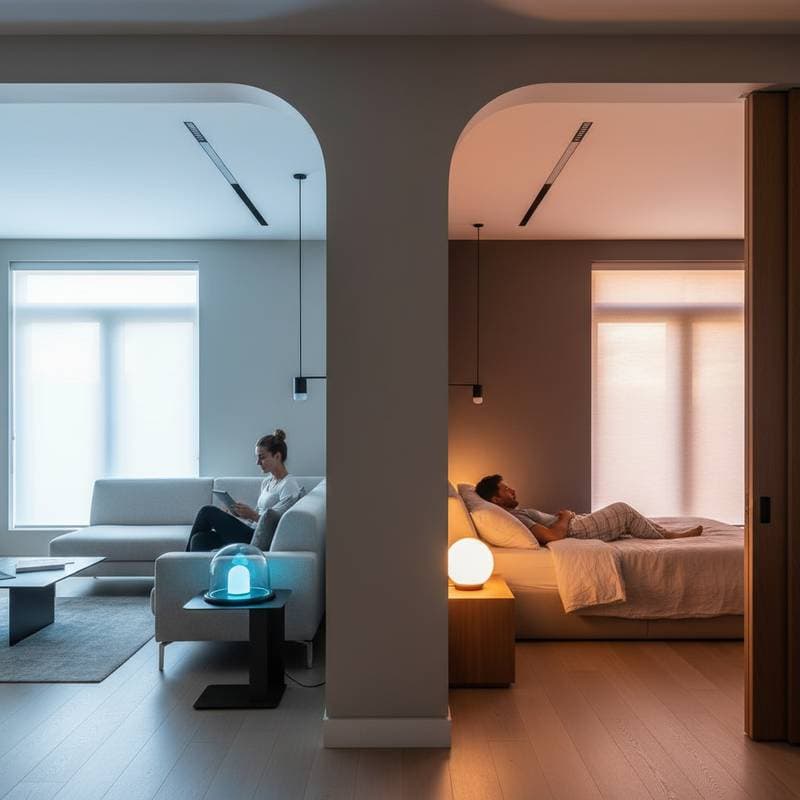
Whole-Home Circadian Lighting Ends Sleep Struggles
Imagine waking up to soft golden light that mimics sunrise, then transitioning to warm amber tones in the evening that prepare your mind for rest. This setup eliminates harsh overhead glare and blue-tinted bulbs that disrupt alertness. Whole-home circadian lighting reshapes daily sleep, focus, and overall well-being through technology that aligns artificial light with natural rhythms.
The Everyday Sleep Struggle
That persistent alertness when you enter bed, despite exhaustion, often stems from environmental factors. Screens, bright kitchen fixtures, and bathroom bulbs simulating daylight signal your body to remain awake. Your circadian rhythm, the internal clock governing sleep and wakefulness, relies on precise light cues for regulation.
Blackout curtains and supplements address symptoms but ignore the core issue: mismatched artificial lighting. Circadian systems correct this by dynamically adjusting color temperature and intensity to emulate natural daylight cycles throughout the home.
How Circadian Lighting Changes Everything
Static lighting fails to support varying daily needs, but circadian systems shift tones progressively. Mornings feature cooler blues for energy and alertness, while evenings deliver warmer hues to promote relaxation. These adjustments track local sunrise and sunset, automating changes without manual intervention.
This integration of wellness and smart home features extends beyond basic control. Users experience quicker sleep onset, refreshed mornings, and sustained daytime concentration as the system nurtures biological rhythms.
A Step-by-Step Guide to Building a Whole-Home Circadian Lighting System
1. Select a smart lighting platform
Opt for systems with tunable white or full-color capabilities. Philips Hue White and Color Ambiance bulbs, priced at $49 each, offer an accessible starting point compatible with major voice assistants. Nanoleaf Essentials A19 bulbs at $19 per unit, combined with an Apple HomePod mini as a hub, provide reliable mid-tier automation. For high-end options, Ketra systems begin at $150 per fixture and deliver precise, professional-grade circadian emulation suitable for wellness-oriented residences.
2. Define lighting zones
Divide your space based on usage patterns: bedroom for rest, kitchen for tasks, office for productivity, and common areas for transition. Assign schedules accordingly, such as cool illumination in the bedroom at 7 a.m. shifting to warm tones by 9 p.m., with sustained brightness in the kitchen during preparation times.
3. Implement automations
Configure app-based scenes for wake-up and wind-down routines. Leverage built-in circadian presets that respond to time-of-day data. Integrate with voice controls, motion detectors, or automated shades to create a cohesive environmental response.
4. Refine settings
Monitor performance over one to two weeks and tweak intensity or timing as needed. Some users favor gradual evening fades or intensified morning starts. Consistency in daily cues maximizes the physiological advantages.
5. Scale incrementally
Begin with high-impact areas like the bedroom and living room if budget or wiring limits initial scope. Modular designs allow room-by-room expansion without overhauling the entire setup.
The Role of Color Rendering in Circadian Systems
Color Rendering Index (CRI) evaluates how faithfully bulbs reproduce natural hues, a detail often overlooked. Ratings above 90 ensure comfortable perception, minimizing eye strain and enhancing mood stability. Lower-rated options around 80 can distort colors subtly, diminishing the system's effectiveness; select high-CRI products for optimal results.
Key Considerations for Implementation
Budget
Basic configurations with eight bulbs and a hub range from $300 to $600. Comprehensive installations using Ketra or Lutron-compatible fixtures may surpass $5,000, yielding seamless, architectural integration.
Timeline
Self-installation requires a weekend for setup and configuration. Custom wired systems demand weeks, especially when involving electricians or interior specialists.
Installation and Safety
Disconnect power sources prior to any fixture changes. Engage certified electricians for extensive projects to handle low-voltage requirements and avoid network overloads.
Compatibility
Verify alignment with existing hubs or assistants. Philips Hue supports Alexa, Google Assistant, and Apple HomeKit effortlessly, while Lutron Caséta accommodates diverse smart ecosystems.
Broader Impacts of Circadian Lighting
Improved sleep represents the primary gain, yet effects ripple through daily life. Morning exposures elevate alertness and hormonal equilibrium. Afternoon settings alleviate visual fatigue for remote workers, and evening warmth fosters calm while enhancing meal aesthetics.
Families observe children settling faster with programmed dimming. Seniors benefit from reduced disorientation and steadier energy. This approach sustains well-being across all hours.
Synergies with Additional Smart Technologies
Circadian lighting amplifies when paired with complementary devices.
- Automated shades: Lutron Serena shades at $599 per window synchronize with light scenes to replicate natural daylight progression.
- Thermostats: Align schedules with units like the Ecobee Smart Thermostat Premium ($249) to lower temperatures alongside dimming.
- Voice controls: Activate routines via phrases such as "Good morning" or "Good night" to orchestrate multi-room adjustments.
Navigating Blue Light in Circadian Design
Cool white light aids morning arousal through targeted blue wavelengths, but evening exposure disrupts rest. Effective systems schedule these elements precisely, avoiding prolonged daytime simulations. Automation ensures appropriate timing, preventing inadvertent rhythm interference.
Sustained Advantages and Efficiency
Post-installation, the system operates autonomously, fostering habits like diminished caffeine needs and fewer lethargic starts. Gradual shifts reduce headaches and fatigue while promoting emotional balance.
LED efficiency shines through: bulbs endure up to 25,000 hours on minimal power, with dimming prolonging longevity and cutting costs.
Steps to Get Started
Initiate in a single room to gauge sleep and energy shifts. The natural alignment soon motivates full-home adoption. This investment elevates daily comfort through thoughtful light management.
Frequently Asked Questions
Do I need special fixtures for circadian lighting?
Standard sockets accommodate many tunable bulbs. Built-in or recessed options may require compatible replacements.
How quickly do benefits appear?
Most users notice sleep improvements within a week of consistent use, with focus gains following shortly.
Can circadian lighting integrate with existing smart homes?
Yes, platforms like Philips Hue and Lutron connect to major ecosystems for broad compatibility.