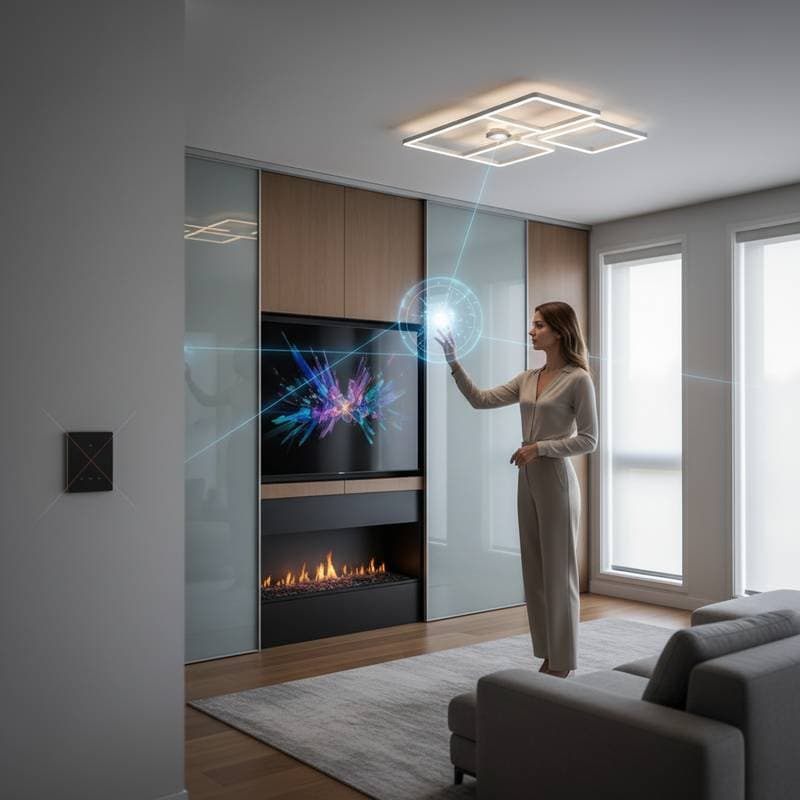
Why Gesture Control Will Replace Smart Switches by 2026
Smart homes have evolved from optional luxuries to essential components of modern living. Voice commands and mobile applications, once groundbreaking, now integrate seamlessly into everyday activities. Gesture control represents the subsequent advancement in this progression. This technology, initially prominent in gaming and prototypes, emerges as the primary interface for interconnected residences. It enables environments that react intuitively to natural movements, eliminating the need for physical switches or screens.
The transition to touchless operations extends beyond mere ease. It fosters hygienic, responsive spaces where devices operate unobtrusively. With advancements in sensor precision, affordability, and ecosystem compatibility, gesture control positions itself to supplant conventional smart switches as the central command mechanism in contemporary households.
1. Transitioning from Voice to Motion as the Primary Interface
Voice activation transformed smart homes by eliminating reliance on tangible controls. However, it encounters challenges in environments with background noise, among multiple occupants, or for rapid modifications. Gesture control addresses these issues through silent, accurate responses. A brief hand gesture suffices to lower illumination, modify temperature settings, or halt audio playback.
Such interactions align with innate human behaviors. Gesturing to draw curtains or extending a hand to deactivate lights requires no spoken words or direct contact. It elevates control to an unconscious level. Innovations from firms like Ultraleap and Sony showcase sensors capable of detecting fine hand motions with high fidelity. These developments facilitate integration into expansive smart home networks.
2. Prioritizing Hygiene in Touchless Environments
Increased emphasis on sanitation propels the adoption of contact-free methods. Conventional switches accumulate contaminants, particularly in high-traffic areas such as kitchens and restrooms. Gesture control circumvents this by activating functions through airborne motions, preserving surface sterility and curbing microbial transmission.
This advantage appeals to those pursuing healthier domestic settings. While many illumination systems incorporate basic motion detection, gesture variants provide refined differentiation. They discern intentional directives from incidental passage. This level of discernment elevates gesture control from gimmick to essential enhancement, supporting wellness-oriented lifestyles.
3. Unifying Device Ecosystems for Cohesive Control
A common challenge in smart homes involves disjointed device operations. Illumination, climate controls, audio equipment, and security measures frequently function in isolation. Gesture control bridges these divides via unified recognition frameworks. Users execute a single motion, prompting synchronized responses from various appliances.
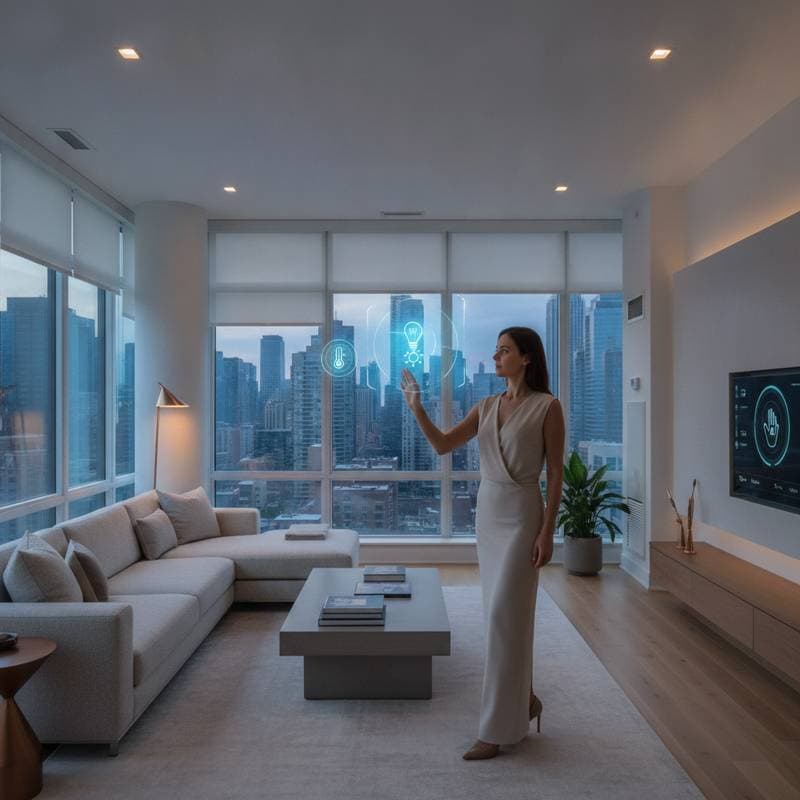
Consider elevating both hands to initiate an entertainment sequence: illumination fades, window coverings descend, and video displays activate preferred content. Initiatives aligned with standards like Matter advance cross-brand gesture compatibility. A universal gesture vocabulary emerges, governing entire residences irrespective of origins. This cohesion fulfills long-standing demands for streamlined management.
4. Leveraging Adaptive Learning for Tailored Interactions
Contemporary gesture systems incorporate machine learning to evolve with users. They identify individuals, catalog preferred motions, and calibrate based on situational factors. One household member might favor minimal gestures, while another employs expansive ones. The system refines its performance to accommodate these variations.
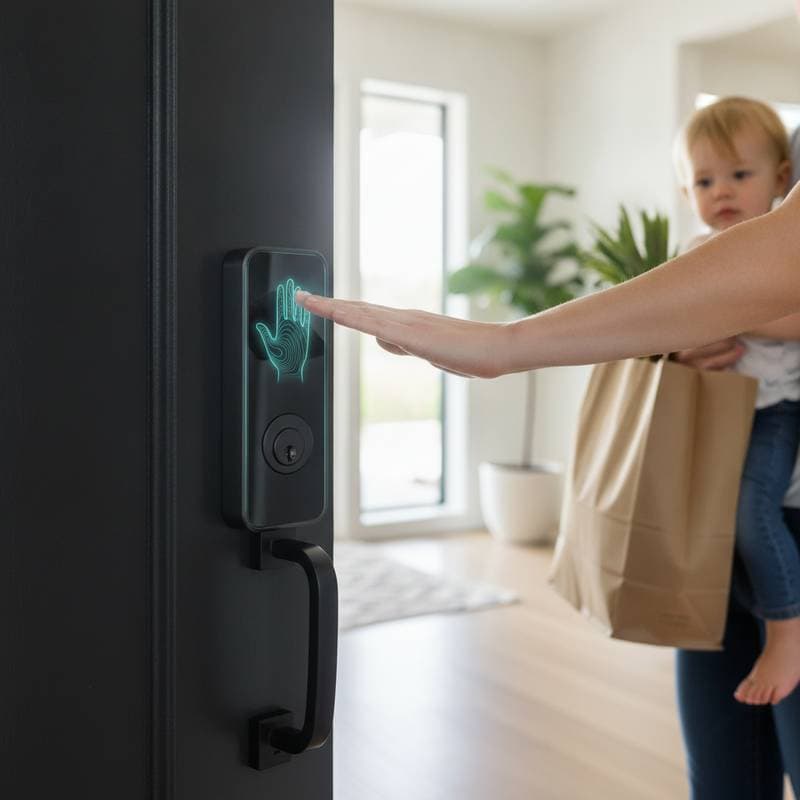
This customization streamlines usage. Picture a subtle wave while handling packages, triggering partial kitchen lighting attuned to routine patterns. Gesture control advances from reactive to anticipatory functionality. It interprets intentions proactively. Projections indicate that enhanced algorithms will deliver virtually flawless precision, rendering physical controls obsolete.
5. Enhancing Energy Management with Contextual Intelligence
Beyond user comfort, gesture control promotes resource conservation. Integrated sensors monitor occupancy and deliberate actions to optimize consumption. Paired with intelligent lighting and climate systems, residences modulate output according to actual needs.
A hallway activation via wave conserves power by deactivating after detecting inactivity. This awareness curtails excess while upholding usability. Homes gain autonomy in self-regulation. As environmental concerns shape choices, gesture control emerges as a practical and principled alternative to legacy switches.
6. Promoting Accessibility Through Inclusive Interfaces
Gesture control expands opportunities for diverse users. Those facing mobility or verbal constraints benefit from straightforward motions like pointing or wrist turns. These replace intricate verbal instructions or digital navigation, broadening smart home accessibility.
Designers prioritize adaptable systems suited to varying capabilities. Customizable gesture libraries allow personal definitions of controls. This adaptability accommodates all residents, extending beyond initial adopters to universal application.
7. Extending Functionality via Wearable Technologies
Gesture capabilities transcend stationary installations through wearables like rings, timepieces, and bands. These capture subtle finger and hand shifts, converting them to directives throughout the space.
A finger snap might regulate sound levels remotely, or a wrist twist alter ambiance schemes. This mobility surpasses fixed switch limitations. It supports control in varied settings without acoustic dependencies. Wearable and ambient sensor fusion yields pervasive, contactless operation.
8. Safeguarding Privacy in Connected Systems
Connectivity introduces data handling concerns, particularly with visual or radar-based gesture detection. Solutions emphasize local processing to retain information on-device, avoiding cloud transmission.
This method upholds performance without compromising confidentiality. Heightened user vigilance demands clear policies and self-contained operations. Providers emphasizing data autonomy will spearhead market confidence. Secure implementations enable gesture control's reliable integration into routines.
9. Phasing Out Traditional Smart Switches
Early automation relied on smart switches for remote and programmed functions. They enhanced efficiency yet demanded tactile or app-based engagement. Gesture control eradicates this intermediary, streamlining access with fluid motion.
Switches may persist in specialized roles or as redundancies. Declining sensor expenses and simplified retrofits accelerate the shift. Homeowners increasingly select gestures for their directness and sophistication, paralleling the obsolescence of wired telephony.
10. Examining Pioneering Implementations
Industry leaders integrate gestures into viable offerings. Automation providers deploy wave-responsive panels for lighting. Interactive screens support aerial navigation and pauses. Automotive sectors apply them for hands-free adjustments, maintaining focus on primary tasks.
These instances validate feasibility and desirability, guiding residential expansion. Widespread adoption fosters standardization, akin to mobile touch uniformity. Consistent protocols diminish switch dependency, establishing gestures as normative.
Integrating Gestures to Optimize Home Automation
The evolution from switches to gestures aligns with demands for effortless, healthful, and eco-conscious living. It harmonizes technology with instinctive actions, minimizing overt intervention. Homeowners gain liberated, responsive spaces that anticipate needs, marking a definitive step toward intuitive connectivity.