Smart Room-by-Room Climate Control Saves $800 Yearly
Smart homes are moving from novelty to necessity. One of the most impactful upgrades for comfort and savings is smart climate control. Heating and cooling often account for nearly half of the total utility bill. Most systems still treat the entire house as a single zone. This approach ignores whether anyone occupies each room. Room-by-room climate control changes that pattern by combining smart thermostats, sensors, and zoning technology.
The promise of saving up to $800 annually brings more than lower bills. It also creates a more comfortable environment, supports sustainability goals, and simplifies temperature management.
Why Traditional Climate Control Falls Short
A single thermostat controls the entire heating and cooling system in most homes. That setup may keep the living room comfortable yet leave bedrooms too cold or upstairs spaces too warm. Homes are dynamic spaces. Rooms heat, cool, and retain energy differently based on sunlight, insulation, and occupancy. Traditional systems cannot adapt to those variations.
Homeowners often compensate by raising the heat or increasing air conditioning output. This response only raises costs. The inefficiency persisted for decades because better options were unavailable or too complex. Smart thermostats and multi-zone HVAC systems now bring intelligence and precision to every room.
How Room-by-Room Control Works
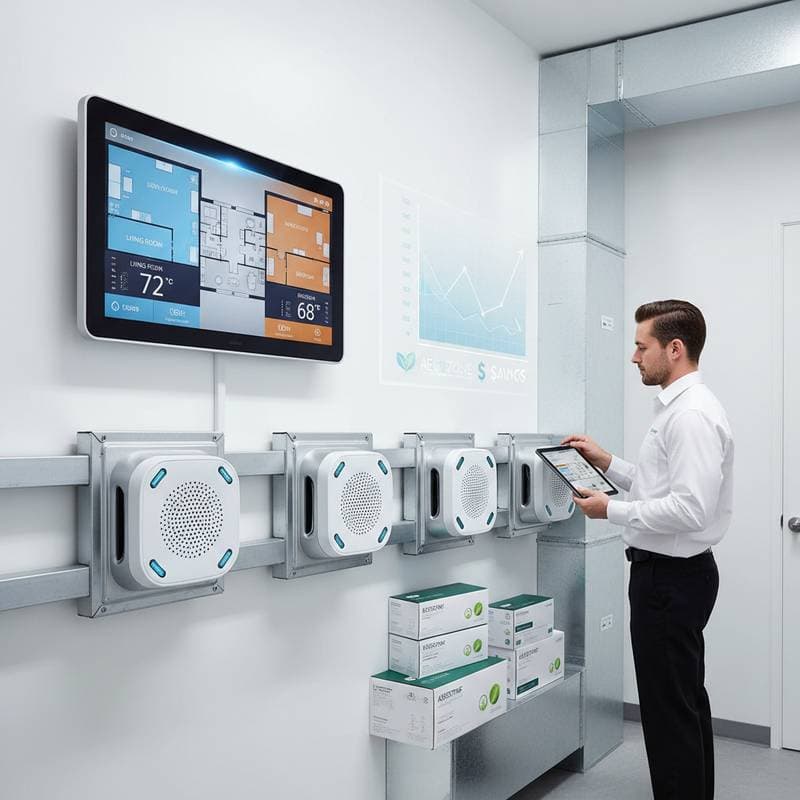
Room-by-room climate control uses smart thermostats, wireless sensors, and automated vents. Each room or zone becomes an independent environment. The system responds to occupancy, time of day, and user preferences. It learns patterns and adapts automatically.
The process follows these steps:
- Small battery-powered sensors track temperature, humidity, and motion in each room.
- Automated vents or dampers adjust airflow based on sensor data.
- A central controller interprets the data, predicts usage patterns, and manages HVAC output.
- Users view room temperatures, set schedules, or create comfort zones through a smartphone app or voice assistant.
This method directs energy only where it provides benefit. The outcome includes lower energy use, longer HVAC lifespan, and consistent comfort throughout the home.
The Financial Case for Annual Savings
Room-by-room control often cuts energy use by 20 to 30 percent. For many households that reduction equals as much as $800 in annual savings. Smart thermostats alone reduce consumption by around 10 to 12 percent. Adding zoning technology and occupancy-based adjustments increases those benefits further.
When sensors detect no activity in a guest bedroom or home office, the system reduces airflow to those spaces. When movement occurs in the living room or kitchen, airflow increases. The HVAC system therefore runs less frequently and more efficiently.
Comfort and Customization
Energy savings form only part of the value. Each family member can maintain an ideal temperature. The system learns preferences over time and creates profiles that adjust automatically. A bathroom can warm before morning use while other rooms stay cooler. Living areas can reach a comfortable temperature before guests arrive. These capabilities now come through devices that install easily and connect wirelessly.
Integration with Smart Home Systems
Room-by-room climate control connects with lighting, security, and voice assistants. When the home enters away mode, the system reduces heating or cooling in unused rooms. When motion sensors register activity, temperature settings adjust to match occupancy. Devices that support interoperability standards allow mixing of brands without compatibility concerns.
Practical Examples of Smart Zoning
Several products demonstrate the approach. Ecobee thermostats use room sensors to prioritize occupied spaces. Flair smart vents retrofit existing HVAC systems and balance airflow automatically. Keen Home systems combine vent automation with temperature sensors. Tado controls add scheduling and geofencing for mini-split or window units. Each option shows that personalized climate control no longer requires major renovations.
Environmental Benefits
Reduced energy use lowers household carbon footprints. The combined effect of many homes adopting these systems can decrease emissions from residential heating and cooling. Utilities often provide incentives for smart thermostat installation and participation in demand-response programs. Room-by-room zoning makes energy use more responsive to real-time conditions and supports integration with renewable sources.
Addressing Adoption Concerns
Some homeowners worry about installation complexity or upfront cost. Modern wireless sensors and app-based controls have reduced both barriers. Systems can start with one or two rooms and expand later. Setup often requires less than an hour per device. Privacy concerns receive attention through transparent data policies and local processing options from established manufacturers.
Role of Predictive Algorithms
Modern systems use algorithms that learn from behavior, weather, and occupancy data. They can preheat a room before arrival or adjust overnight temperatures for better sleep. These capabilities remove the need for constant manual changes and improve accuracy over time.
Daily Life Improvements
Room-by-room control reduces conflicts over thermostat settings. It supports well-being through consistent comfort and contributes to sustainability goals. Families gain a more harmonious environment while tech users receive practical automation.
Steps to Begin the Upgrade
Many homeowners start with a single smart thermostat and a few sensors. Additional vents or thermostats expand coverage later. The following actions help with the transition:
- Identify the current HVAC type, whether central, mini-split, or room units.
- Select compatible thermostats and sensors.
- Follow app instructions for pairing and calibration.
- Define comfort levels for different times of day.
- Review energy data in the app to confirm savings.
Toward Effortless Comfort
The financial return reaches $800 annually in many cases. The larger benefit is comfort that adjusts quietly in the background. As smart homes advance, climate control will require even less direct attention while delivering consistent results.