Why Smart Thermostats Recoup Costs in 6 Months
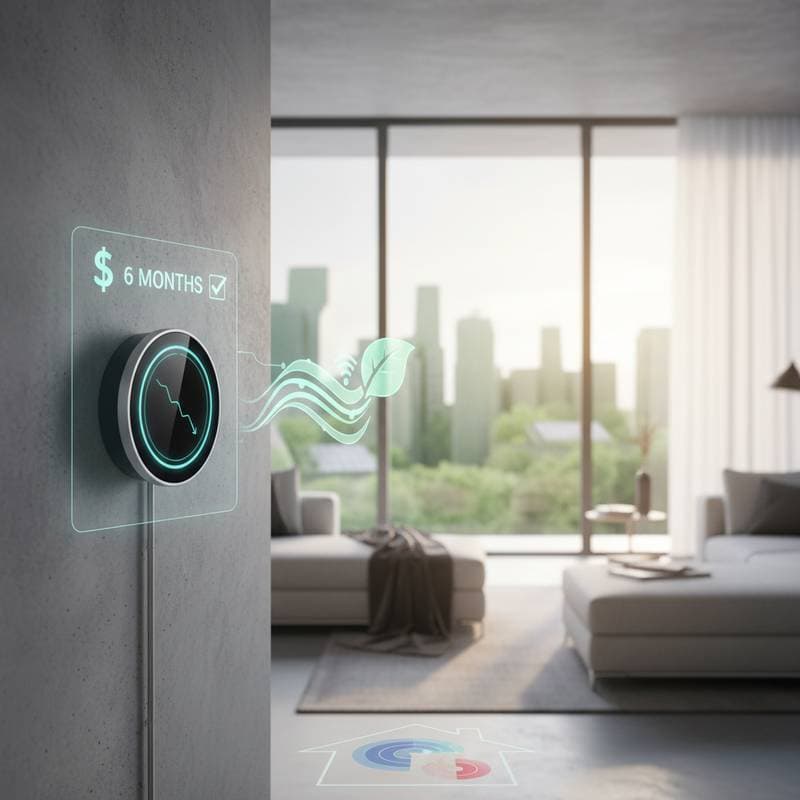
Picture entering your home after a demanding day to find the temperature precisely as preferred. Neither excessively warm nor chilly, but ideal. No manual adjustment to the thermostat proves necessary. This scenario represents the benefit of smart climate control. For numerous homeowners, such functionality extends beyond mere convenience. It serves as a method to reduce energy expenses rapidly, allowing the device to recover its cost within half a year.
The Everyday Problem: Wasting Energy Without Realizing It
Many individuals fail to recognize the extent of financial loss from ineffective temperature regulation. Heating and cooling typically account for almost half of a residence's overall energy expenses. Conventional thermostats depend on manual settings, while programmable versions function effectively only if schedules receive consistent updates. Overlook a weekend getaway or permit the system to operate during absence, and funds that might remain in personal accounts dissipate.
Smart thermostats address this inefficiency through integrated automation, occupancy detection, and remote management within a compact design. These devices analyze user routines, identify presence or absence, and sustain optimal conditions without requiring constant attention. Consequently, energy waste diminishes steadily, leading to a clear reduction in monthly utility charges.
The Big Picture: How Smart Thermostats Pay for Themselves Quickly
Claims that a smart thermostat recovers its investment in merely six months may appear ambitious. Examination of the calculations, however, confirms the feasibility. Such devices generally range in price from 120 to 300 dollars. Average monthly heating and cooling bills for households fall between 150 and 250 dollars. Typical energy reductions of 10 to 20 percent occur shortly after installation. This translates to monthly savings of 15 to 50 dollars, varying by system efficiency and user patterns. Over six months, these figures align closely with the initial purchase cost.
Automation drives these benefits without demanding significant lifestyle alterations. Sensors, algorithms, and intelligent scheduling handle the optimization process seamlessly.
Step-by-Step: How Smart Thermostats Deliver ROI
-
Learning Your Patterns
Advanced machine learning enables most smart thermostats to adapt to daily routines. They monitor arrival and departure times, sleep schedules, and activity levels. Gradually, a personalized schedule emerges that aligns with these behaviors. Automatic temperature adjustments then conserve energy during periods of low activity. -
Using Motion and Geofencing
Integrated motion sensors identify occupancy within the home. Geofencing technology links to smartphone location data for precise adjustments. Upon departure, the system lowers heating or cooling output. As return approaches, it restores comfortable settings to ensure seamless reentry. -
Optimizing for Weather and Energy Rates
Incorporation of local weather data allows proactive adjustments to prevent overworking the HVAC system. Certain models also account for time-of-use pricing structures from utilities. They shift higher energy demands to off-peak periods, avoiding elevated rates during high-demand hours. -
Remote Access and Voice Control
Smartphone applications or voice assistants such as Alexa or Google Assistant permit adjustments from any location. This feature proves invaluable for pre-trip modifications or unexpected schedule changes. Vacation settings become effortless to implement and revise. -
Energy Reports and Coaching
Comprehensive reports detail savings achieved and highlight potential enhancements. These insights form a feedback mechanism that refines operations over time. Users gain motivation to adopt subtle habits that amplify efficiency.
Real Device Comparisons and Price Points
Options exist to suit diverse budgets and levels of technical familiarity.
-
Budget Pick: Amazon Smart Thermostat (around 80 dollars)
This unit provides reliable automation and seamless Alexa integration at an accessible price. Although it omits advanced motion detection, it excels in schedule-based controls and app-managed remote access. Renters or smart home novices find it an ideal entry point. -
Mid-Range Pick: Google Nest Learning Thermostat (around 180 dollars)
Renowned for its adaptive learning capabilities, this thermostat employs internal sensors to maximize energy efficiency. Compatibility with Google Home ecosystems ensures effortless operation. The Home/Away Assist function prevents unnecessary operation in unoccupied spaces, blending form and function for contemporary settings. -
Premium Pick: Ecobee Smart Thermostat Premium (around 250 dollars)
Equipped with air quality monitoring, embedded Alexa functionality, and multi-room sensors, this model supports expansive homes. Integration extends to security and lighting systems for holistic control. Superior occupancy tracking accommodates irregular usage across varied spaces.
Compatibility with primary HVAC configurations applies to all listed models. Professional assistance may prove essential for heat pumps or legacy systems. Confirm wiring specifications prior to acquisition to avoid complications.
Insider Tip: Hidden Savings From Utility Rebates
A frequently overlooked benefit involves rebates from utility providers, ranging from 50 to 125 dollars for qualified installations. Pairing these incentives with ongoing energy reductions shortens the payback timeline below six months. Select providers extend discounts directly at purchase, minimizing initial outlay.
Participation in demand-response initiatives offers additional value. Devices like the Ecobee Premium enroll automatically to curtail usage during grid strain. Participants receive credits or payments as compensation for supporting network stability.
Practical Considerations Before You Buy
Strong returns accompany smart thermostats, yet compatibility and preparation influence success. Review these elements prior to proceeding.
- Wiring: A common wire (C-wire) supplies power to most units. Absence requires an adapter or professional addition by a technician.
- HVAC Type: Verify support for specific heating configurations. Advanced models accommodate multi-stage or variable-speed systems more effectively.
- Wi-Fi Connection: Reliable internet access underpins remote features. Signal strength at the installation site prevents operational interruptions.
- Integration Goals: Align selections with existing smart devices, whether Alexa, Google Home, or Apple HomeKit ecosystems, for unified management.
DIY installation typically spans under an hour for those familiar with basic electrical work. Professional services range from 100 to 200 dollars. The swift return on investment ensures positive financial outcomes within the initial year for the majority.
For Beginners: Simple Setup and Instant Wins
Individuals new to smart technology benefit from user-friendly models with guided applications. The Amazon Smart Thermostat stands out, offering step-by-step wiring tutorials via its app. Energy conservation commences promptly, requiring no alterations to established routines.
For Intermediate Users: Fine-Tuning Comfort and Control
With growing familiarity, delve into features like zoned scheduling or voice-activated sequences. Establish a bedtime routine that simultaneously adjusts temperature and deactivates lights. The Google Nest Learning Thermostat thrives in this context, continuously refining settings based on evolving preferences.
For Advanced Users: Whole-Home Optimization
Enthusiasts with comprehensive smart ecosystems leverage the Ecobee Premium for intricate oversight. Multiple sensors enable even temperature distribution across expansive areas. The HomeIQ analytics dashboard delivers runtime data and savings projections, informing strategic HVAC adjustments.
Notably, Ecobee sensors interface with security protocols. This connectivity allows the thermostat to respond to arming or disarming events, enhancing layered home automation.
Budgeting and Timeline Expectations
Anticipate total expenditures of 150 to 500 dollars, encompassing the unit, potential wiring modifications, and installation fees. Recovery through savings and rebates occurs for most within six months. Inefficient residences achieve breakeven seldom beyond one year.
Homeowners contemplating resale recognize added value in such upgrades. Prospective buyers associate smart thermostats with enhanced efficiency and livability, potentially elevating market appeal.
Safety and Compliance
DIY approaches suit many, but electrical errors risk HVAC damage. Systems involving heat pumps, dual fuels, or humidifiers demand licensed professional intervention. Disconnect power at the breaker prior to disassembly.
Local authorities may mandate permits for electrical alterations. Verification upholds warranties and safeguards against hazards. Compliance requires minimal additional effort but yields substantial protection.
Making It Happen
Transitioning to a smart thermostat ranks among the most straightforward strategies for diminishing energy use while elevating residential comfort. Benefits materialize swiftly, often before the conclusion of the first seasonal cycle. Intelligent features, rebate opportunities, and accessibility converge to establish these devices as essential components of contemporary households.
Effortless climate management and cost reductions position this upgrade ahead of many residential enhancements. To determine the optimal model for a specific setup, consult platforms like HomeAdvisor or Angi for connections to qualified local HVAC experts capable of secure implementation.
Frequently Asked Questions
How much can I realistically save with a smart thermostat? Savings average 10 to 20 percent on heating and cooling bills, equating to 15 to 50 dollars monthly for typical households.
Do I need professional installation? Basic setups allow DIY, but complex systems or missing C-wires benefit from technician assistance to ensure safety and performance.
Are smart thermostats compatible with all HVAC systems? Most support standard configurations; verify model specifications for heat pumps, radiant heating, or multi-stage units.
What if my home has poor Wi-Fi? Position the thermostat near a strong signal or use extenders; offline modes maintain basic scheduling, though remote features require connectivity.