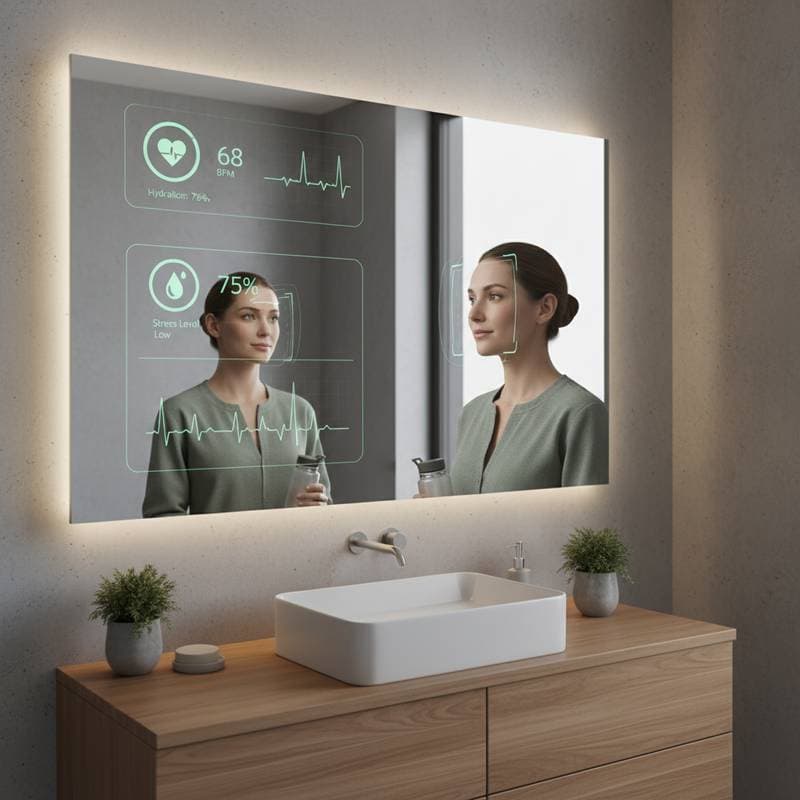
Real-Time Health Scans via Smart Bathroom Mirrors
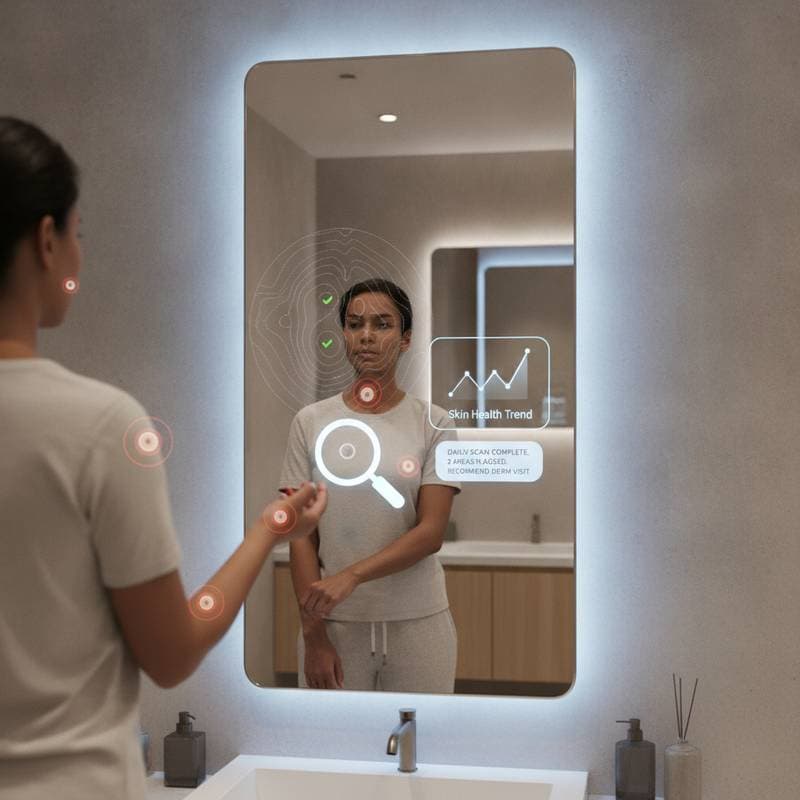
Smart homes evolve beyond basic convenience to support personal wellness. The smart bathroom mirror emerges as a key innovation in this progression, serving as both a reflective surface and a health monitoring tool. Users begin their day with more than a visual check; they gain insights into vital signs, hydration status, and potential health signals.
These mirrors redefine health monitoring by embedding sensors, cameras, and artificial intelligence into daily routines. The bathroom transforms into a supportive space for informed decisions. This approach complements professional medical care by providing immediate, user-driven data.
The Evolution of the Smart Mirror
Initial smart mirrors emphasized practical features like adjustable lighting, voice commands, and connections to virtual assistants. Users accessed weather updates, calendar reminders, and audio playback during morning preparations. Developers soon recognized the potential for health data collection using the mirror's surface.
Advancements in sensors enabled detection of heart rate through skin color shifts and breathing patterns via subtle movements. Current models deliver data akin to fitness trackers, integrated effortlessly into routines. This evolution positions smart mirrors as essential tools for proactive health management.
How Real-Time Health Scanning Works
Biometric sensors and computer vision form the foundation of these systems. They monitor blood flow-induced skin color changes, facial temperature fluctuations, and micro-expressions signaling stress or fatigue. Integration with devices like smart scales or connected toothbrushes compiles comprehensive profiles.
Infrared cameras evaluate circulation, while depth sensors assess posture and body composition. Artificial intelligence processes this information to estimate heart rate variability, oxygen levels, hydration, and skin moisture. A personal baseline develops over time, flagging deviations for early awareness.
Data transmits securely to apps or dashboards for trend analysis and sharing with providers. This loop connects habits to actionable health insights.
Why It Matters for Everyday Life
Consistent small observations build health awareness. Morning feedback on heart rate or stress levels prompts adjustments like increased water intake or brief relaxation. Visible signs of dehydration or sleep disruption guide preventive steps.
For those with chronic conditions, alerts to subtle changes offer timely reassurance. The system promotes habits such as exercise adherence without added effort. Convenience stands out: no charging or wearing devices disrupts natural flows.
Real-World Examples Leading the Shift
Companies deploy infrared sensors in models to track temperature variations, linking them to skin analysis for hydration or skincare recommendations. Partnerships with research institutions validate accuracy against clinical benchmarks. Prototypes employ optical sensors for non-invasive blood pressure and rhythm detection.
These developments suggest routine mirror use will soon include vital checks, enhancing daily wellness.
Data Privacy and Ethical Considerations
Health information demands robust protection. Manufacturers implement encrypted storage, on-device processing, and user-controlled sharing. On-screen indicators display active sensors or data transmission status.
Users gain options to delete data or maintain offline operations. Balancing insights with autonomy builds trust, ensuring bathroom privacy amid advanced monitoring.
Integration into the Smart Home Ecosystem
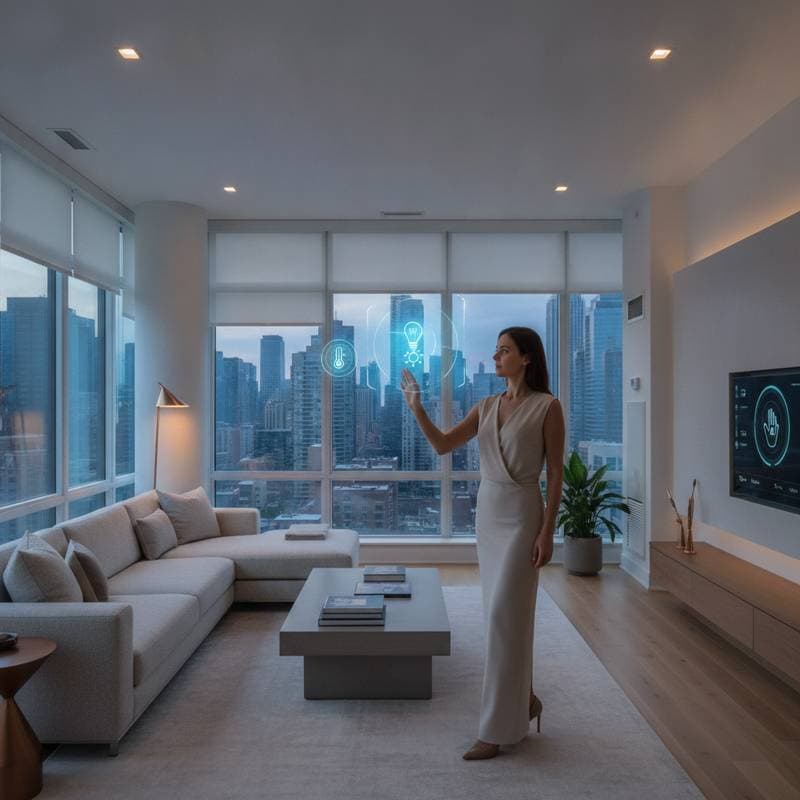
Smart mirrors connect with lighting, climate systems, and care devices for holistic support. Detecting fatigue might trigger sleep-optimized lighting adjustments. Voice assistants deliver health summaries or hydration reminders during routines.
Paired with scales or wearables, mirrors centralize data streams. Personalization adapts feedback to goals like skin health or post-workout recovery, fostering tailored wellness.
The Science Behind Mirror Diagnostics
Photoplethysmography tracks light reflection from skin to gauge blood flow. Thermal imaging identifies temperature shifts tied to circulation or inflammation. Machine learning refines interpretations against health norms, improving over time.
Facial analysis detects stress through symmetry and color patterns. Consistent bathroom lighting ensures reliable readings. The passive nature requires no user action beyond normal use.
From Fitness to Preventive Healthcare
Beyond activity logs, mirrors contextualize data with skin and facial indicators. They spot dehydration pre-symptom or stress buildup early, enabling proactive responses. This advances from reaction to prevention.
Professionals view these tools as telemedicine supplements, supplying baseline data for consultations or recovery tracking.
The Consumer Experience
Design integrates seamlessly, avoiding clutter with minimal interfaces. Activation occurs via touch or voice, delivering subtle notifications. Multiple profiles use facial recognition for household sharing.
Setup involves app-guided calibration and preference setting. Interactions resemble conversations, offering encouragement through accumulated insights.
Challenges to Widespread Adoption
High costs from premium sensors limit accessibility. Platform compatibility issues arise in mixed-brand homes. Standardization efforts ensure consistent, reliable data across products.
Education clarifies readings and responses, with built-in tips linking data to actions.
The Broader Lifestyle Shift
Smart mirrors align with trends redefining homes as wellness environments. Bathrooms evolve into zones for integrated care, alongside sleep trackers and air monitors. This ecosystem promotes sustained health.
Accessibility will grow, with basic models for essentials and advanced ones for detailed analysis.
Steps to Integrate Health Scanning at Home
Assess needs: basic tracking or in-depth metrics. Review privacy policies and device compatibility. Start with add-on sensors for existing mirrors or full units with extras like voice control.
As technology advances, upgrades simplify through better interoperability. These mirrors embed wellness into daily spaces, fostering awareness and balance for long-term health gains.