Smart Mirrors Unlock Real-Time Health Diagnostics
Nearly every household device has become smarter, from thermostats that learn habits to lighting that adapts to mood. Now, the bathroom mirror joins the revolution. Smart mirrors extend beyond voice-activated lighting or morning forecasts; they serve as health companions that monitor wellness, detect body changes, and provide real-time insights before the day begins.
This category of bathroom technology transforms a simple daily ritual into a personalized health checkup. The mirror shifts from a passive surface to an active participant in well-being.
The Rise of Reflective Intelligence
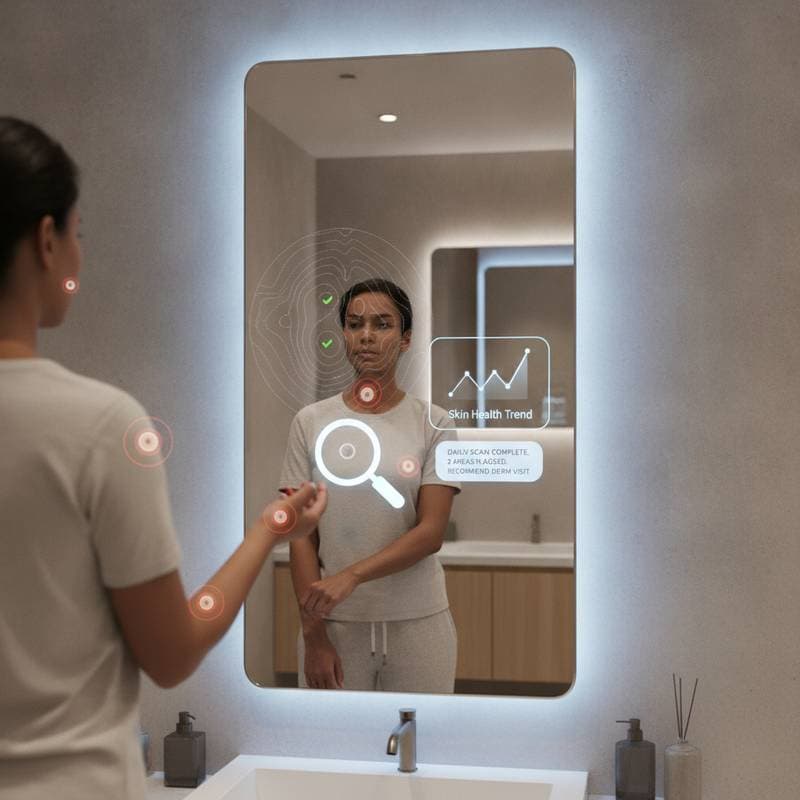
Smart mirrors integrate advanced sensors, computer vision, and health analytics to capture data on facial features, skin tone, heart rate, and related metrics. They analyze subtle changes that escape human notice, flagging early signs of stress, fatigue, or health concerns.
Analysts report sharp growth in interest for connected bathroom technology as consumers pursue integrated home wellness tools. Surveys indicate rising acceptance of technology for proactive monitoring when it aligns with daily routines.
Consider approaching the mirror each morning as it measures heart rate via facial recognition or assesses hydration through skin analysis. Companies already offer prototypes and commercial models that realize these functions.
From Reflection to Detection
Traditional mirrors reflect visible images. Smart mirrors interpret those images. High-resolution cameras, light sensors, and machine learning algorithms examine facial microchanges, including skin texture, coloration, and pupil dilation. These elements reveal insights into cardiovascular health, stress levels, and respiratory patterns.
For instance, a smart mirror might identify variations in lip or cheek color suggesting reduced oxygen levels. It could then recommend deep breathing exercises or a medical consultation. Devices often synchronize with wearable data or mobile health apps, merging visual readings with sleep quality and activity metrics for comprehensive analysis.
Such insights convert an aesthetic routine into a vital health checkpoint, influencing lifestyle decisions and preventive care.
Smart Bathroom as a Wellness Hub
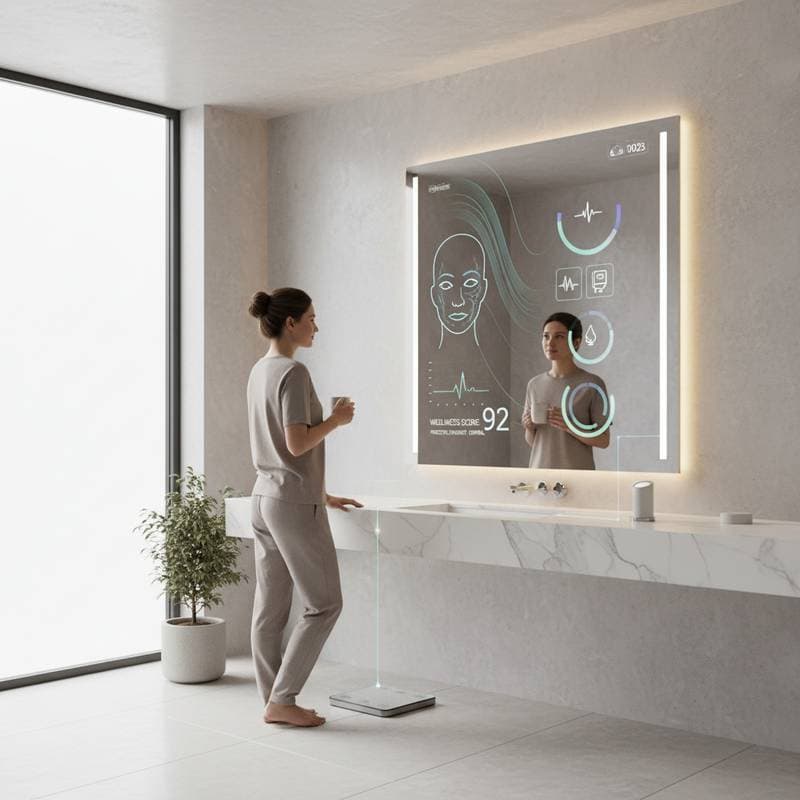
The bathroom emerges as a data-rich space in connected homes. Smart scales, toothbrushes, and toilets collect biometric information. A diagnostic mirror completes this ecosystem, turning the bathroom into a compact wellness laboratory.
Smart mirrors connect with other devices for expanded feedback. If dehydration signs appear, the mirror might advise increased water intake while a connected shower adjusts temperature to support circulation. Paired with a smart scale, it could correlate body composition with skin condition, delivering holistic recommendations.
This device integration supports ambient health monitoring. The home acts as a subtle wellness assistant, providing guidance without additional user effort.
Real-World Innovations
Tech brands develop smart mirrors for health diagnostics. Certain models scan facial blood flow to estimate heart rate and blood pressure. Others employ non-contact sensors for temperature variations indicating inflammation or illness. Luxury bathroom brands incorporate these mirrors with voice assistants, enabling queries like "How is my skin today?" for data-based responses.
One startup created a mirror that monitors facial symmetry to identify neurological conditions ahead of conventional methods. Another product tracks skin hydration and suggests tailored skincare routines using environmental and personal data. These developments position smart mirrors beyond vanity uses, into accessible medical territory.
Why Real-Time Health Data Matters
Preventive healthcare depends on awareness. Subtle appearance changes often signal underlying issues, yet individuals typically detect them only when pronounced. Smart mirrors address this by delivering immediate feedback.
Real-time data enables minor adjustments before problems intensify. Persistent fatigue indicators might inspire sleep routine modifications. Recurring dehydration cues could promote nutritional improvements. This ongoing feedback fosters better well-being via early action.
Medical experts investigate smart mirrors for telehealth support. Vital sign tracking could share data with clinicians for remote oversight, enhancing care for chronic conditions. Privacy and security remain essential, yet accessible continuous insights redefine home healthcare.
Balancing Innovation and Privacy
Health data holds personal significance; collection devices must manage it responsibly. Smart mirrors prompt concerns over biometric storage, access, and transmission security.
Manufacturers prioritize on-device processing, analyzing data locally to minimize cloud exposure and build trust. Standard features include opt-in sharing and adjustable privacy controls.
As adoption increases, select brands that handle health data akin to medical standards. Real-time diagnostics convenience must not compromise privacy.
Everyday Benefits Beyond Diagnostics
Health tracking defines smart mirrors, yet they improve comfort and routines. Models function as entertainment and productivity centers, showing news, weather, or guided exercises during mornings. Integrated lighting adjusts brightness by time and skin tone for precise grooming.
Skincare users gain personalized analytics tracking progress. The mirror identifies effective products or habits for complexion enhancement. Fitness individuals sync workout data for visual recovery and energy assessments. This multifunctional approach centers the mirror in smart home life.
Barriers to Adoption
Interest grows, but challenges persist. Premium pricing limits accessibility for early models. Ecosystem compatibility matters; users demand seamless device communication, making interoperability crucial for widespread use.
Accuracy draws examination. Technology detects trends but substitutes no professional diagnosis. Manufacturers collaborate with health experts to improve algorithms and validate reliability through research. Maturing systems will boost user confidence.
Moving Toward Predictive Wellness
Predictive analytics marks the next phase for smart mirrors. Beyond current metrics, advanced models forecast risks from long-term patterns. They could warn of hypertension or skin issues pre-symptom. Linked with other devices, they create adaptive wellness networks.
This progression advances proactive health management. Mirrors anticipate future needs, granting individuals greater wellness control. Broader implications suggest environments that support healthier living.
Integrating Reflective Technology for Daily Wellness
Adopting a smart mirror exceeds a tech addition. It alters perspectives on health, convenience, and personal areas.
Continued innovation positions these mirrors alongside common smart devices. The bathroom evolves into an intelligent wellness space. Such investment emphasizes practical wellness enhancement over gadget novelty.