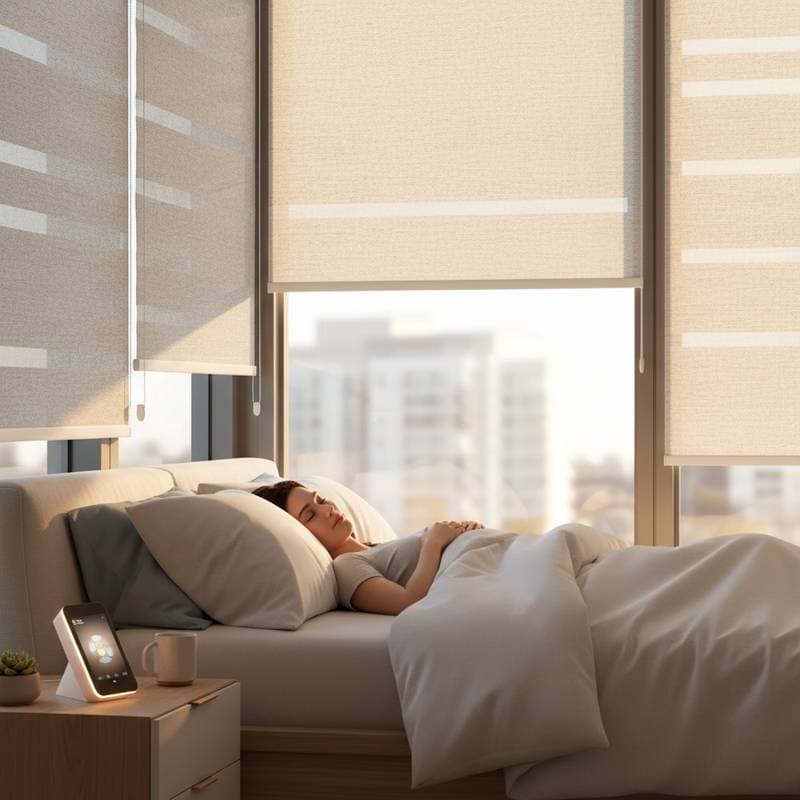
Imagine Awakening to Gentle Sunlight Without Adjusting Blinds
You awaken as sunlight softly enters the room, with blinds rising in harmony with your body's internal clock. No jarring alarms or sudden brightness disrupt the moment; instead, natural light provides the gentle signal your body needs. Smart blinds tuned to your circadian rhythm deliver this experience, fostering balanced mornings, sustained energy throughout the day, and restorative evenings.
Many individuals begin their day facing either excessive or insufficient light, which can lead to grogginess, diminished concentration, and irregular sleep patterns. These smart blinds address such issues by automating adjustments to align with natural light cycles. The result is improved daily well-being through consistent, biology-aligned illumination.
Aligning Light with Your Body's Natural Rhythm
The circadian rhythm governs sleep, mood, and alertness, primarily influenced by light exposure. Insufficient morning sunlight or excessive evening artificial light can disrupt this rhythm, resulting in fatigue or unease. Indoor lighting timing profoundly affects overall health, yet many overlook its impact.
Smart blinds bridge the divide between technology and human biology. Equipped with sensors for light levels, weather, and personal schedules, they automate movements to meet physiological needs. For example, blinds open progressively at dawn to provide awakening light without harsh glare, then partially close midday to mitigate heat and reflections while preserving workspace illumination for focus.
How Smart Blinds Function as a Lighting Solution
These circadian-adaptive smart blinds belong to the broader smart lighting ecosystem, managing natural light akin to how smart bulbs handle artificial sources. The principle involves automated shading combined with intelligent scheduling to ensure steady, beneficial light exposure.
Integration with smart home hubs, lighting systems, and sensors creates a cohesive environment that promotes productivity, relaxation, and ease. Key operational elements include:
- Sensors and Scheduling: Devices detect ambient light intensity and position blinds accordingly.
- Circadian Algorithms: Software synchronizes adjustments with optimal daily light patterns for the body.
- System Integration: Compatibility with smart bulbs or voice assistants enables manual overrides or refinements.
Guide to Setting Up Circadian Smart Blinds
Selecting Appropriate Blinds
Begin with motorized shades that complement your interior design and automation objectives. Consider these categories:
- Affordable Choice: IKEA Fyrtur Smart Shades, priced at approximately $169 per window. Battery-operated and linked via the IKEA Dirigera hub, they support basic routines through the Home Smart app, such as sunrise openings and bedtime closings.
- Mid-Level Selection: SwitchBot Curtain 3, around $89 per window. This retrofit option attaches to existing rods and works with Alexa, Google Home, and Apple HomeKit, incorporating light sensors for rhythm-mimicking adjustments.
- High-End Variant: Lutron Serena Smart Shades, from about $599 per window. Featuring precise motors and daylight monitoring, they connect effortlessly to Lutron Caséta and adapt to local sunrise and sunset times.
Integrating with a Central Hub
A hub or controller is essential for circadian functionality. Options like Google Home, Apple HomeKit, or Samsung SmartThings facilitate automation scenes that coordinate with additional lighting elements.
If you employ a system such as Philips Hue, linking blinds to the same network enables comprehensive room control. Blinds and bulbs then collaborate to deliver gradual morning brightening and evening dimming.
Activating Circadian Features
Advanced models offer predefined circadian modes that adjust positions daily. Companion apps allow customization of wake-up and relaxation periods, with blinds responding in real time.
For sophisticated configurations, tools like Home Assistant or IFTTT enable tailored rules. Examples include: "Close blinds partially if outdoor light falls below 300 lux" or "Fully open blinds when indoor temperature drops under 72°F to admit warmth."
Optimizing for Privacy and Ease
Achieve peak performance by harmonizing light intake with privacy needs. Program bedroom blinds to rise halfway in early hours for illumination without complete visibility. In communal spaces, configure angular adjustments during daylight to sustain brightness while shielding screens from glare.
Coordinating with Additional Lighting
Combining blinds with compatible bulbs ensures reliable cues regardless of external conditions. Select circadian-focused options like Philips Hue White Ambiance or Nanoleaf Essentials, which transition from cool daytime tones to warm evening shades.
Key Factors for Implementation
Cost and Setup
Prices for motorized blinds span $150 to over $600 per window, varying by fabric and controls. Battery models suit self-installation, typically completed in less than an hour per unit. Wired versions necessitate expert setup, adding about $200 per window for electrical work.
During renovations, incorporate wiring for smart shades from the outset to maintain aesthetics and enable circuit integration. In established homes, opt for battery or plug-in alternatives for straightforward retrofits.
System Compatibility and Durability
Verify alignment with your smart home platform; widespread support exists for Alexa and Google Home, though HomeKit requires specific confirmation. Prioritize devices with firmware update capabilities for ongoing security and enhancements.
Professionals recommend calibrating motors for proper torque and tension during installation, which prolongs lifespan and ensures smooth operation. Homeowners who overlook this step may encounter premature wear; initial care yields quieter, longer-lasting performance.
Security and Upkeep
Adhere to manufacturer protocols, particularly for electrical or expansive window projects. Secure cords away from children and pets. Maintain cleanliness with a soft microfiber cloth, and service batteries quarterly through recharging or replacement.
Emerging Trends in Smart Blind Technology
Recent advancements include adaptive learning in premium models, where devices observe manual inputs over weeks to anticipate user patterns. Hunter Douglas PowerView Gen 3 exemplifies this, refining automations autonomously.
Additionally, integrating blinds with smart thermostats enhances efficiency. Automatic closings during intense sunlight reduce cooling demands, conserving energy. Platforms like Ecobee or Google Nest facilitate this via data sharing.
Experiencing the Benefits Daily
After installation, the seamless operation of rhythm-aligned blinds renders manual controls obsolete. Subtle shifts provide morning vitality, eliminate afternoon distractions, and usher in calming evening ambiance.
This integration of innovation and health yields profound improvements, with light adapting fluidly to daily demands for enhanced vitality.
Steps to Integrate into Your Home
Initiate in a primary space, such as the bedroom or living room. Test schedules and sensors to refine the natural flow. For assistance in selection or setup, consult certified professionals through reliable service networks.
As your system grows, unify blinds with lighting and climate controls. A cohesive smart home environment intuitively supports your lifestyle, delivering proactive comfort and efficiency.