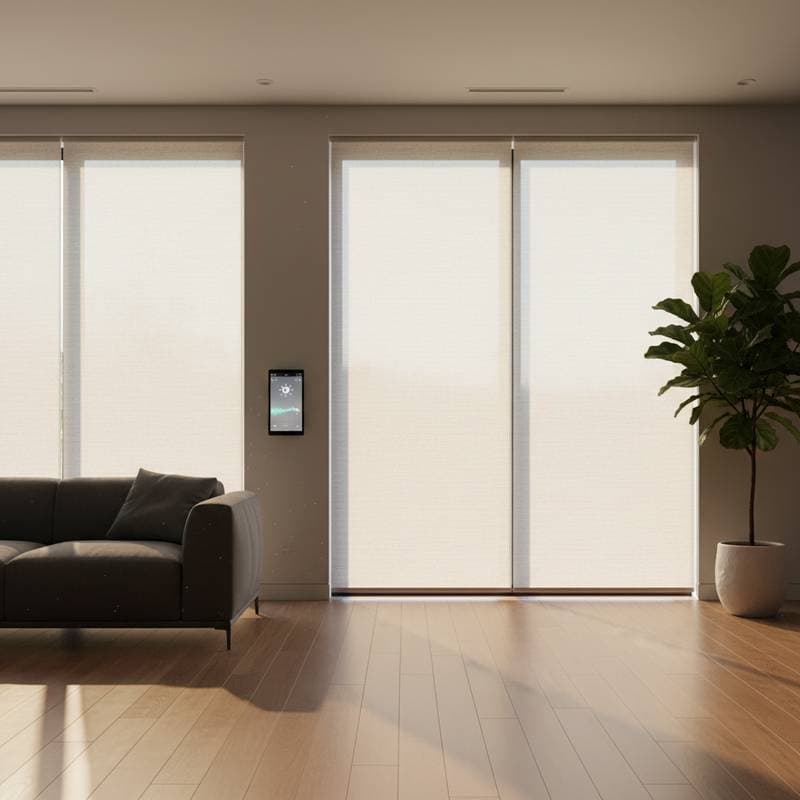
Smart Blinds Syncing with Circadian Rhythms for Health
Smart homes now extend their influence into personal health management. Innovations such as smart blinds that align with natural light cycles offer a targeted approach to supporting circadian rhythms. These devices go beyond basic automation by actively promoting better sleep, heightened focus, and enhanced overall well-being through precise light control.
The Science Behind Circadian Lighting
The human body operates on a circadian rhythm, an internal clock that governs sleep-wake cycles, hormone release, and daily energy fluctuations. Light serves as the primary cue for this rhythm; morning exposure to bright, cool-toned light suppresses melatonin production and boosts alertness, while evening dim, warm light encourages relaxation and prepares the body for sleep. Disruptions from inconsistent artificial light sources, prolonged screen time, or erratic schedules can lead to fatigue, mood disturbances, and impaired cognitive function.
Smart blinds address these issues by replicating the sun's natural progression. They adjust opacity and positioning to deliver appropriate light intensity at optimal times, thereby reinforcing the body's innate responses to environmental cues. Research indicates that consistent alignment with these patterns can improve sleep duration by up to 30 minutes per night and enhance daytime productivity.
How Smart Blinds Work
These systems integrate advanced sensors, geolocation data, and user-defined schedules to automate shade adjustments. Built-in photocells detect ambient light levels and trigger movements accordingly, while connectivity to Wi-Fi or Zigbee networks allows synchronization with broader home automation setups. Users access controls via mobile applications, enabling customization such as gradual opening sequences that simulate a natural dawn.
Consider a typical daily cycle: at sunrise, blinds ascend slowly over 30 minutes to introduce gentle illumination, easing the transition from sleep to wakefulness. Midday settings partially lower to diffuse harsh rays, reducing heat gain and visual strain during work hours. As dusk approaches, full closure blocks external light, fostering a serene indoor environment that signals the body to wind down.
Integration with voice-activated assistants like Alexa or Google Home adds hands-free operation. For instance, a simple command can override automation for unexpected weather changes, ensuring adaptability to real-time conditions.
Real-World Examples
Leading manufacturers provide robust options tailored for circadian support. Lutron's Serena Shades feature precise motor controls and app-based scheduling that sync with local sunrise data, allowing users to set personalized light profiles for different rooms. These shades also interface with smart thermostats to optimize both light and temperature for comfort.
Eve MotionBlinds emphasize energy-efficient Thread protocol for reliable, low-latency connections within Apple HomeKit ecosystems. Their motion sensors detect occupancy and adjust shades to maintain privacy while permitting beneficial light entry. Hunter Douglas's PowerView system offers geo-fencing capabilities, automatically responding to your location to prepare the home before arrival.
Advanced setups combine blinds with LED lighting arrays. When outdoor light diminishes, interior bulbs transition to amber hues mimicking sunset, extending the circadian benefits into fully enclosed spaces. Such pairings create comprehensive environments that support shift workers or those in low-light regions.
Why It Matters for Health and Lifestyle
Proper light management yields measurable health advantages. Clinical studies link circadian-aligned exposure to reduced insomnia rates, elevated serotonin levels for improved mood, and sharper concentration during tasks requiring sustained attention. Individuals in remote work scenarios report up to 20 percent gains in daily output after implementing these systems.
Energy conservation represents another key benefit. Automated shading during peak solar hours cuts reliance on air conditioning by blocking up to 80 percent of heat transfer, potentially lowering utility bills by 10 to 15 percent annually. This passive approach minimizes environmental impact while maintaining indoor climate stability.
On a practical level, the automation eliminates routine chores. Systems learn from usage patterns via machine learning algorithms, refining adjustments over time to match evolving routines, such as seasonal shifts or family schedules. This seamless integration fosters a sense of effortless wellness in daily life.
Overcoming Barriers to Adoption
Initial costs for high-quality smart blinds range from $200 to $600 per window, with installation adding $100 to $300 depending on complexity. Compatibility concerns arise with older home setups, but most modern systems support universal protocols like Matter, which ensures interoperability across brands.
To ease entry, begin with retrofit kits that convert manual blinds into motorized ones using battery-powered hubs, avoiding full replacements. Professional consultations through retailer apps can assess room-specific needs, recommending configurations that balance budget and functionality. As prices decline with market growth, widespread adoption becomes more accessible.
User education plays a vital role; tutorials within companion apps guide setup, from pairing devices to calibrating sensors. Troubleshooting common issues, like signal interference, often involves simple repositioning of hubs for optimal coverage.
Integrating Smart Blinds into Your Routine
To maximize benefits, evaluate your home's light patterns by tracking sunlight entry over a week using a basic journal or app. Select blinds with adjustable slat angles for fine-tuned control, and pair them with sleep-tracking wearables to monitor rhythm improvements. Experiment with scene presets, such as a 'focus mode' that maintains steady midday light while dimming distractions.
Maintenance involves periodic battery checks for wireless models and firmware updates via apps to incorporate new features like AI-driven predictions for weather-based adjustments. Over time, these tools not only enhance health but also adapt to life changes, ensuring sustained value.
Achieving Harmony Through Adaptive Lighting
Circadian smart blinds transform ordinary windows into proactive health allies. By harmonizing indoor spaces with natural light dynamics, they deliver tangible improvements in rest, vitality, and efficiency. As technology advances, these systems promise to elevate living environments, aligning modern demands with our biological foundations for lasting well-being.