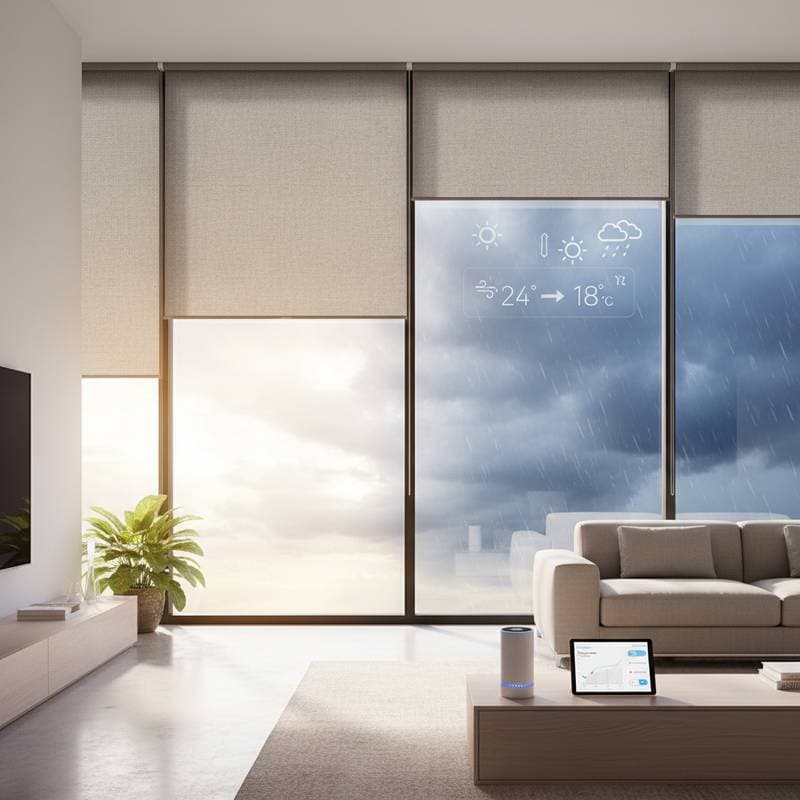
Smart Blinds That Read Weather and Adjust Themselves
Smart blinds represent a leap in home automation technology. These devices integrate weather data with built-in sensors to adjust positioning automatically, optimizing light and temperature without manual intervention. Homeowners gain convenience and efficiency as blinds respond to forecasts and real-time conditions, enhancing daily living.
Understanding Smart Blinds Technology
Smart blinds operate through a combination of hardware and software. Embedded sensors detect sunlight intensity, room temperature, and humidity levels. These connect to a central hub or app that pulls weather data from online sources, predicting changes like impending rain or intense sun.
The core mechanism involves motorized tracks that raise, lower, or tilt slats based on predefined rules. For instance, on a sunny morning, blinds might partially open to allow natural light while blocking direct glare. Integration with voice assistants such as Alexa or Google Home enables further customization through simple commands.
This technology draws from IoT principles, ensuring seamless communication between devices. Reliability depends on stable Wi-Fi and regular firmware updates, which manufacturers provide to refine predictive accuracy.
Key Benefits for Homeowners
One primary advantage lies in energy savings. By modulating sunlight exposure, smart blinds reduce reliance on air conditioning during hot days and heating in cooler periods. Studies indicate potential reductions in energy bills by up to 20 percent in well-optimized setups.
Comfort improves significantly as well. Automatic adjustments prevent overheating or excessive darkness, maintaining a balanced indoor environment. Privacy enhances too, with blinds closing at dusk or when motion is detected outside.
Beyond practicality, these systems contribute to sustainability. They minimize light pollution and promote natural illumination, aligning with eco-conscious living. Long-term, the initial investment pays off through lower utility costs and extended lifespan of fabrics due to reduced UV damage.
Setting Up Smart Blinds
Installation begins with selecting compatible models for window sizes and types. Measure dimensions accurately, considering both width and drop. Most kits include mounting hardware for easy retrofit onto existing frames.
Connect the blinds to power sources, either via rechargeable batteries or wired options for continuous operation. Pair them with a smart hub using the manufacturer's app, following on-screen prompts to scan QR codes and join your network.
Configure automation rules next. Access the app to set triggers, such as closing blinds when temperature exceeds 75 degrees Fahrenheit or opening them at sunrise based on local weather feeds. Test adjustments manually to verify smooth operation and fine-tune sensitivity.
Professional installation services are available for complex setups, ensuring safety and precision. Budget around 30 minutes per window for DIY approaches.
Popular Product Options
Several brands lead the market with innovative features. Lutron Serena offers wireless shades compatible with multiple ecosystems, featuring geo-fencing that activates based on your location. These excel in quiet operation and durable fabrics.
IKEA's Fyrtur line provides affordable entry points, with battery-powered motors and app control. Integration with Tradfri hubs allows expansion into broader smart home networks.
For premium choices, Somfy's systems include advanced weather stations that forecast up to 48 hours ahead. These support zoning, enabling different rooms to follow unique schedules.
Consider factors like material—cellular shades for insulation or roller styles for minimalism—when selecting. Prices range from $100 per window for basics to $500 for high-end models with full automation.
Insider Tips for Optimal Performance
To maximize effectiveness, position sensors away from direct airflow to avoid false readings. Regularly clean slats to prevent dust buildup, which can impede motors.
Sync blinds with other devices, such as thermostats, for holistic control. For example, pair with a smart AC unit to activate cooling only after blinds adjust.
Monitor app notifications for weather alerts and update rules seasonally. In winter, prioritize warmth retention by limiting openings during cold snaps.
Experiment with schedules to match lifestyle patterns. Wake-up routines that gradually raise blinds simulate natural dawn, improving sleep quality.
Achieving a Responsive Home Environment
Implementing smart blinds transforms ordinary spaces into dynamic, efficient areas. Residents experience reduced manual tasks and consistent comfort tailored to external conditions. Energy efficiency gains support broader sustainability goals without sacrificing aesthetics.
As technology evolves, expect enhancements like AI-driven predictions for personalized preferences. Start small with one room to appreciate the impact, then scale for whole-home harmony. This integration elevates living standards, making homes more intuitive and attuned to the world outside.