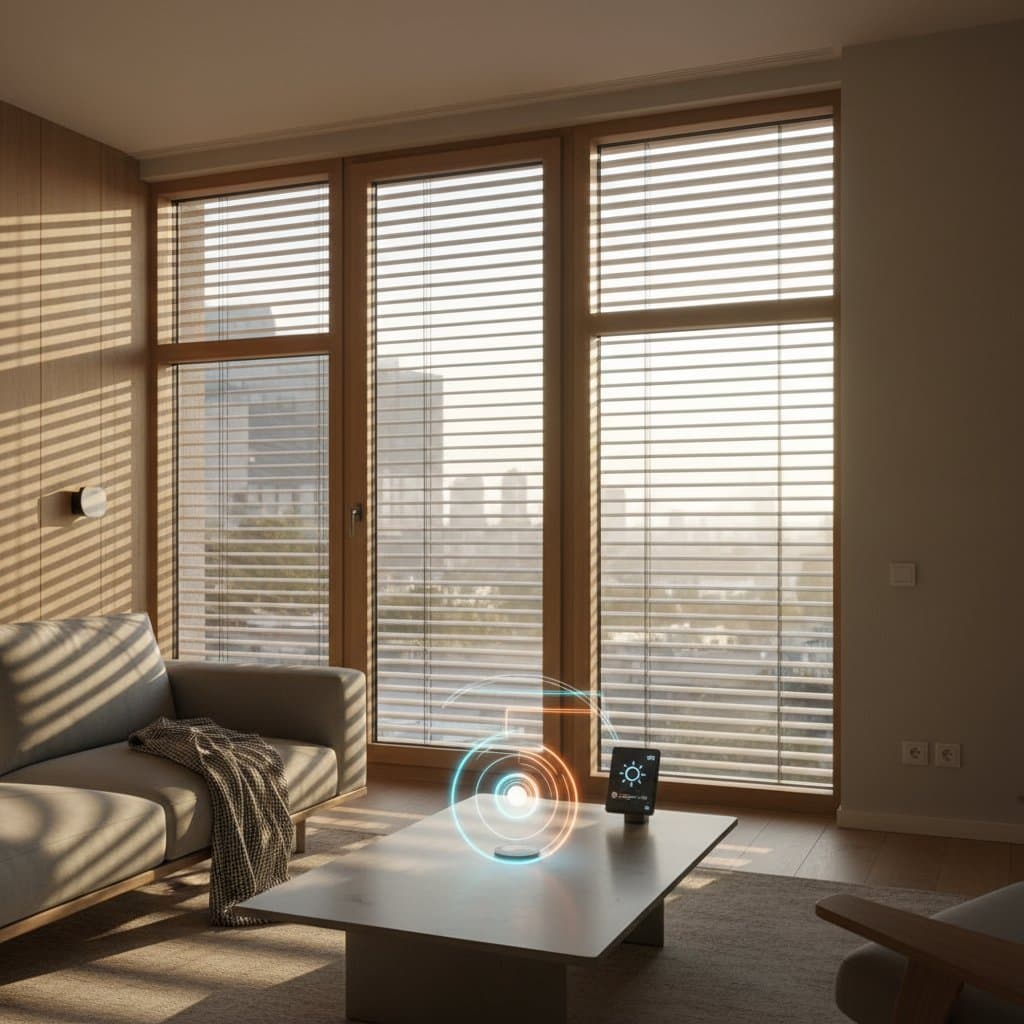
Introduction to Circadian Smart Blinds
Picture this scenario: you awaken to soft daylight gradually entering your bedroom, without the jolt of a blaring alarm or the need to reach for the blinds. The illumination starts subtle and builds in intensity as your body responds, creating a seamless transition into the day. Smart blinds designed for circadian rhythm synchronization deliver this experience by aligning your home's lighting with the patterns your biology expects.
Traditional window treatments remain fixed, either blocking light entirely or allowing it to overwhelm spaces irrespective of the hour. Such inconsistency often interferes with the sleep-wake cycle, resulting in morning fatigue and evening unease. Circadian-enabled smart blinds address this issue by introducing automation that supports biological harmony, combining ease with health benefits.
Functions of Circadian-Controlled Smart Blinds
These devices employ integrated motors and sensors to raise or lower shades based on sunlight exposure, ambient light measurements, and user-defined timelines. When combined with circadian lighting features, the setup evolves across the day to replicate the sun's arc. Early hours bring crisp, invigorating light to promote wakefulness, while evening shifts to softer, warmer hues signal relaxation.
Beyond mere automation, the core advantage lies in aiding the body's melatonin and cortisol production, hormones essential for rest and vitality. Aligning blinds with lighting systems fosters an environment that complements physiological needs, rather than opposing them.
Technical Mechanisms Behind the Systems
Contemporary smart blind setups link via Wi-Fi, Zigbee, or Thread protocols, enabling interaction with central hubs such as Amazon Alexa, Google Home, or Apple HomeKit. Numerous models incorporate sunlight sensors to monitor instantaneous brightness and color shifts. Integration with ecosystems like Philips Hue or Lutron Caséta allows synchronized adjustments of natural and supplemental lighting for sustained circadian balance.
Consider this advice: motor quality varies significantly. Entry-level units might generate audible hums that disrupt serene settings. Opt for systems with brushless DC motors, which operate silently, endure longer, and provide fluid adjustments, especially valuable for automating several windows.
Guide to Installing Circadian Smart Blinds
- Select your platform. Choose integration with Alexa, Google Assistant, or Apple HomeKit, as this influences compatible blinds and add-ons.
- Choose appropriate blinds. Select motorized options that accommodate scheduling or sensor-based activation.
- Mount and initialize. Many installations complete in less than one hour; hardwired variants may necessitate professional electrical work.
- Link to lighting controls. Connect through a unified app or hub to achieve comprehensive circadian management.
- Customize settings. Modify timings for openings and closings to match your sleep habits and local light variations.
Comparing Products and Costs
Affordable entry: The SwitchBot Curtain Rod 2, priced at approximately $89 per window, attaches to existing drapes and suits renters well. It pairs via Bluetooth or Wi-Fi and works with Alexa or Google Home using an additional hub. Although it omits onboard light sensors, it executes programmed routines reliably.
Balanced mid-tier: IKEA Fyrtur Smart Shades, beginning at about $179 per window, provide hushed performance and compatibility with the IKEA Home Smart application. Schedule operations or issue voice directives via a gateway. Battery operation simplifies setup.
High-end luxury: Lutron Serena Smart Shades, costing around $600 per window, boast superior craftsmanship, near-silent motors, and broad support for Apple HomeKit, Alexa, and Google Home. Pairing with Lutron Caséta lights facilitates automatic circadian adjustments for both shades and illumination daily.
Key Factors to Evaluate Prior to Purchase
Financial constraints matter, yet power sources deserve attention too. Battery-dependent models install effortlessly in compact areas. Hardwired alternatives excel in renovations or expansive setups, avoiding repeated battery replacements.
Prioritize safety by engaging a certified electrician for any wired connections. For extensive or multi-area deployments, certified technicians ensure accurate setup and configuration. Anticipate $100 to $250 per window for self-install kits; expert services add expense but offer accuracy and extended guarantees. Homeowners often offset costs through energy savings, as these blinds moderate temperatures and lessen reliance on HVAC systems.
Advanced Feature: Calibrating for Ambient Light
Experienced users can configure blinds to react to live outdoor conditions over rigid timetables. Combining with a device like the Aqara Light Sensor enables shades to adapt fluidly. This method sustains uniform indoor brightness amid weather fluctuations or seasonal shifts, yielding a responsive home that intuitively supports comfort.
Implementing Your System
Begin modestly by equipping one or two primary windows, such as those in the bedroom or main living area. Observe enhancements in mood, vitality, and rest before scaling up. Resources like smart home directories assist in locating trusted professionals or obtaining estimates for larger initiatives.
Circadian smart blinds represent an accessible wellness enhancement for all. They enable natural awakenings and serene evenings through reliable, cost-effective technology. The true value emerges in their effortless fusion of health and habit, allowing your surroundings to adapt proactively.
Frequently Asked Questions
What exactly is a circadian rhythm, and why does it matter for home lighting? Your circadian rhythm governs the 24-hour internal clock that dictates sleep, alertness, and hormone release. Aligning home light with this cycle improves these processes by signaling appropriate times for activity or rest.
Do smart blinds work without additional smart home devices? Basic models operate independently via apps for scheduling, but full circadian features require hubs or sensors for optimal light adaptation.
How much energy do these systems consume? Motorized blinds use minimal power, often under 1 watt during operation, with batteries lasting 6-12 months; hardwired options draw negligible steady-state current.
Can they integrate with existing window treatments? Yes, clip-on rods like SwitchBot fit over current curtains, while custom shades replace or retrofit originals seamlessly.