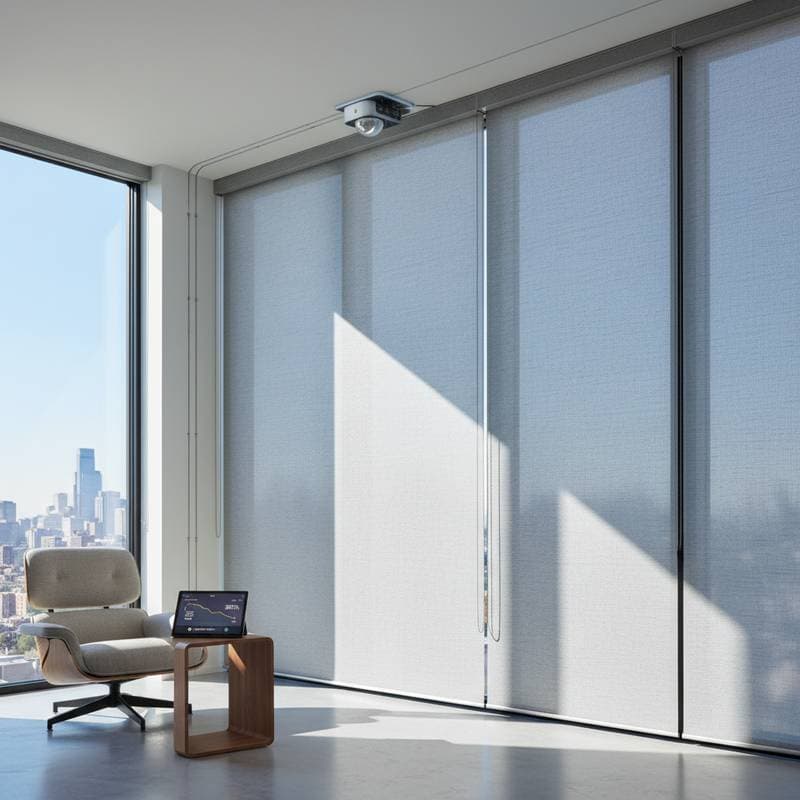
Visualize a Home That Adapts to Sunlight
Sunlight enters your bedroom softly in the morning, avoiding harsh glare. In the afternoon, your living room remains cool without excessive air conditioner use. Blinds shift positions as light changes, requiring minimal effort from you. Smart blinds designed to follow the sun deliver this experience, offering convenience while reducing cooling costs by up to 35 percent and maintaining a comfortable, attractive environment.
Managing Sunlight for Optimal Comfort
Homeowners often face difficulties in controlling sunlight entry. Excess heat from windows forces air conditioners to work harder, increasing energy use. Insufficient light creates dark interiors that feel confining. Manual adjustments seldom achieve balance, and blinds remain static when occupants leave, allowing heat buildup or unnecessary dimness.
Smart blinds address these issues with automated precision. They track the sun's movement in real time, blocking heat during intense periods and admitting light when advantageous. This approach creates a naturally balanced, energy-efficient living space.
Mechanisms Behind Sun-Tracking Smart Blinds
These blinds incorporate compact sensors and motors linked to a smart home network. Sensors detect sunlight intensity and angle, prompting the motor to reposition the blinds quietly. Advanced models connect to a hub or app that computes the sun's trajectory using location data. Some employ machine learning to anticipate patterns and refine comfort settings over time.
The operational sequence includes these steps:
- Sunlight Sensing: A dedicated sensor assesses brightness and temperature at the window.
- Position Determination: Software evaluates the need to angle slats or lift shades to control heat or maximize light.
- Automated Movement: A quiet motor executes the adjustment without user intervention.
- Ongoing Monitoring: The system tracks changes in sunlight, making incremental tweaks as needed.
This process occurs throughout the day, responding to weather variations, seasonal shifts, and room temperatures. Adjustments integrate seamlessly into daily routines, eliminating the need for manual operation or reminders.
Calibration Advice for Different Rooms
Experts recommend calibrating blinds per room to optimize performance. Windows facing south require stronger shading to combat afternoon heat, whereas east-facing areas benefit from softer morning illumination. Applying a uniform schedule across all windows leads to inefficiency and discomfort. Tailoring settings to each room's sun exposure enhances energy savings and fosters a more harmonious light flow.
Comprehensive Advantages
Smart blinds influence multiple facets of daily life, extending well beyond financial gains.
- Energy Savings: They curb direct sunlight during high-heat periods, cutting cooling needs by up to 35 percent, which proves especially valuable in homes with extensive glazing.
- Enhanced Comfort: Indoor temperatures stabilize, eliminating abrupt hot zones or blinding reflections.
- Improved Privacy: Schedules can lower blinds at dusk and raise them at dawn automatically.
- Design Appeal: Absence of cords and precise alignment contribute to a sleek, contemporary appearance.
- Seamless Connectivity: Compatibility with platforms such as Amazon Alexa, Google Home, and Apple HomeKit enables voice or app-based control.
Selecting an Appropriate Smart Blind Solution
Evaluate budget, window dimensions, and control preferences when choosing smart blinds. Consider these three categories for informed decisions.
Entry-Level Choice: SwitchBot Curtain Rod 2 (Approximately $100 per Window)
This device mounts onto existing rods, automating standard curtains via Bluetooth and optional light sensors. It responds to brightness levels, suiting beginners or temporary setups.
- Advantages: Low cost, simple self-installation, integration with Alexa and Google Home.
- Drawbacks: Moderate accuracy and deliberate movement speed.
Intermediate Selection: IKEA Fyrtur Smart Shades (Approximately $179 per Window)
Battery-operated and compatible with IKEA's Dirigera or Tradfri hubs, these shades support scheduling and voice commands. Pairing with sensors enables effective sun tracking.
- Advantages: Attractive styling, rechargeable power source, intuitive app interface.
- Drawbacks: Hub dependency for full functionality, restricted material options.
High-End Recommendation: Lutron Serena Smart Shades (Starting at About $600 per Window)
Renowned for durability, Lutron's Serena series features near-silent motors, sophisticated light sensors, and broad smart home support. It automates based on sun position, time, or temperature.
- Advantages: Superior craftsmanship, fluid motion, proven dependability.
- Drawbacks: Elevated price, suggestion for expert installation.
Strategic Implementation Tip
Prioritize automating windows with greatest sun exposure, such as those facing south or west. Initial installations in key areas generate noticeable savings, funding further expansions.
Practical Installation and Technical Aspects
Most smart blinds suit hands-on installation, though preparation ensures success.
Power Supply Choices
- Battery Operation: Simplest setup, with recharges required periodically.
- Solar Recharging: Suited for elevated windows, using panels to maintain battery life.
- Hardwired Systems: Optimal for renovations, providing concealed power without upkeep.
Network Compatibility
Options include Wi-Fi for ease, or Zigbee and Thread for robust multi-device homes. Verify alignment with existing hubs to avoid compatibility issues.
Setup Guidelines
- Measure windows precisely for custom fits.
- Ensure motor access post-installation.
- Engage a qualified electrician for wired configurations to meet safety standards.
- Verify routines across various daylight hours for accurate operation.
Project Duration
Installing one blind takes about an hour. Multi-window or wired endeavors span several days, including calibration periods.
Quantifiable Energy Reductions
Savings depend on regional climate and window alignment, yet audits indicate up to one-third reductions in cooling expenses with correct use. Benefits arise from blocking peak solar heat and permitting mild warming in cooler conditions. Comfort improvements accompany these financial gains.
In an average household, such systems yield hundreds in yearly savings. Pairing with thermostats or efficient glazing amplifies outcomes, often recouping costs in two to three years.
Sustainability Impact
Lower air conditioning reliance decreases carbon output. These blinds promote eco-friendly habits by easing grid demands and preserving air quality.
Synergies with Complementary Devices
Pairing enhances functionality.
- Thermostat Linkage: Blinds close upon detected temperature rises.
- Lighting Coordination: Morning blind openings trigger light adjustments.
- Security Integration: Arming systems prompts blind closure for added privacy.
- Voice Control: Commands like "raise kitchen blinds" simplify use.
Future-Proofing Advice
Opt for Matter- or Thread-enabled products to ensure interoperability and scalability across vendors.
Financial Planning for Smart Blinds
Approaches range from modest to comprehensive.
- Basic DIY: $100 to $500 for initial windows with wireless controls.
- Expanded Setup: $800 to $1,500 for sensor-equipped multi-room coverage.
- Full-System Overhaul: $3,000 plus for integrated, professionally installed options.
Local rebates for efficient coverings may offset expenses; investigate utility incentives.
Professional services guarantee precise setup. Resources like xavagetech.com connect users with specialists in automation and efficiency.
Experiencing Daily Benefits
Installed smart blinds operate unobtrusively, enhancing routines. Reduced screen glare, moderated afternoon warmth, and fluid light transitions become routine. Technology recedes, allowing focus on comfort.
These systems yield ongoing advantages: monthly bill reductions, elevated well-being from balanced illumination, and assured privacy. Integration creates a responsive, intuitive home.
Steps to Implement Sun-Tracking Blinds
These devices transform homes into efficient, sun-responsive spaces. Begin with targeted automation to realize immediate gains in energy use, livability, and style.
Frequently Asked Questions
How do smart blinds detect the sun's position? Sensors measure light and angle, while apps use GPS to map trajectories for precise adjustments.
Are they compatible with all smart home platforms? Most support Alexa, Google, and HomeKit; confirm specifics per model.
What maintenance do they require? Battery models need occasional charging; clean fabrics gently and test motors yearly.
Can they save money in cold climates? Yes, by admitting passive solar heat in winter, balancing seasonal efficiency.