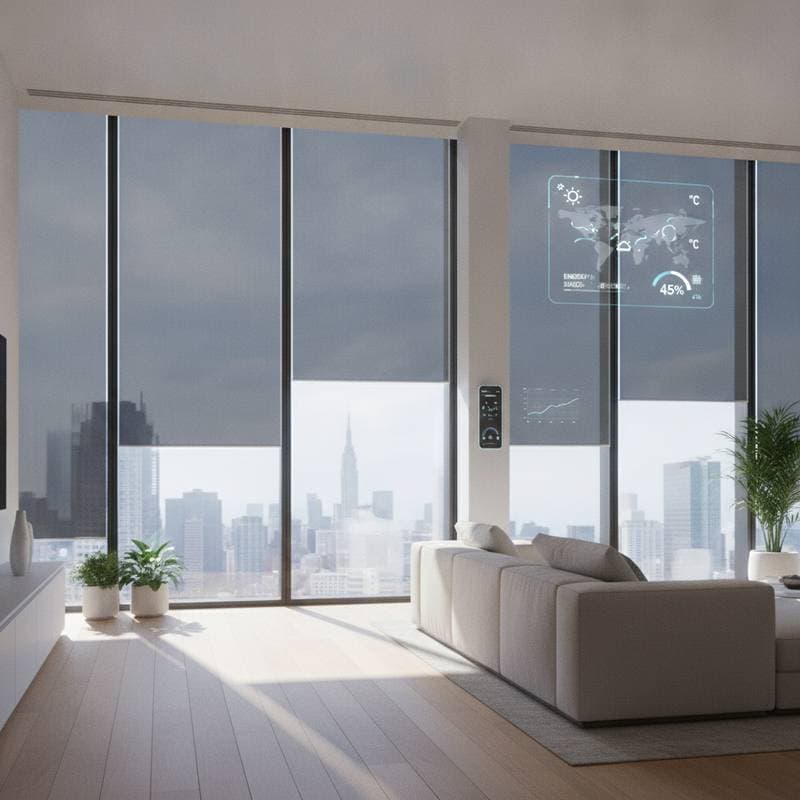
Smart Blinds Use AI Weather Data to Cut AC Costs 45%
Smart homes are evolving from simple voice commands to systems that anticipate needs. A new class of smart blinds uses AI driven weather data to manage indoor temperatures. These blinds cut energy costs, with early reports showing up to 45 percent savings on air conditioning.
The concept relies on live weather data, sensor inputs, and household patterns. The blinds adjust automatically to control sunlight and heat. Homes stay cooler and more efficient without constant manual effort.
Energy Waste in Cooling and Heating
Cooling ranks among the largest household energy expenses. Traditional blinds depend on human attention, and most people forget to close them before peak sun or reopen them for evening breezes. Air conditioners then work harder than necessary.
Older smart blinds use timers or basic light sensors. They cannot interpret changing weather or adapt to forecasted swings. The result is continued energy waste when conditions shift unexpectedly.
AI Enhanced Climate Intelligence
New automated shading systems connect to weather networks and home sensors. They apply pattern recognition to decide when to open or close. When forecasts predict a heatwave, the blinds close early to block sun before indoor temperatures climb. When cooler air arrives later, they reopen for natural ventilation.
This approach stabilizes interior temperatures with less mechanical cooling. It also reduces sharp temperature swings that force HVAC systems to cycle more often.
Cost Savings and Comfort Benefits
Homeowners increasingly seek technology that lowers bills and environmental impact. Smart blinds meet both goals. When coordinated with thermostats and occupancy sensors, they maintain balanced conditions throughout the day.
A 45 percent reduction in cooling costs adds up quickly across a season. Rooms remain cooler, glare decreases, and indoor temperatures feel more consistent, especially in regions with intense sun or variable weather.
Real World Performance
Several systems already demonstrate these capabilities. One model links directly to smart thermostats and local weather APIs. Predictive algorithms adjust the blinds before indoor heat builds.
Another integrates with a central hub to align with lighting and occupancy routines. Blinds close when the home is empty and adjust for light and privacy when residents return. Property managers in multi unit buildings use the same technology to reduce peak load across apartments.
How the System Operates
The blinds draw from three main data sources:
- Weather forecasts for sunlight intensity, temperature, and humidity.
- Indoor sensors for temperature, brightness, and occupancy.
- User preferences for comfort levels and daily routines.
An AI engine processes these inputs and makes small adjustments throughout the day. Sudden cloud cover triggers a slight opening for natural light. A detected heat spike prompts closure to preserve cool air. Users retain override options through apps or voice assistants, and the system learns from those choices over time.
Environmental Impact
Lower air conditioning demand reduces greenhouse gas emissions and eases pressure on local power grids. In many areas cooling accounts for a large share of residential energy use. Cutting that load by nearly half delivers measurable environmental gains without lifestyle changes.
Homeowners can pair the blinds with solar panels or smart thermostats. The combination of on site generation and intelligent consumption creates stronger overall efficiency.
Ecosystem Integration
Modern smart blinds communicate with lighting, thermostats, and speakers. A single voice command can raise the blinds while adjusting brightness and temperature settings. Interoperability standards such as Matter allow devices from different brands to work together.
Builders now include prewired shading systems in standard packages. The feature has moved from luxury option to expected element in new construction.
Installation Considerations
Before purchase, review these factors:
- Power source options, including battery or solar models that avoid new wiring.
- Compatibility with existing smart home hubs.
- Available control methods, from manual overrides to full automation.
- Manufacturer policies on sensor and weather data handling.
Professional installation helps ensure reliable performance and proper communication with other devices.
Daily Living Improvements
Beyond numbers, the blinds create a quieter, more responsive home. Light enters gradually in the morning, midday glare fades automatically, and rooms cool naturally by evening. Residents experience comfort as a steady background condition rather than a series of manual adjustments.
Next Steps for Homeowners
The technology is ready for wider adoption as energy costs and smart home standards continue to rise. Start with a single room to observe the adjustments in real conditions. Lower bills and steadier comfort follow directly from that first installation.