The Growing Dialogue Between Smart Appliances and Power Companies
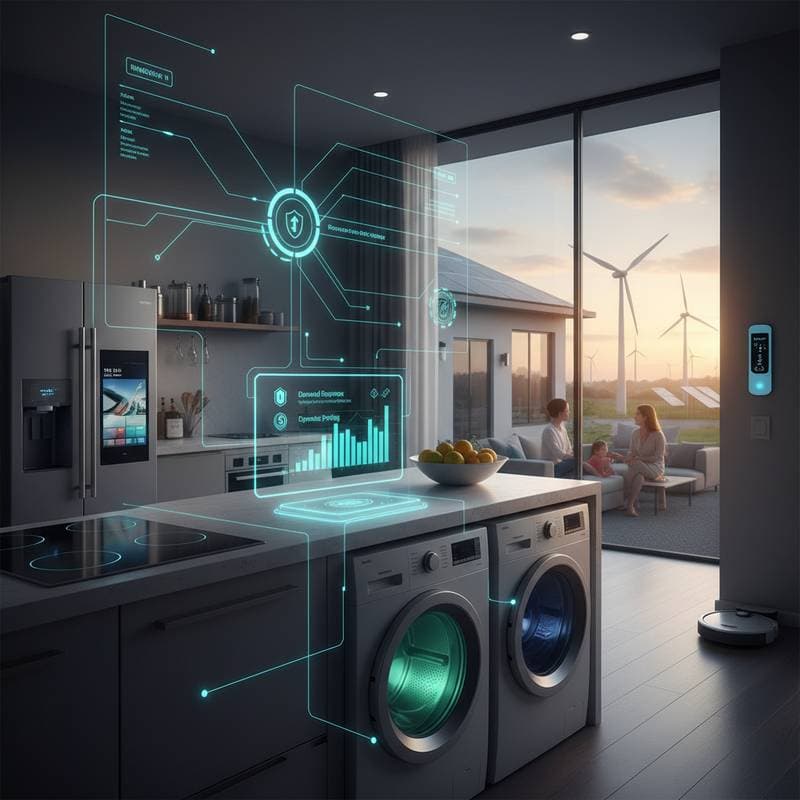
Smart homes extend beyond basic connectivity to form intelligent partnerships with the energy infrastructure. Appliances now engage in direct communication with utilities, shifting from passive consumers to active contributors. This interaction fosters reduced costs, heightened efficiency, and enhanced grid stability for all users.
Such advancements occur in households worldwide. A washing machine or electric vehicle charger receives real-time signals from the grid, adjusting operations according to demand levels and pricing structures. This exchange embodies demand response and dynamic pricing mechanisms, which reshape electricity usage patterns.
Foundations of the Smart Grid
Conventional power grids operated on a unidirectional model, delivering energy from plants to consumers without reciprocal input. This approach sufficed for years but falters amid rising demands from proliferating devices, electric vehicles, and intermittent renewables like solar power.
The smart grid introduces sensors, data networks, and analytical tools to enable real-time supply-demand equilibrium. Appliances integrate as key components, modulating their energy draw to support overall system balance. For instance, during peak loads, a dishwasher postpones its cycle until rates decline, preserving grid integrity while yielding savings.
Multiplied across numerous residences, these adjustments amplify impacts on resource conservation and environmental health.
Mechanisms of Grid-Home Communication
Secure digital channels facilitate this exchange. Smart meters serve as central nodes, relaying consumption data to utilities and receiving tariff updates in return.
Appliances process these inputs via embedded intelligence. A water heater activates during off-peak hours when rates fall, ensuring readiness without excess expenditure. Similarly, thermostats preemptively adjust temperatures ahead of surges, maintaining comfort seamlessly.
Experts term this process grid integration, where residential tech aligns with utility-scale operations. Utilities gain no overriding authority; rather, the framework promotes mutual optimization of energy resources.
Personal Benefits of Grid Integration
Homeowners often seek tangible advantages from such technologies. These emerge in short-term gains and enduring outcomes.
-
Cost Reduction:
Time-of-use pricing incentivizes shifting loads to economical periods. Scheduling laundry during low-rate windows directly trims bills. -
Enhanced Stability:
Coordinated reductions avert overloads and outages. Collective appliance adjustments during highs sustain service continuity. -
Environmental Gains:
Flexible devices accommodate variable renewables, stabilizing clean energy adoption and curbing emissions. -
Effortless Management:
Built-in automation eliminates manual monitoring. Systems handle optimizations independently, freeing users from routine interventions.
Energy oversight thus becomes an unobtrusive function, harmonizing efficiency with daily life.
Understanding Demand Response
Demand response forms the core of home-utility synergy. It involves modulating consumption to match supply dynamics, avoiding the need to activate reserve generation during surges.
The process resembles dialogue: the grid indicates elevated loads, prompting devices to defer non-essential tasks. A dryer, for example, halts briefly until pressures subside, then continues without interruption.
Utilities reward engagement with credits or discounted tariffs. Opt-in occurs voluntarily via device apps, granting users full oversight.
Dynamics of Time-Based Pricing
Dynamic pricing ties rates to instantaneous conditions, diverging from fixed charges. Abundant supply lowers costs; constraints elevate them.
Intelligent appliances leverage this intelligence for fiscal prudence. Vehicle chargers delay until midnight minima, while heat pumps prepare spaces pre-peak.
Studies indicate participants achieve 10 to 20 percent savings, amplified by automated responses. This pairing cultivates grid-friendly habits alongside personal economies.
Practical Implementations
Leading firms deploy compatible solutions across categories.
-
Intelligent Thermostats:
Google Nest and Ecobee models link to utility initiatives, modulating temperatures during demands to uphold equilibrium without discomfort. -
Responsive Water Heaters:
Rheem units align heating with optimal energy windows, prioritizing affordability and low-carbon sources. -
EV Charging Stations:
Integrated schedulers align with rate schedules, automating fills for minimal cost. -
Comprehensive Systems:
Tesla and Sunrun platforms merge solar, storage, and controls, toggling sources per economic and load cues.
These innovations underscore collaborative energy stewardship, empowering users as grid allies.
Addressing Privacy and Autonomy
Connectivity invites scrutiny over data security and device sovereignty. Usage profiles might disclose routines, necessitating robust safeguards.
Providers employ encryption and compliance protocols to protect information. Users dictate involvement levels, from full automation to advisory alerts only.
Clear interfaces ensure informed choices, fostering confidence in these networks.
Community-Wide Implications
Individual actions aggregate into societal advancements. Smart grids facilitate renewable penetration, diminishing reliance on fossil backups.
In crises like extreme weather, distributed responses mitigate disruptions, safeguarding essential services alongside residences.
Municipalities promote uptake via subsidies and outreach, amplifying communal resilience as participation expands.
Underpinning Technologies
Seamless user interfaces mask complex operations. Algorithms forecast peaks using past data, while platforms orchestrate device ensembles rapidly.
Integrations incorporate meteorology and presence sensors. Anticipating warmth, systems precool dwellings; surplus solar triggers storage in thermal forms.
Standards such as Matter standardize protocols, enabling cross-brand harmony for unified home orchestration.
Overcoming Adoption Hurdles
Challenges persist in accessibility and trust. Not every home boasts connectivity or advanced devices; skepticism lingers on surveillance risks.
Upfront investments exceed basics, though incentives narrow divides. Education clarifies cooperative natures, dispelling control myths.
Targeted campaigns highlight verifiable upsides, accelerating mainstream embrace.
Embracing Grid-Responsive Homes
Envision residences as adaptive nodes in the energy web: vehicles fueling economically, appliances syncing intuitively. This reality materializes through existing connectivity.
Subtle operations yield profound results—purer atmospheres, steadfast supply, fiscal relief—without fanfare.
Steps to Build a Grid-Connected Home
Grid-communicative appliances redefine efficient living, automating stewardship for mutual gains.
Begin modestly: install a thermostat or heater with utility compatibility to experience responsiveness. As integration deepens, anticipate adaptive pricing, robust renewables, and intuitive domiciles.
Intelligent utilization, not mere production, defines energy progress. Appliance-utility exchanges exemplify this evolution.