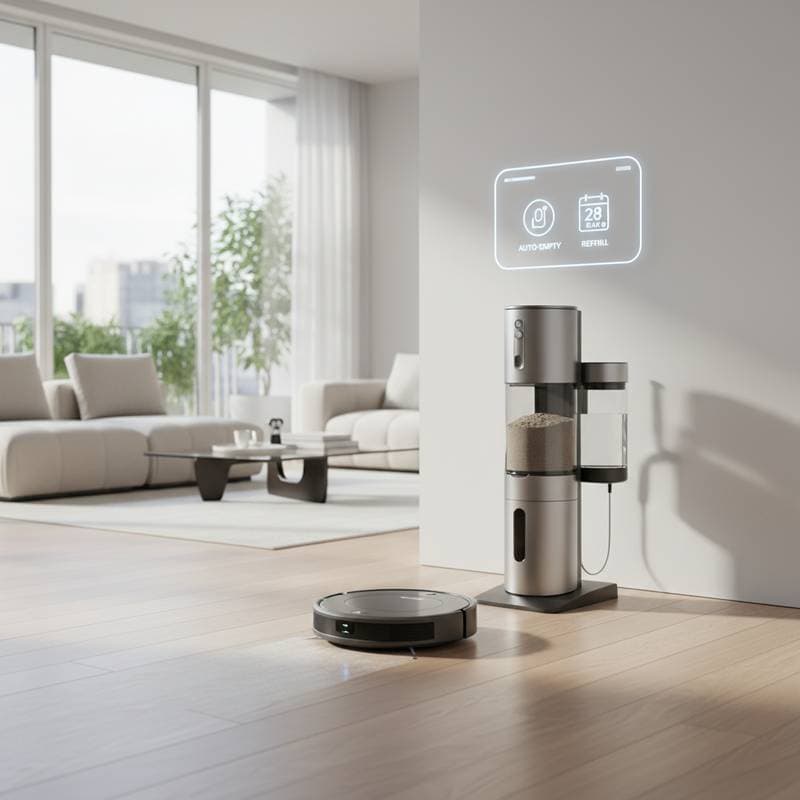
Imagine a Home That Stays Clean Without Constant Intervention
Picture completing a demanding week only to find your floors remain pristine. No need to haul out a dustbin or contend with clogged filters and overflowing compartments. A silent device navigates your spaces, managing every aspect of the process, including its own disposal and replenishment. Self-emptying and self-refilling robot vacuums deliver this level of independence.
These appliances appeal to those weary of persistent dust accumulation. They navigate entire residences, return to their base for charging, deposit collected debris, and restore water supplies for mopping functions. Homeowners enjoy extended periods of automated operation with minimal involvement.
Challenges with Conventional Robot Vacuums
Standard robot vacuums offer notable convenience, yet demand regular oversight. Their compact internal bins reach capacity swiftly in households featuring pets or children. Users often empty these bins after each session, undermining the automation's intent.
Mopping-capable units require water top-ups and pad replacements. Automation handles the cleaning, but upkeep remains manual. This limitation discourages full adoption among potential users.
Bridging the Convenience Divide Through Enhanced Automation
Advanced self-emptying and self-refilling models address these shortcomings. Their bases incorporate sealed disposable bags and integrated water reservoirs. Upon docking for recharging, the unit transfers debris to the base's expansive bag and replenishes its water supply as necessary. Certain variants also clean and dry mop attachments.
This setup enables seamless cleaning routines spanning weeks without user action.
Operational Mechanics
Debris Handling via Self-Emptying
Integrated sensors signal the end of a cleaning pass. At the docking station, a robust suction mechanism extracts particles from the robot's bin into a high-capacity bag. Such bags accommodate up to 60 days of debris for typical households.
Mopping with Automatic Refilling
Hybrid vacuum-mop systems benefit from base stations with dedicated clean water reservoirs. These automatically refill the robot's tank and dispose of used water. Each cleaning pass employs fresh solution, maintaining hygiene.
Intelligent Navigation and Scheduling
Contemporary units employ LiDAR or 3D sensors to generate precise home layouts. Applications allow designation of specific areas, adjustment of cleaning intervals, and timetable creation. Devices adapt suction intensity when transitioning between hard surfaces and rugs.
Proactive Maintenance Notifications
Integrated alerts inform users of impending needs, such as bag replacement or reservoir checks. Advanced systems predict remaining cycles based on usage patterns.
Recommended Models
The following selections represent leading performers in this segment:
-
Affordable Pick: Shark AI Ultra 2-in-1 Self-Empty Robot Vacuum ($449)
Suitable for compact residences, this model automates debris disposal and provides essential mopping capabilities, requiring manual water addition. It integrates seamlessly with Alexa and Google Assistant. -
Balanced Option: Roborock Q Revo ($899)
Equipped with dual reservoirs for hands-free refilling and mop pad maintenance, it handles multi-level mapping and delivers potent suction. Ideal for average-sized homes seeking reliable autonomy. -
High-End Choice: Ecovacs Deebot X2 Omni ($1,499)
Featuring a low-profile build, 8000 Pa suction, and a comprehensive base that manages washing, drying, refilling, and emptying, this unit employs AI for obstacle avoidance, including cords and small items.
All options integrate with prominent smart home platforms like Google Home and Amazon Alexa. Verify compatibility with systems such as Home Assistant or Apple HomeKit prior to acquisition.
Practical Advice for Optimal Performance
-
Strategic Base Positioning: Locate the docking station adjacent to an electrical outlet, shielded from sunlight and humidity. Dust on base sensors can disrupt alignment; clean them periodically.
-
Targeted Cleaning Zones: In pet-friendly environments, program increased frequency in busy zones to distribute debris load and prolong intervals between maintenance.
-
Modular Upgrades: Existing basic-dock owners can purchase enhanced auto-empty bases separately. Manufacturers like iRobot and Roborock support cross-model compatibility.
Investment and Implementation Overview
Anticipate expenditures from $400 to $1,500, influenced by automation depth and storage volume. Higher-tier systems with mop maintenance justify the premium through time savings.
Setup proves straightforward: allocate space for the base, pair with the mobile application, and initiate operation within an hour. Routine tasks include bag swaps every several weeks and sensor cleaning.
For tailored selection, consult platforms like Thumbtack or Angi to engage certified specialists. They assess flooring compatibility and network configurations to recommend suitable units.
Embracing Hands-Free Cleanliness
Adopting a fully independent robot vacuum reshapes daily routines. The subtle operational sounds blend into the environment, fostering tranquility. Reduced allergens and consistent cleanliness enhance well-being, freeing schedules for priorities beyond chores.
Reliability forms the core attraction. Eliminate the need for designated cleaning sessions or last-minute preparations for visitors. These devices suit aspirations for simplified living or effortless maintenance, ensuring sustained floor perfection.
Prepare to delegate debris, spills, and fur management to intelligent automation. Mature engineering and accessible pricing position these tools as viable for modern households, granting extended cleanliness with negligible oversight. Beyond mere tidying, they restore leisure and serenity.
Frequently Asked Questions
How long can a self-emptying robot vacuum operate without upkeep?
Most models sustain 30 to 60 days prior to dust bag replacement in the base.
Do self-refilling variants require plumbing connections?
Premium configurations offer this option, though most rely on detachable tanks for simplicity.
Are multiple floors supported?
Yes, numerous units retain maps for various levels and clean designated areas upon manual relocation.
Will they damage hardwood surfaces?
No, provided mop intensity settings prevent excess moisture.
What is the cost of replacement bags?
Packs of three typically range from $15 to $25, sufficient for months of use.
Can operation proceed offline?
Yes, but advanced features like scheduling and mapping necessitate Wi-Fi.
How noisy is the emptying process?
The short suction phase resembles a portable vacuum, lasting mere seconds.
Is expert installation necessary?
Generally not, yet guidance proves valuable for broader smart home integrations.