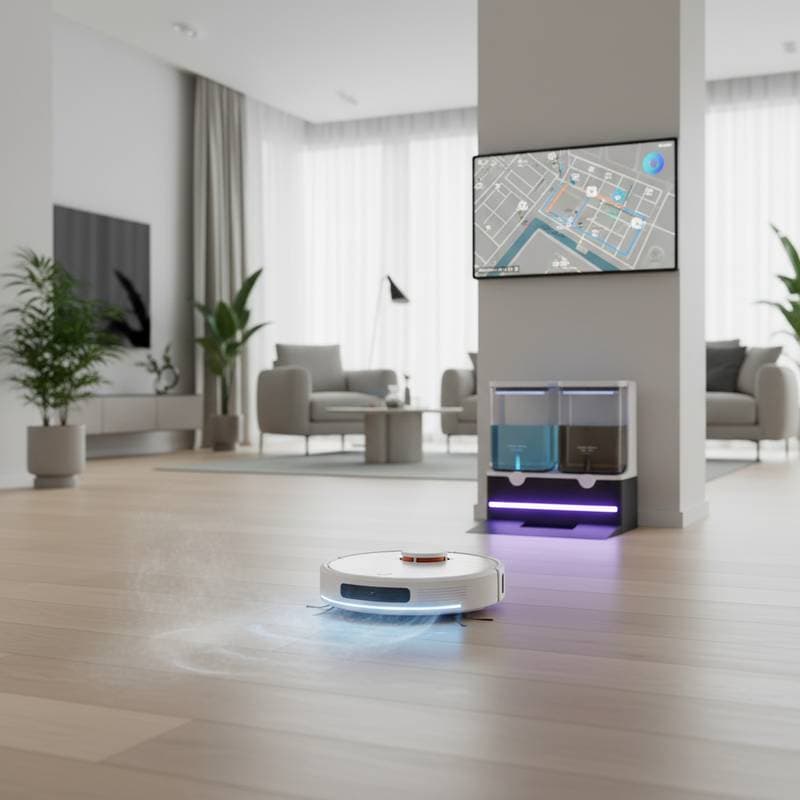
Robot Vacuums That Integrate Vacuuming, Mopping, and Disinfection
Smart home cleaning technology has advanced significantly. Devices that previously managed only dust and debris now address spills, residues, and pathogens in a unified operation. Homeowners gain access to thorough floor care that requires minimal intervention and maximizes automation.
The Importance of Integrated Cleaning Functions
Traditional robot vacuums excelled at dry debris but often overlooked wet messes and microbial growth. Demand from users seeks comprehensive solutions for diverse cleaning needs. Research among smart home users highlights automated cleaning as a key focus, particularly in busy households that prioritize health and efficiency.
Automated systems foster regular maintenance routines. Hybrid robots that vacuum, mop, and sanitize independently encourage sustained cleanliness without daily oversight.
Key Advancements in Multifunctional Robot Cleaners
- Combined Vacuum, Mop, and Disinfectant Capabilities
These models employ suction for debris, rotating pads for wiping, and integrated dispensers for sanitizing agents. Sensors detect surface types and adjust operations, such as prioritizing vacuuming on rugs and mopping on hard floors.
Practical advantages: This approach consolidates tasks, which conserves energy and water compared to sequential device use. Households with young children or pets receive daily sanitation without reliance on strong chemical cleaners.
Product illustration: The Ecovacs Deebot X series features a mop that applies disinfectant during vacuuming cycles. The unit returns to its base to wash and air-dry the pads, which minimizes bacterial accumulation.
- Intelligent Water Distribution Systems
Advanced reservoirs monitor usage and adapt flow rates to surface conditions. Mapping algorithms identify frequent spill areas for additional attention during routines.
Practical advantages: Such controls avoid excess moisture on sensitive floors like hardwood and optimize disinfectant application to eliminate residues.
Product illustration: iRobot's recent hybrid incorporates pumps that blend filtered water with antibacterial solutions for uniform distribution across floors.
- UV Light and Electrolyzed Water for Pathogen Control
Certain robots deploy ultraviolet-C illumination or generate electrolyzed water to eradicate bacteria and viruses without added chemicals. These methods achieve high sanitation levels suitable for sensitive environments.
Practical advantages: Individuals sensitive to allergens or synthetic cleaners benefit from residue-free results. Technologies proven in medical settings now adapt to residential scales.
Product illustration: Narwal's premium unit produces electrolyzed water that disrupts bacterial structures at a cellular level, resulting in odorless, trace-free surfaces.
- Automated Maintenance Through Docking Systems
Contemporary bases perform rinsing of mop components, air drying, and water replenishment without user input. They also manage dust collection and internal sanitation.
Practical advantages: Full automation extends to device upkeep, which prevents mold growth and maintains performance over multiple sessions.
Product illustration: Roborock's current platform removes debris, launders mop elements, and sanitizes internals as part of standard recharging.
- Precision Mapping and Selective Cleaning Zones
Navigation systems now interpret room functions, distinguishing between areas prone to spills or dust. Applications allow users to designate restricted or intensified cleaning regions.
Practical advantages: Targeted operations focus efforts on high-use spaces, which extends battery life and enhances overall efficiency.
Product illustration: Dreame's software supports user-defined zones, such as avoiding mopping on carpets or intensifying scrubs in kitchens.
Direct Benefits for Everyday Users
These innovations streamline household tasks by operating during off-hours, such as work or rest periods. Parents reduce concerns over play-area contaminants, while pet owners manage tracks and scents more effectively.
Efficiency gains include lower consumption of power and water through task integration. Compatibility with smart ecosystems enables voice activation or sensor-based scheduling, like initiating mops upon detecting departures.
Addressing Initial Limitations
Previous models faced issues with uneven pressure or water marks on surfaces. Developers introduced adjustable mechanisms and elevating mop designs to navigate transitions between floor types seamlessly.
Affordability improves as production scales, with basic hybrids now matching former high-end performance. Options allow gradual investment aligned with expanding smart home setups.
Designers prioritize data security through encryption and optional local storage, which reassures users about privacy in connected devices.
Essential Features for Purchasing Decisions
Select models based on these criteria to ensure reliability:
- Automatic cleaning of mop components, including washing and drying functions.
- Controls for water and sanitizer dispensing to protect various floor materials.
- Detailed navigation for optimized path planning and zone management.
- Quiet operation suitable for use in low-disturbance environments.
- Integration with assistants like Alexa or Google Home for seamless control.
Such attributes elevate devices from conveniences to essential tools in automated homes.
Integrating Advanced Cleaners into Daily Routines
After setup, these robots adapt to user habits, refining paths and schedules for consistent results. They blend into home operations alongside other automations, such as lighting or climate controls.
Reports from users indicate improved overall tidiness, as pristine floors inspire broader organization. This environment supports greater focus and well-being in daily activities.
Advancing Home Sanitation Standards
Multifunctional robots surpass basic vacuuming by delivering professional-level floor care. Future developments will likely enhance connectivity with broader home systems.
These tools establish automated hygiene as an accessible norm, providing not only clean surfaces but also reclaimed time and reduced stress.