Robot Vacuum Mops Conquer Under-Furniture Cleaning
Smart homes evolve from optional features to essential components of daily life. Robot vacuum mops exemplify this shift as compact, intelligent devices that extend beyond basic tasks. The current models address a persistent cleaning challenge: accumulated dust and debris beneath furniture. Enhanced sensors, reduced heights, and refined navigation enable these machines to access previously inaccessible areas, surpassing the limitations of manual efforts.
The Challenge of Cleaning Under Furniture
Homeowners face ongoing difficulties when maintaining floors beneath heavy items like couches and beds. Traditional vacuums lack the necessary clearance, and relocating furniture proves cumbersome. Dust, pet hair, and allergens accumulate in these spaces, compromising indoor air quality and creating uneven cleanliness. Earlier robot models attempted to mitigate this issue but often encountered obstacles, leading to incomplete coverage or operational failures.
Contemporary robot vacuum mops redefine this process. They incorporate sophisticated mapping and adaptive modes to navigate confined areas effectively. These devices maneuver past furniture legs with precision, ensuring thorough cleaning in overlooked zones.
1. Ultra-Low Profiles for Access to Tight Spaces
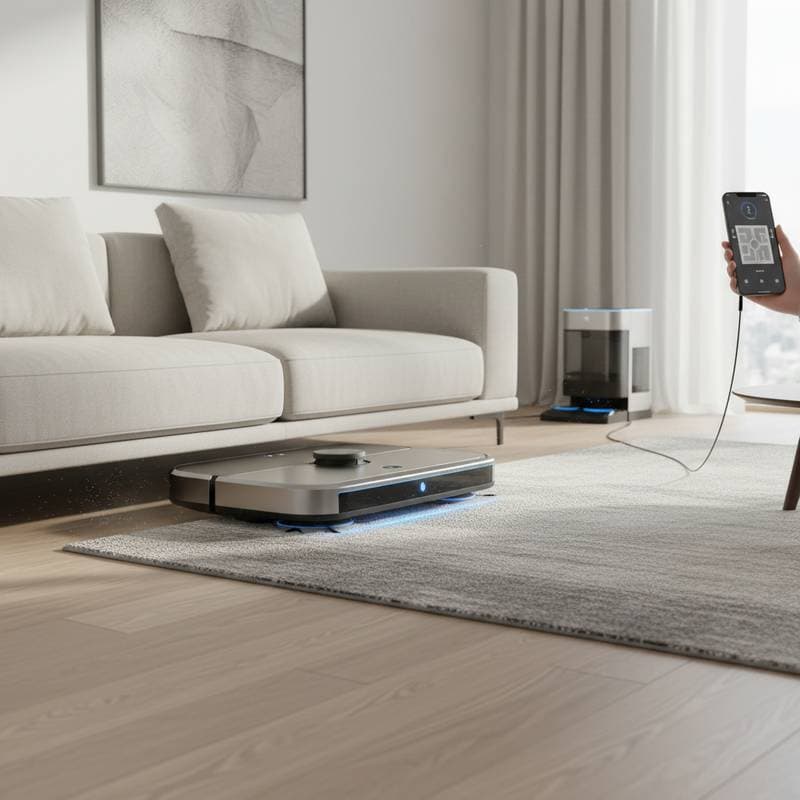
A key advancement lies in the engineering of exceptionally thin chassis. Leading models measure less than three inches in height, allowing passage under most standard furniture. This design eliminates visible dust buildup along edges and addresses neglected sections of flooring.
Consider the Roborock S7 Max Ultra, which pairs its streamlined form with dynamic path planning to avoid entrapment. Users benefit from consistent performance across varied home layouts, simplifying floor care routines.
2. Advanced Sensors for Accurate Navigation
Effective cleaning demands more than minimal height; it requires environmental awareness. Modern units deploy laser-based LiDAR, infrared detection, and camera systems to map surroundings in real time. They assess furniture elevations, identify potential snags like cords, and optimize routes for full coverage.
This technology yields tangible advantages. A unit can anticipate the position of table supports and alter its trajectory seamlessly, conserving battery and minimizing disruptions. Industry data highlights navigation reliability as a primary purchase criterion for consumers.
3. Hybrid Vacuum-Mop Functionality for Comprehensive Results
Vacuuming alone removes loose particles, yet mopping enhances sanitation by tackling residues. Integrated systems perform both operations sequentially in a single cycle, first extracting solids and then applying moisture to capture finer contaminants.
Such versatility proves ideal for areas prone to pet residues or spills. Manufacturers like Ecovacs and Dreame equip their devices with mechanisms that elevate mop pads on carpets, preventing unwanted dampness. This all-in-one approach maintains uniform cleanliness throughout the residence with limited oversight.
4. Dynamic Suction and Mopping Adjustments
Concealed spaces often harbor concentrated debris. Responsive suction mechanisms modulate power according to detected soil levels and floor types, ramping up for heavy accumulations and dialing back for lighter tasks. This automation extends battery life and operates quietly.
Mopping features similarly adapt pressure and water disbursement to suit surfaces such as tile or wood, avoiding excess moisture. These capabilities accommodate diverse flooring in a single household, promoting durability and efficiency.
5. Automated Maintenance Docks for Convenience
Maintenance has historically deterred widespread adoption of robotic cleaners. Current high-end variants feature bases that automate dustbin evacuation, mop rinsing, and fluid replenishment upon return.
This functionality suits demanding schedules, as users initiate cycles remotely and discover pristine results without intervention. The system sustains readiness for subsequent uses, supporting larger areas without performance decline.
6. Integrated App and Voice Controls
These devices integrate into expansive smart ecosystems via dedicated applications and voice platforms. Owners define no-go zones, establish timetables, and track operations from afar. Compatibility with Google Home or Alexa enables verbal commands, aligning cleaning with other automated functions.
This interoperability fulfills demands for cohesive home management. Devices anticipate user patterns, fostering an environment where maintenance occurs intuitively alongside daily activities.
7. Focus on Energy Savings and Eco-Friendly Features
Efficiency extends to resource conservation. Optimized algorithms minimize redundant traversals, lowering power and water consumption. Select models incorporate recyclable parts and reusable filters, aligning with environmental priorities.
This approach resonates with households seeking balanced innovation. Cleaning becomes not only effective but also mindful of broader impacts.
Achieve Seamless Home Maintenance
Robot vacuum mops elevate routine chores into automated processes. They deliver uniform cleanliness, including challenging under-furniture zones, while integrating smoothly into modern lifestyles. Homeowners gain time and assurance through reliable, intelligent support that anticipates needs and sustains environments effectively.