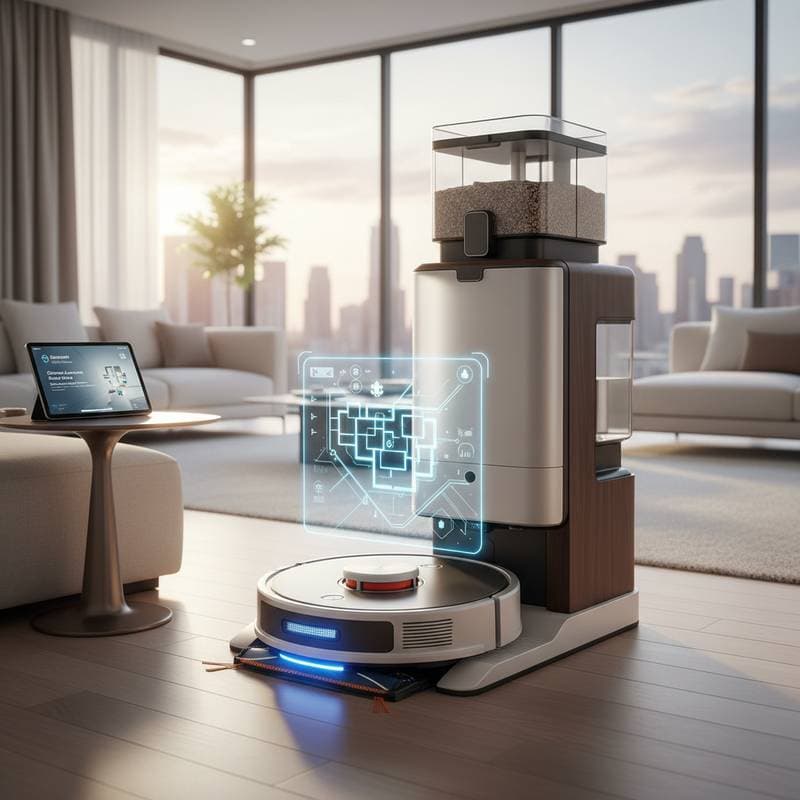
Robot Vacuums That Mop, Sanitize, and Self-Empty for Weeks
Smart home cleaning has transitioned from a distant idea to an everyday reality. Devices that once moved aimlessly across floors now perform comprehensive tasks: they vacuum, mop, sanitize, and manage their own waste. These advanced robots maintain spotless homes for weeks with minimal user involvement, reshaping household routines through intelligent automation.
The Evolution of Autonomous Cleaning
Initial robotic vacuums offered basic functionality, yet they frequently encountered obstacles and followed inefficient paths. Contemporary models employ sophisticated sensors, precise mapping, and hybrid cleaning mechanisms to traverse intricate layouts. They distinguish between floor types, avoid hazards, and execute targeted cleaning strategies.
This progression mirrors the broader development of integrated smart homes. Homeowners benefit from unified systems that streamline operations and deliver superior outcomes without requiring multiple specialized appliances.
1. Multi-Stage Cleaning in One Device
Advanced robot vacuums integrate powerful suction, moist mopping, and disinfection capabilities into a single unit. During a session, the device scans the area, removes loose particles via vacuuming, applies measured moisture to mop pads for hard surfaces, and applies sanitizing agents to eliminate microbes.
This approach ensures comprehensive coverage tailored to each surface. For instance, select models feature separate reservoirs for clean and used water, preventing cross-contamination during mopping cycles. Such design choices reduce the need for separate tools and minimize daily oversight, allowing users to maintain hygiene standards effortlessly.
2. Self-Emptying Dustbins and Water Refill Stations
Previous generations required frequent manual emptying of compact bins and water reservoirs, undermining their convenience. Current innovations include automated docking stations that extract dust into larger containers, rinse mop attachments, and replenish water supplies automatically.
These features extend operational independence to periods of two to four weeks, depending on home size and usage. High-end variants employ allergen-sealed bags in the base unit, which users replace only periodically. This setup transforms the robot into a reliable partner that operates with negligible supervision.
3. Smart Mapping and Adaptive Navigation
LiDAR technology and artificial intelligence enable robots to generate accurate home blueprints, detect changes in layout, and optimize paths for efficiency. Over multiple runs, the system refines its understanding, adjusting to relocated items or varying dirt accumulation in high-traffic zones.
Users gain precise control through companion applications, designating specific areas for cleaning or scheduling targeted sessions. For example, instruct the device to focus on entryways after outdoor activities. This intelligence reduces cleaning duration and enhances thoroughness, integrating maintenance seamlessly into daily life.
4. Built-In Sanitization and Allergy Control
Beyond surface cleanliness, these devices address microbial and particulate threats. Integrated UV illumination or heated steam functions target pathogens on floors, while base stations capture airborne irritants during waste transfer.
Such capabilities promote healthier environments, particularly in homes with sensitive occupants like young children or allergy sufferers. By reducing allergen spread, the robots contribute to improved indoor air quality. This emphasis on wellness positions cleaning technology as a vital component of family health management.
5. Voice and App Integration
Seamless compatibility with platforms such as Amazon Alexa and Google Assistant allows voice-activated commands for initiating or halting operations in designated rooms. Mobile applications provide granular oversight, from setting recurring schedules to monitoring progress via real-time visualizations.
Users receive notifications for maintenance needs, such as low water levels, enabling proactive adjustments even remotely. This connectivity personalizes the cleaning process, aligning it with individual preferences and eliminating disruptions to productivity.
6. Energy Efficiency and Sustainability
Designers prioritize resource conservation through adaptive power management. Robots charge only as required and modulate suction intensity according to debris levels and flooring materials, optimizing energy consumption.
Reusable components, including washable pads and filters, decrease disposable waste. These elements appeal to environmentally aware consumers, lowering operational costs and supporting sustainable practices. A device that performs effectively while conserving resources embodies forward-thinking household innovation.
7. The Move Toward Full Autonomy
Manufacturers pursue complete independence, where robots manage all cleaning facets without prompts. Equipped with expansive docks for waste and fluid handling, plus predictive scheduling based on usage patterns, select systems operate for extended durations with rare interventions.
This advancement redefines chore management, shifting from manual triggers to anticipatory maintenance. Homes equipped with such technology sustain optimal conditions proactively, freeing residents from routine oversight.
Real-World Example: The Complete Smart Cleaning Ecosystem
Integrated setups amplify individual device potential. Combine a robot vacuum with an intelligent air filtration unit and climate control system to respond dynamically to environmental shifts. Post-cleaning, the purifier engages to clear residual particles; elevated moisture from mopping prompts ventilation adjustments.
This interconnected framework fosters adaptive spaces that align with occupancy and needs. Homeowners experience cohesive automation that elevates overall comfort and efficiency.
Selecting and Integrating Advanced Cleaning Solutions
To choose an effective robot vacuum, evaluate capacity for self-maintenance, navigation reliability, and compatibility with diverse floorings. Prioritize intuitive applications and synergy with existing smart devices for maximum utility.
Implementation involves initial mapping runs to calibrate performance, followed by customized routines that match lifestyle demands. Regular firmware updates ensure ongoing enhancements, sustaining peak functionality over time.
These technologies deliver enduring benefits: pristine environments, reduced effort, and enhanced well-being. They enable focus on priorities beyond maintenance, establishing a foundation for modern, efficient living.