Micro-Zone Heating Delivers Room-by-Room Climate Control
Smart homes now extend beyond lights and assistants. Micro-zone heating brings precise temperature management to individual spaces. This approach replaces a single central thermostat with independent controls that match each room to its actual use.
The system learns occupancy patterns and adjusts output automatically. Homeowners gain better efficiency along with consistent comfort. As these controls mature, they form a practical step toward lower utility costs.
Limitations of Single-Thermostat Systems
A single thermostat often creates uneven conditions. Sunlit rooms overheat while shaded areas stay cold. Occupants adjust the setting repeatedly, which raises energy use without solving the mismatch.
Unused spaces such as guest rooms receive the same heat as living areas. This uniform delivery wastes fuel and increases monthly bills. Zoned control removes that waste by directing heat only where people are present.
Core Components of a Zoned System
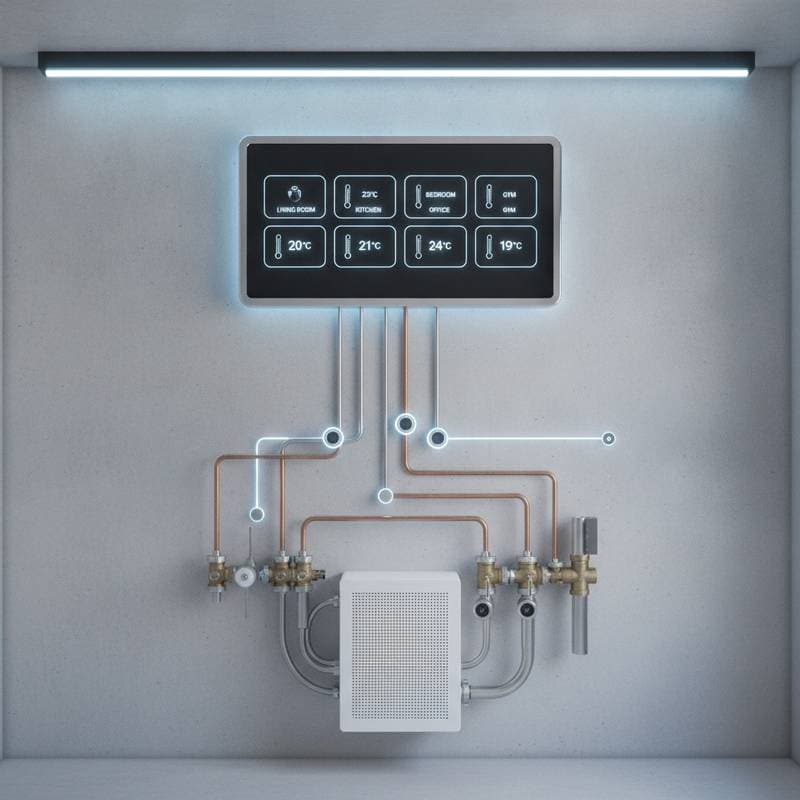
A micro-zone setup relies on four main elements. Smart controllers sit in each room. Wireless sensors track temperature, humidity, and motion. Motorized valves or dampers regulate airflow or hot water. A central hub processes the data and updates settings throughout the day.
These parts work together without constant manual input. The result is a responsive network that maintains chosen temperatures in occupied zones only.
Measured Benefits for Homeowners
Zoned heating reduces energy consumption by directing output to active spaces. Agencies note savings that reach one-third in suitable homes. Larger properties with varied sun exposure see the largest drops.
Daily routines improve as well. A bathroom can reach a comfortable temperature before morning use while bedrooms stay cooler. An office warms only during work hours. These targeted adjustments remove the need for repeated thermostat changes.
Available Hardware Options
Several established products support room-level control. Tado supplies radiator valves that include scheduling and open-window detection. Ecobee pairs occupancy sensors with its thermostats to lower output in empty rooms. Honeywell Home offers wireless damper kits that retrofit existing ductwork.
Each option pairs hardware with companion software. Users review usage reports and refine schedules from a phone or tablet.
Factors That Shape Perceived Comfort
Air temperature alone does not determine comfort. Humidity, air movement, and radiant heat also matter. Multi-sensor units capture these variables and make small corrections. A north-facing room may receive a slight increase on cloudy days, while a kitchen sees reduced output during cooking.
The continuous feedback keeps conditions steady and limits excess energy use.
Connections to Other Smart Devices
Heating zones operate best when linked to the wider home network. A single voice command can lower blinds, dim lights, and adjust temperatures in non-bedroom areas. Security motion sensors can also serve as occupancy detectors.
Open standards such as Matter simplify these links. Devices from different makers share data without custom bridges.
Sustainability Gains
Heating accounts for a large share of household energy. Targeted delivery, schedule alignment with actual use, and remote shutoff all cut waste. Usage reports highlight opportunities such as draft sealing or added insulation.
These steps support lower bills and reduced emissions while preserving comfort.
Predictive Adjustments
Advanced systems apply usage history to anticipate needs. Rooms warm shortly before typical occupancy. Outdoor forecasts allow preemptive changes that maintain indoor stability.
The proactive method avoids reactive spikes and keeps overall consumption lower.
Installation and Cost Factors
Older homes with single-zone ductwork may require added valves or dampers. Professional assessment identifies the simplest retrofit path. Upfront costs exceed those of a basic thermostat, yet energy reductions offset the difference over several seasons.
Selecting equipment that follows open communication standards prevents future compatibility issues.
Daily Experience After Setup
Once configured, the system follows household patterns without further attention. Morning zones activate first in kitchens and baths. Evening settings favor living areas while sleeping spaces remain cool. Temporary zones for visitors are created through the same app used for permanent schedules.
Preparing for an Upgrade
Review room usage patterns before selecting equipment. Note spaces that stay empty for long periods or that need different temperatures. Compare valve-based and damper-based solutions against existing heating infrastructure. A short professional survey confirms the most direct installation route.
The outcome is a home that supplies warmth only where it is needed and when it is needed.