Room-by-Room Climate Control Replacing Central HVAC
Smart home innovation is transforming how people think about comfort. For decades heating and cooling have been handled by a single central system that treated an entire home as one space. That model often wasted energy and left some rooms too hot or too cold.
A new approach now lets homeowners control the temperature of each room individually. Room-by-room climate control is replacing traditional central HVAC and promises personalized comfort along with lower bills.
Why Central HVAC Is Losing Ground
The traditional HVAC setup sends air through one network of ducts regulated by a single thermostat. It is simple but inefficient because a hallway thermostat cannot detect sunlight warming the living room or cooler upstairs bedrooms in the evening. The result is uneven comfort and wasted power.
Heating and cooling account for nearly half of typical household energy use. Much of that energy is lost when entire homes are conditioned while only a few rooms are occupied. Consumers recognize these inefficiencies and seek more precise solutions.
The Rise of Zoned Heating and Cooling
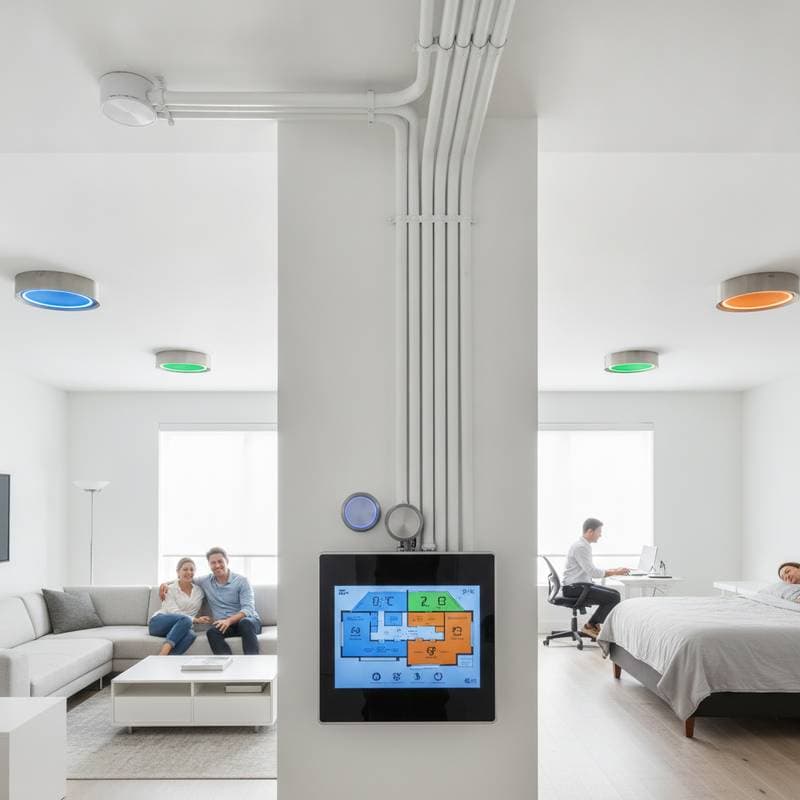
Zoned systems divide a house into separate areas that can be heated or cooled independently. Smart home technology now makes this approach affordable for residential use. Modern systems rely on wireless sensors and smart vents that open or close automatically based on occupancy and temperature readings.
A family can keep the living room cool during the day while unused bedrooms stay warmer. The system adjusts as people move through the house. Companies such as Flair, Ecovent, and Keen Home offer ecosystems that connect through apps and learn usage patterns over time.
How Smart Thermostats Are Evolving
Early smart thermostats learned preferences and adjusted schedules automatically. Newer models integrate multiple sensors that allow precise control for each area. Battery-powered sensors measure temperature, humidity, and air quality in individual rooms.
The system then balances airflow or changes settings for each space. Ecobee thermostats, for example, support multiple sensors that prioritize occupied rooms. Integration with voice assistants and motion sensors lets the home prepare itself before arrival.
Energy Efficiency and Cost Savings
Targeted climate control reduces consumption by conditioning only the spaces that need it. Savings are greatest in larger homes with multiple rarely used rooms. These systems also support grid stability by lowering demand during peak hours.
Comfort Tailored to Every Lifestyle
Each household member can enjoy a preferred temperature without compromise. A child room can stay slightly warmer while a home gym remains cooler. Zone control prevents unnecessary conditioning when rooms are empty.
Morning routines become smoother when bedrooms warm gradually before wake-up time. Multi-generational homes benefit because older members can have warmer spaces while younger members keep cooler air.
The Role of Smart Vents and Sensors
Smart vents replace standard registers and contain small motors that respond to sensor signals. Installation requires only a screwdriver and a connected hub. When a room reaches the desired temperature the vent closes partially to redirect airflow.
Manufacturers design vents to maintain safe air pressure and avoid strain on the HVAC blower. Wireless communication keeps power use low.
Integration with Broader Smart Home Ecosystems
Room-by-room control connects with lighting, security, and energy management systems. Motion sensors can shut off both lights and airflow when a room is empty. The Matter standard allows devices from different brands to work together without complex setup.
Overcoming Barriers to Adoption
Cost and compatibility remain concerns for some households. Retrofit solutions now work with existing ducts and furnaces without major modifications. Apps display temperature maps that simplify zone management once preferences are set.
Health and Air Quality Benefits
Smart sensors track humidity and air quality indicators. When readings move outside healthy ranges the system increases ventilation or alerts the user. Balanced humidity helps prevent mold and supports respiratory comfort.
Real-World Example: A Smarter Suburban Home
A two-story house experienced hotter upstairs bedrooms than the downstairs living area. After installing smart vents and room sensors connected to an existing thermostat the system learned daily patterns within a week. It directed more cool air upstairs in the afternoon and shifted airflow at night. Energy bills dropped and comfort became consistent throughout the home.
What to Consider Before Upgrading
Assess whether the current HVAC system supports variable airflow. Identify the rooms used most often and at what times. Choose devices that integrate with existing smart home platforms. Check for utility rebates that offset part of the upfront cost.
Living with Smarter Climate Control
Homes feel more responsive once the system is installed. Subtle adjustments occur throughout the day to maintain steady comfort. The technology encourages awareness of energy use and fosters better habits over time.