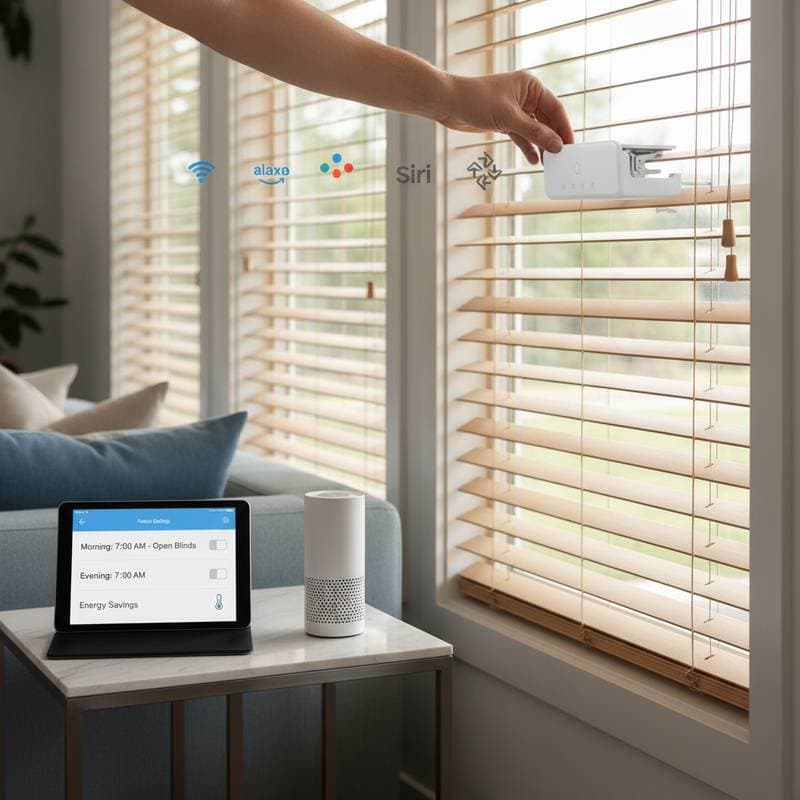
Imagine Your Blinds Responding to You Instantly
Existing blinds may appear satisfactory yet function in outdated ways. Each morning requires pulling the cord, which often sticks or jerks before allowing sufficient light. Replacing them with motorized alternatives seems appealing, but high costs and installation challenges deter many. Retrofit kits enable retention of current blinds while adding smart control in under a minute.
These kits automate blinds swiftly without wiring or hardware replacement. Modern retrofit motors achieve this transition in approximately 60 seconds per window. Their simplicity and affordability stand out, particularly with compatibility for Alexa, Google Home, Siri, and Matter hubs.
The Opportunity: Smarter Light and Better Living
Smart blinds extend beyond mere convenience to enhance comfort, privacy, and energy efficiency. Schedule them to rise at sunrise, lower during peak heat, or coordinate with thermostats for natural temperature regulation. They safeguard furnishings from sun damage and maintain a uniform ambiance in living spaces.
Complete replacement systems often exceed hundreds of dollars per window, with professional installation adding substantial fees. Retrofitting addresses this by integrating a compact motor into the existing mechanism, yielding automated functionality immediately. Homeowners find this a straightforward weekend task that refreshes spaces without renovation expenses.
How Smart Blind Retrofit Kits Work
Retrofit kits employ a compact motor that secures to the blinds' chain or wand. This motor links via Bluetooth, Wi-Fi, or Zigbee to home networks or hubs. Post-installation, control occurs through apps, voice assistants, or routines. Certain models incorporate sensors for light or temperature to enable automatic adjustments.
The Basic Components
- Motor Unit: Central element that propels blinds using a gear compatible with existing cords or chains.
- Control Module: Integrated or separate, manages wireless connections.
- Power Source: Rechargeable lithium batteries provide months of use; solar panels offer optional maintenance-free power.
- Mounting Accessories: Clips or brackets ensure secure, non-damaging attachment.
Installation in 60 Seconds
A standard process unfolds as follows:
- Measure and Match: Verify compatibility of chain or cord style, including bead dimensions and spacing.
- Attach the Motor: Secure the motor to the chain or wand side.
- Connect Power: Install the battery or attach a cable for outlet-powered units.
- Pair with App: Link the motor to Wi-Fi or Bluetooth via the manufacturer's application.
- Test and Adjust: Operate the blinds to establish open and close limits.
No drilling, wiring, or specialized tools prove necessary.
Product Options: Budget to Premium
Retrofit kits span price points based on features and compatibility.
1. Budget Option: SwitchBot Blind Tilt ($69 per window)
This motor attaches to wands and integrates with the SwitchBot app. It connects to Alexa and Google Assistant via the SwitchBot Hub Mini. A rechargeable battery powers it, with solar panel compatibility for ongoing energy. Renters and novices appreciate the sub-minute setup.
2. Mid-Range Option: Soma Smart Shades 2 ($149 per window)
Designed for chain-driven blinds, this motor uses Bluetooth or Wi-Fi. The Soma Connect hub enables Apple HomeKit, Alexa, or Google Home integration. Batteries endure six months per charge, supplemented by solar panels. Quiet, smooth performance suits living areas or offices.
3. Premium Option: Eve MotionBlinds Retrofit Kit ($199 per window)
Supporting Thread and Matter, this kit ensures adaptability to smart home advancements. It pairs directly with Apple Home without additional hubs. Silent operation and robust construction appeal to those expanding automation systems.
User feedback highlights ease, reliability, and compatibility across these options, all preserving original blinds.
Insider Tip: The Hidden Power of Group Control
Group blinds by sun exposure, such as "East Windows" or "Living Room Set," to adjust multiples simultaneously. This conserves battery and stabilizes temperatures while avoiding uneven appearances from shifting light.
Calibrate limits one inch short of full extension to minimize motor strain and prolong durability.
Compatibility and Smart Home Integration
Integration amplifies retrofit effectiveness with other devices.
- Amazon Alexa: Commands like "Alexa, close the bedroom blinds" function via hubs.
- Google Home: Supports routines such as "Good Morning" or "Movie Time."
- Apple HomeKit: Provides secure, local management for privacy.
- Matter: Enables universal compatibility across platforms; prioritize for longevity.
Automate with lights, thermostats, or sensors—for example, closing blinds upon heat detection.
Practical Considerations Before You Buy
1. Check Blind Type
Motors suit roller, Venetian, or vertical blinds with bead chains or wands. Cordless or tension models demand alternative approaches.
2. Power and Charging
Batteries last three to six months; solar panels ease upkeep for multiple units. Apps notify of low power.
3. Connectivity Range
Bluetooth limits distance; opt for Wi-Fi or Thread in obstructed areas.
4. Budget Planning
Costs range $70 to $200 per window, totaling $600 to $1,200 for a three-bedroom home.
5. Professional Assistance
DIY suits most, but experts handle high or intricate setups. Custom chains may need adapters.
6. Warranty and Support
Seek one-year coverage and update-capable products for ongoing enhancements.
The Benefits of Smart Blind Automation
Energy Efficiency
Intelligent sunlight management cuts heating and cooling expenses by up to 15 percent via sensors.
Comfort and Convenience
Eliminate manual adjustments; align with alarms or sunset for effortless use.
Security
Automated movement simulates presence, integrating with security for added deterrence.
Accessibility
Voice or app control aids those with limited mobility, bypassing physical effort.
DIY Versus Professional Installation
Clip-on designs favor self-installation, ideal for novices. Professionals ensure precision for elevated or complex configurations, often finishing several windows swiftly.
For assistance, explore specialized installers via platforms like XavageTech Marketplace. They manage setup, calibration, and system integration.
Long-Term Maintenance and Upgrades
- Periodic Cleaning: Remove dust from chains and motors with a dry cloth quarterly.
- Battery Care: Recharge promptly; preserve lithium capacity by avoiding depletion.
- Firmware Updates: Monitor apps for connectivity and feature improvements.
- Future Upgrades: Add hubs to Bluetooth systems or leverage Matter expansions without motor replacement.
Making It Happen
Retrofits deliver swift, gratifying home enhancements. Begin with select windows to integrate automation into daily life, selecting ecosystem-aligned products. DIY installations proceed rapidly; professionals accelerate larger projects. The result: rooms that adapt seamlessly to light and needs, fostering sustained efficiency and ease.