Gesture Control Ushers in the Touchless Smart Home Era
Smart homes evolve beyond voice commands and mobile applications toward more intuitive interactions. Gesture control emerges as a pivotal advancement, converting everyday spaces into environments that respond to motion, posture, and presence. This approach creates living areas that feel natural, hygienic, and integrated seamlessly into daily routines.
Consider entering the kitchen and raising a hand to activate the coffee maker, or twisting the wrist to adjust lighting levels. Such scenarios represent current realities rather than distant fantasies. Advances in spatial computing and sensor technology now deliver gesture recognition for practical, everyday applications.
The Shift Toward a Touchless Lifestyle
Previous smart home generations emphasized voice assistants and app-based controls. Although useful, these methods demand intentional engagement. Gesture recognition alters this dynamic fundamentally, as homes observe and predict needs via natural movements.
Demand for touchless options surged with priorities on cleanliness and minimized surface contact. Research indicates that users prioritize solutions enhancing sanitation and reducing physical interactions. Gesture systems align with these preferences, providing control that appears instinctive and forward-thinking.
How Gesture Recognition Works
Gesture recognition integrates motion sensors, cameras, and spatial computing to analyze body movements. Systems employ depth-sensing or radar technologies to identify hand gestures, finger motions, or full-body actions. Algorithms process this information to execute corresponding digital instructions.
For example, a wave might advance a music track, while a swipe adjusts illumination. The technology maps movements in three-dimensional space and interprets them as specific commands. Ongoing refinements in machine learning enable distinction between deliberate signals and incidental motions, supporting nuanced recognition.
Everyday Convenience, Elevated
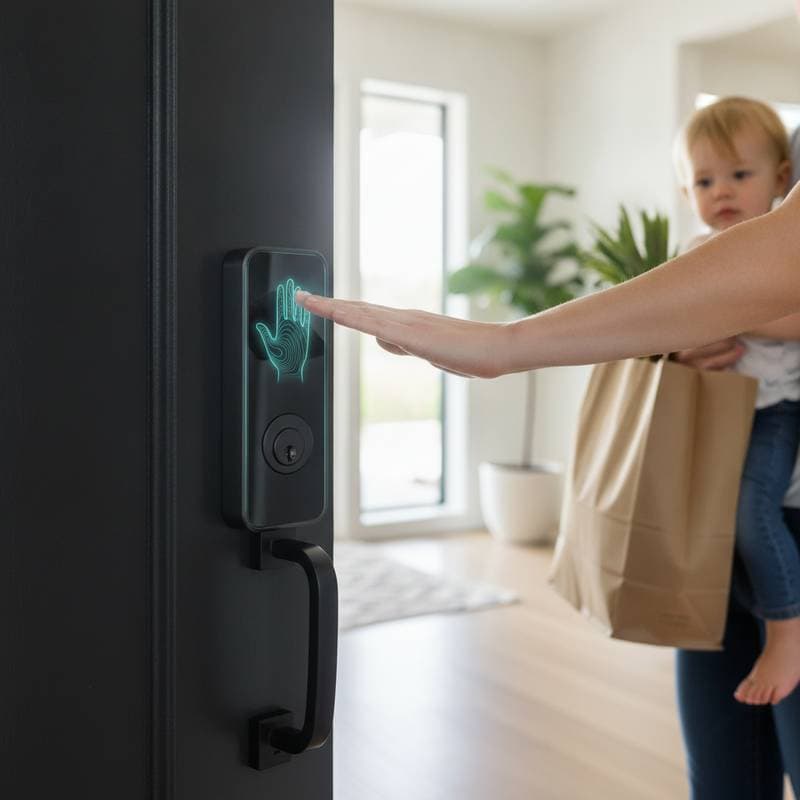
Gesture control extends beyond novelty to practical enhancements in home navigation. Situations involving full or soiled hands, such as during meal preparation, cleaning, or transporting items, often lead to awkward device handling. Gesture systems eliminate these disruptions.
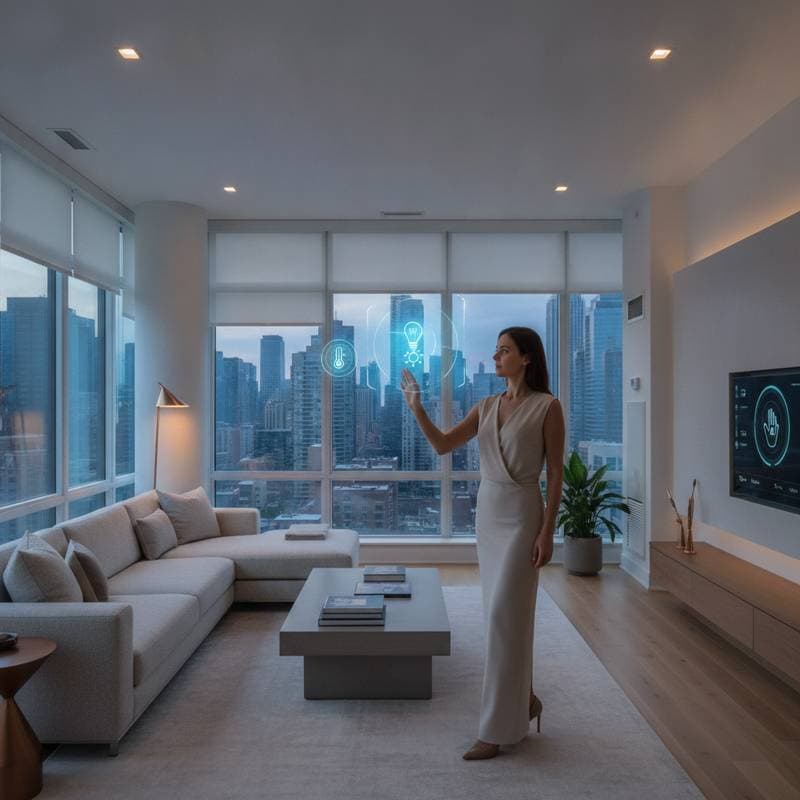
One motion suffices to raise window coverings, halt audio playback, or initiate video communications. This capability streamlines time management and facilitates concurrent tasks. Ultimately, it fosters interactions mirroring natural human expression, minimizing barriers between intent and outcome.
Leading Innovations in Gesture Control
-
Spatial Sensing Displays
Evolving smart displays surpass traditional touch interfaces. Integrated radar sensors detect hand movements near or above the surface. Individuals navigate playlists, mute notifications, or review instructions without surface contact, preserving device condition and incorporating advanced functionality into routines. -
Gesture-Enabled Lighting Systems
Lighting manufacturers embed sensors within fixtures or panels. A straightforward wave toggles power, and rotational gestures modify intensity or hue. These features prove particularly valuable in high-moisture areas like kitchens and restrooms, boosting usability and sanitation. -
Smart TVs and Entertainment Hubs
Gesture integration refreshes communal spaces. Certain televisions interpret motions for menu traversal and volume regulation, offering alternatives to remote controls. When combined with ambient sound systems and occupancy awareness, interactions gain depth and adaptability. -
Appliances That Respond to Motion
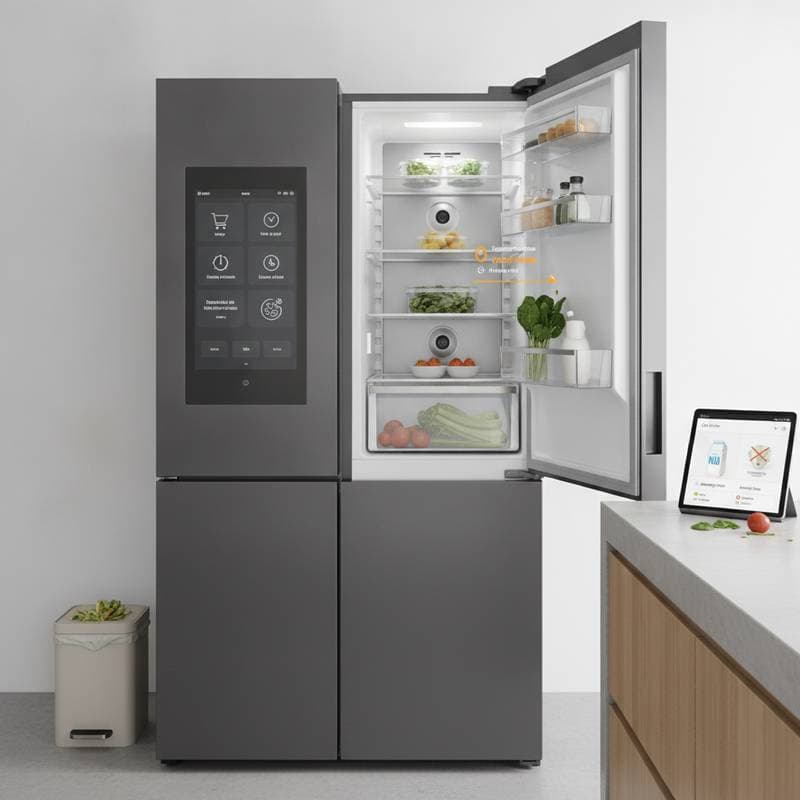
Domestic devices in cooking and cleaning sectors adopt these capabilities. Proximity to an oven might reveal timer status via a gesture, or motion initiates laundry operations. Developers pair detection with location awareness to optimize resource use. -
Security and Access Systems
Security solutions incorporate motion for activation. Defined gestures engage surveillance, release locks, or deactivate alerts. Integration with biometric verification enhances tailored security measures.
Why Consumers Are Excited
Users embrace gesture recognition for its emphasis on ease, sanitation, and autonomy. Elimination of contact appeals to wellness-focused families. Simplified handling supports demanding schedules. Additionally, it imparts a progressive ease surpassing voice-only options.
Pioneering users characterize it as unobtrusive utility, operating subtly without overt demands. This seamless operation anticipates requirements discreetly. Such discretion signals the progression of intelligent habitats.
The Technology Behind the Magic
Sophisticated underpinnings power this apparent simplicity. Spatial computing bridges virtual and tangible realms using sensors and computational models. Depth-imaging devices, radar components, and thermal detectors record multidimensional activity, with onboard units analyzing inputs instantaneously.
Innovations in energy-efficient processors support gesture processing without excessive consumption. This efficiency enables embedding in diverse applications, from compact controls to substantial machinery. Enhanced performance broadens applicability within interconnected home networks.
Overcoming Adoption Barriers
Gesture systems encounter hurdles including expense, setup, and data security. Premium sensors elevate initial costs, deterring some budgets. Concerns arise regarding surveillance from imaging or tracking elements.
Producers mitigate issues through on-device computation, avoiding external data transmission. This method lowers response times and safeguards information. Maturing approaches build trust, accelerating widespread use.
Integration With Existing Smart Ecosystems
Gesture functionality excels within comprehensive smart frameworks. Optimal setups link with illumination, media, environmental regulation, and protection via centralized interfaces. Interconnected platforms permit gestures to orchestrate compound responses, such as dimming lights, securing shades, and queuing media simultaneously.
Emerging protocols like unified connectivity standards promote compatibility. As manufacturers align with these, gestures transition from standalone features to routine essentials. The objective centers on cohesive intelligence permeating the residence.
The Role of Spatial Computing
Spatial computing forms the foundation for contextual gesture interpretation. Devices discern position and activity, enabling precise reactions. A gesture at the entrance might illuminate pathways, whereas the identical motion indoors halts viewing sessions.
This situational intelligence elevates gestures to essential tools. It contributes to adaptive surroundings attuned to inhabitants. Residences increasingly perceive and interpret behaviors to optimize well-being and operations.
Designing for Natural Interaction
Effectiveness hinges on intuitive design. Engineers analyze behavioral patterns to craft motions akin to commonplace actions, such as gesturing or directing. Simplicity encourages habitual adoption.
Exploratory adaptive frameworks customize recognition to user profiles. Progressive refinement aligns with personal styles. This tailoring may distinguish advanced implementations as markets develop.
Embracing Fluid Home Interactions
Gesture recognition advances toward residences responding fluidly to presence. Reduced cognitive load on environmental management enhances technological harmony.
Individuals benefit from incremental adoption, beginning with motion-sensitive illumination or interactive panels. These introductions reveal touchless integration in practice. Expanding standards will disseminate benefits throughout living spaces.
Realizing Enhanced Connected Living
Ongoing developments in gesture technology reshape notions of ease and command in automated environments. Smart homes transcend reactive devices.
Touchless methods augment rather than supplant existing interfaces, yielding versatile accessibility. Future automation thrives on interaction variety, delivering enriched, user-centric experiences.