Achieve 50 Percent Savings on HVAC Through Whole-Home Climate Zoning
Smart homes evolve from optional features to essential components of daily life. Whole-home climate zoning stands out as a key innovation in this progression. This approach minimizes energy loss, optimizes comfort, and lowers expenses associated with heating and cooling.
Homeowners divide their living spaces into distinct zones, each managed independently. Such segmentation allows for precise control, potentially halving HVAC operational costs. Every room maintains its ideal conditions without unnecessary energy expenditure across the entire structure.
Connected thermostats and advanced sensors drive this transformation. The outdated concept of uniform house-wide temperatures diminishes as zoning adapts to genuine occupancy patterns. Homes become more responsive, efficient, and economical to maintain.
Challenges of Conventional HVAC Management
Typical residences rely on a solitary thermostat to govern the full heating and cooling apparatus. This setup distributes identical air temperatures throughout all areas, irrespective of usage. Bedrooms might become excessively warm as the living room chills rapidly.
Unused guest quarters receive equivalent conditioning to active spaces like the kitchen. Each system cycle squanders resources and increases bills. This uniform method fails to align with diverse daily routines.
Residents occupy varied locations at different times. Preferences differ: cooler settings suit restful sleep in bedrooms, while warmer environments support focused work in offices. Traditional systems compel choices between personal comfort and fiscal restraint.
Understanding Climate Zoning
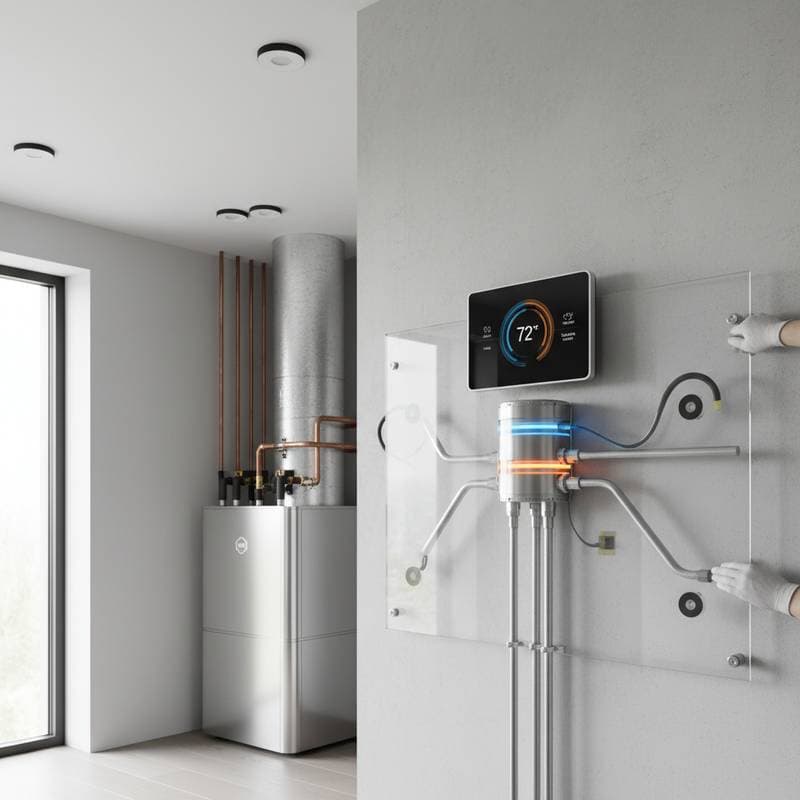
Whole-home climate zoning addresses these issues by segmenting the residence into independent thermal areas. Dedicated thermostats or sensors monitor each zone, paired with motorized dampers that regulate duct airflow. The primary HVAC unit supplies conditioned air, but distribution adjusts dynamically to current needs.
Consider daytime scenarios where upper-level bedrooms remain vacant. The system curtails airflow there while prioritizing comfort in communal areas like the kitchen and living room. Evening shifts redirect efforts to ensure restful conditions upstairs without excess downstairs activity.
Intelligent thermostats streamline operations. They analyze household habits, occupancy levels, and environmental data for automatic adjustments. Integration with motion detectors or geofencing technology enables proactive responses to resident movements, eliminating routine manual overrides.
Key Advantages of Implementation
Heating and cooling represent approximately half of standard household energy outlays. Targeting inefficiencies here yields substantial reductions. Zoning directs conditioned air solely to occupied or required spaces, enhancing overall performance.
The U.S. Department of Energy indicates potential cost decreases of 30 percent or greater through zoning. Practical applications frequently achieve nearly 50 percent savings after optimal calibration. These figures underscore the financial impact.
Additional gains include prolonged HVAC longevity. Reduced full-load operations lessen strain on components like compressors and fans. Consequently, maintenance demands decrease, and the system's environmental impact shrinks over its service life.
Enhancing Comfort via Customization
Personalization emerges as a primary draw of climate zoning. Conventional setups demand consensus on a single temperature, often sparking minor disputes during seasonal transitions. Zoning removes such trade-offs.
Individuals tailor settings to personal spaces. A young adult enjoys a chilled bedroom without affecting shared areas. An office maintains toasty conditions during work periods while other rooms remain moderate.
Adaptive learning in smart thermostats amplifies this. Devices log usage patterns, wake times, departures, and arrivals. Gradually, they develop intuitive schedules that operate without intervention, rendering temperature management instinctive.
Practical Applications and Brand Insights
Leading manufacturers pioneer zoned HVAC solutions. Ecobee's Smart Thermostat paired with SmartSensors establishes virtual zones sans extensive wiring. Distributed sensors gauge occupancy and temperatures, then harmonize conditions effortlessly.
Honeywell zoning panels manage physical dampers to direct airflow according to thermostat signals. When linked to Wi-Fi models, users command zones via mobile applications or voice assistants for granular oversight.
Emerging integrations appear in heat pumps and mini-split configurations. These employ variable-capacity mechanisms that scale output to active zone demands. Such designs boost efficiency and curb energy-wasting on-off cycles in legacy equipment.
Investment and Setup Considerations
Zoning installation expenses fluctuate based on residence scale, current duct infrastructure, and HVAC layout. Retrofitting established homes might necessitate duct alterations, whereas new builds incorporate zoning seamlessly from inception.
Costs span from several hundred dollars per zone for sensor-driven options to thousands for comprehensive damper assemblies. Initial outlays recover through energy reductions within a few years. Utility providers frequently rebate smart thermostats and efficient upgrades to ease upfront burdens.
For those wary of full overhauls, hybrid alternatives exist. Smart vent mechanisms employ powered units to modulate room airflow independently of central ducts. Though not as exact as complete systems, they deliver notable efficiency improvements and comfort upgrades.
Seamless Fusion with Smart Home Ecosystems
Zoned control amplifies when woven into expansive smart home networks. Voice platforms like Alexa or Google Home facilitate commands such as adjusting the living room to 72 degrees. Coupled with sensors for occupancy, illumination, and shading, comprehensive energy orchestration emerges.
Upon departure, the setup cools unoccupied zones, seals blinds against solar influx, and deactivates lights. Return triggers progressive restoration of settings to prevent abrupt power surges. Cumulative minor optimizations compound into annual fiscal relief.
Interconnectivity defines modern expectations. Standards like Matter promote cross-brand compatibility among thermostats, vents, and detectors. This compatibility simplifies deployment and safeguards long-term viability of installations.
Addressing Typical Hesitations
Complexity concerns deter some from zoning adoption. Yet, designs prioritize user simplicity. Post-setup, automation handles operations with scant oversight. Interfaces display energy metrics, thermal histories, and zone analytics clearly.
Maintenance apprehensions also arise. Added elements like dampers and sensors prove durable and low-effort. Standard protocols, including filter replacements and yearly inspections, suffice without escalation.
Broader Implications for Efficiency
Climate zoning aligns with escalating energy-aware lifestyles. As residences incorporate solar arrays, storage solutions, and electric transport, HVAC optimization stabilizes overall consumption. Zoning aids by curbing excess usage and enabling precise command.
Sustainability benefits follow. Efficient energy deployment lowers emissions from thermal processes. Scaled across communities, these reductions contribute meaningfully to environmental preservation.
Steps to Implement Zoning in Your Home
Evaluate your current HVAC setup to identify zoning compatibility. Consult professionals for assessments on ductwork and zone divisions. Select systems matching your home's layout, such as sensor-based for simplicity or damper-integrated for precision.
Budget for installation, factoring in rebates from utilities. Integrate with existing smart devices for enhanced automation. Monitor performance post-setup to refine settings, ensuring maximum savings and comfort.
This strategic adoption not only trims bills but fosters a responsive, eco-friendly living environment tailored to your needs.