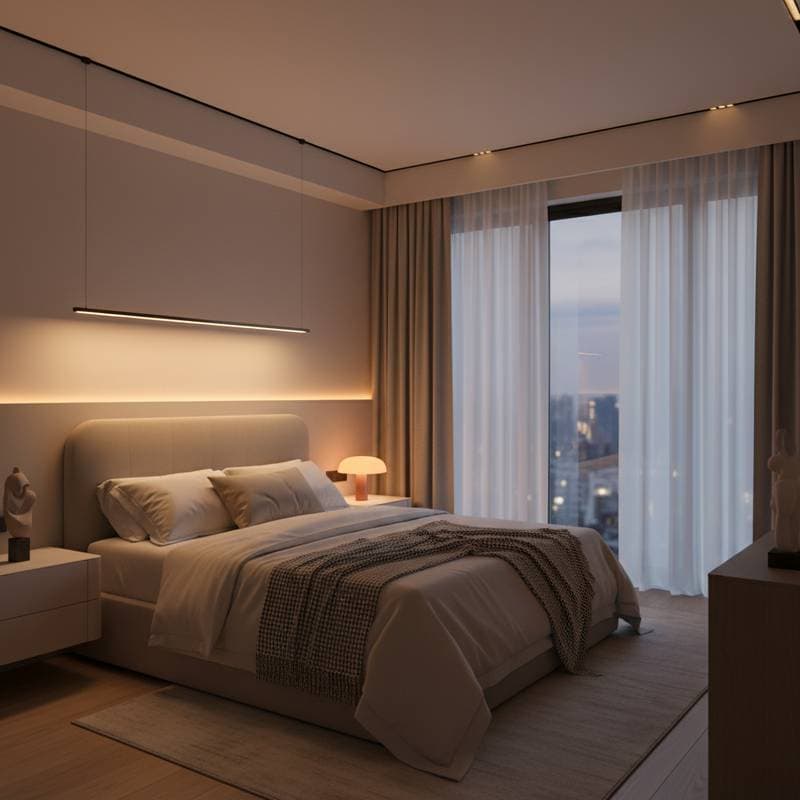
Circadian Lighting Enhances Sleep Quality by 45 Percent
Smart home lighting extends far beyond basic motion detection and voice activation. Circadian lighting represents the current frontier, a system designed to replicate natural sunlight variations for improved sleep, emotional well-being, and efficiency. Research from lighting specialists indicates that households implementing circadian lighting achieve up to a 45 percent gain in sleep quality, drawing interest from health-focused residents and innovative architects.
Challenges Posed by Conventional Lighting
Typical home lighting maintains fixed color and intensity regardless of the hour. Prolonged exposure to artificial sources, particularly cool white hues in the evening, disrupts the body's internal timing mechanism. Individuals frequently experience heightened alertness at night and lethargy upon waking due to this environmental misalignment.
Such inconsistency interferes with melatonin secretion, the key hormone governing sleep cycles. Blue-dominant light from displays and fixtures after dusk postpones melatonin onset and hampers natural sleep cues. Consequently, rest becomes fragmented, energy fluctuates, and daytime concentration suffers.
How Circadian Lighting Functions
Circadian lighting addresses these issues through automated adjustments to intensity and hue across the day. Morning illumination adopts a bright, cool profile to emulate dawn and promote wakefulness. As evening approaches, the light softens to warmer, subdued tones that facilitate relaxation.
Intelligent sensors and learning algorithms power these systems, adapting to individual habits. Integration with regional sunrise and sunset data or custom schedules ensures precision. This approach leverages daylight's inherent patterns to synchronize cerebral and physiological processes with evolutionary rhythms.
Impacts on Daily Routines
Enhanced sleep forms just one aspect of the advantages. Circadian lighting fosters elevated mood, heightened attention, and stable vitality. Users describe smoother morning transitions and calmer nights. For those working remotely, the progressive light changes mark time progression, aiding psychological stability and output.
Studies in professional settings reveal reduced reports of exhaustion and visual discomfort where circadian systems operate. These findings apply equally to residences, yielding superior recovery and holistic health.
Practical Implementations in Smart Ecosystems
Leading smart home providers embed circadian features into their offerings. Philips Hue's Natural Light mode transitions hues from crisp daylight to soothing amber progressively. LIFX delivers time-based adaptations that eliminate the need for user intervention.
Apple HomeKit and Google Home platforms accommodate these routines, enabling synchronized control over multiple fixtures. Advanced options like Ketra or Savant provide exact daylight replication through superior color accuracy. These solutions appeal to health-oriented and stylistically advanced interiors, merging utility with visual appeal.
Evidence Supporting the 45 Percent Gain
The 45 percent metric derives from quantifiable results in controlled trials. Subjects in dynamic lighting scenarios noted quicker sleep initiation, revitalized awakenings, and sustained daily vigor. Light signals profoundly influence the circadian system, where minor hue shifts trigger significant physiological adjustments.
Experts term this alignment entrainment, whereby ambient light refines the body's core oscillator. Indoor simulations of solar transitions cue the mind for activity or repose effectively. This method complements innate mechanisms, distinguishing it from pharmaceutical interventions.
Integrating Circadian Lighting into Residences
Implementation ranges from basic to comprehensive based on preference. Compatible bulbs and units pair with standard smart hubs for accessibility. Begin in high-impact areas like bedrooms, where light most directly affects slumber. Program cooler whites for dawn hours and warmer ambers for dusk.
For full-home integration, link lighting with climate controls, shades, and detectors. This creates seamless environmental responses to daily phases. Lights can intensify softly pre-alarm, fade during relaxation, and mimic twilight glows at bedtime. Gradually, these cues train the body to align with organic activity-rest patterns.
Advancing Toward Adaptive Living Spaces
Circadian lighting advances the shift to human-centric architecture, prioritizing occupant needs over mere mechanization. Connected homes emphasize health, ease, and equilibrium. Illumination serves beyond visibility, acting as a regulator for physiology, emotions, and stamina.
Widespread adoption signals its emergence as a core connected home element. Everyday light activation evolves into a wellness ritual. Aligning domestic illumination with biological imperatives enables profound recovery, lucid starts, and harmonious existence.