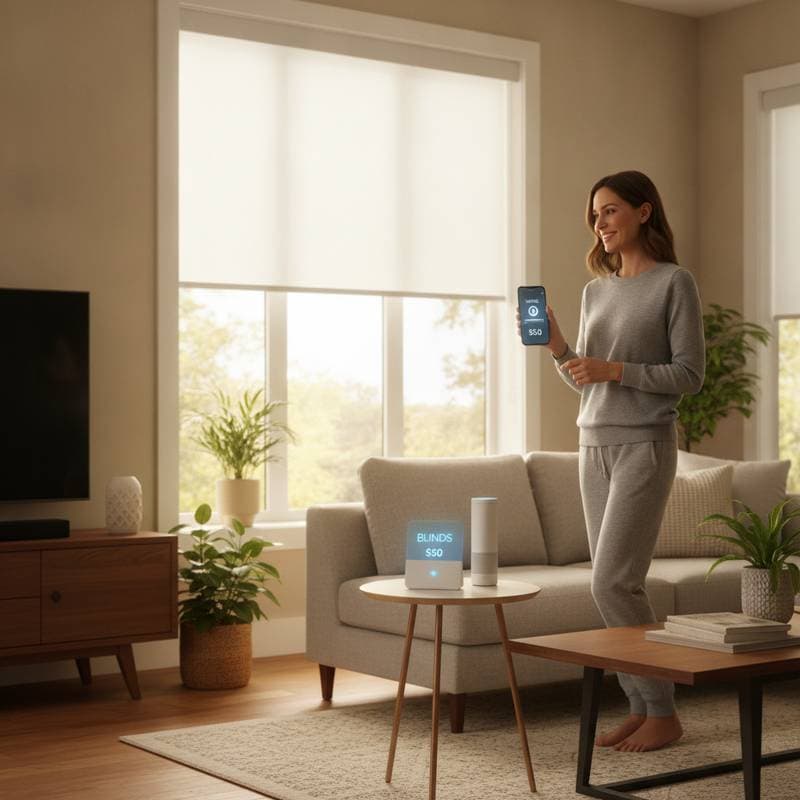
Budget Smart Blinds Reach the Fifty Dollar Price Point
Smart blinds have long seemed like a luxury feature reserved for high end homes. Motorized shades that respond to light and temperature carried price tags in the hundreds of dollars. New models now sell near fifty dollars per window. This change moves automated window coverings from premium add on to practical upgrade for many households.
The shift expands what counts as a standard smart home feature. Window coverings join lights and speakers as elements that can respond automatically to daily conditions. Households gain a simple way to improve comfort and manage energy use without major renovations.
Technology Improvements That Lower Costs
Earlier motors and controllers relied on custom parts and proprietary systems. Those choices kept production expenses high. Current budget models use efficient micro motors and common control chips. Standardized components allow manufacturers to produce units at greater volume and lower cost.
Wireless designs further reduce expense and effort. Battery powered motors connect through Wi Fi or Bluetooth without any wiring. Homeowners complete installation in a few minutes using basic tools. Industry surveys list price as the main obstacle to adoption. The drop below fifty dollars removes that obstacle for many buyers.
Daily Benefits and Energy Savings
Automated blinds adjust on their own to match sunlight and room temperature. They rise in the morning for natural light and close in the afternoon to limit heat gain. These actions create steady comfort without repeated manual effort.
Energy research shows that automated shading can cut heating and cooling costs by up to ten percent. Pairing the blinds with a smart thermostat increases those savings. The result is lower utility bills and steadier indoor conditions throughout the year.
Brands and Product Options
Startups and online retailers now sell retrofit kits that add motors to existing blinds. Other models come as complete shade systems that work with voice assistants. One option uses a built in light sensor to change position automatically. Another connects directly to popular smart home platforms for voice control.
Established window covering companies have added lower priced lines that follow common automation standards. These products suit both new users and those expanding an existing setup.
Connections Across Smart Home Devices
New models follow open connectivity standards instead of closed ecosystems. They work with lighting, thermostats, and security systems without extra hubs. When the alarm activates, the blinds can close while lights turn off. At sunset they lower to add privacy and coordinate with smart bulbs for evening lighting.
This level of coordination no longer requires premium pricing. Entry level products deliver the same linked behavior that once appeared only in higher cost systems.
Sustainability and Material Choices
Lower prices encourage wider use of automated shading. Homes become more energy efficient without extra daily tasks. Manufacturers now include recycled fabrics and low power motors in budget lines. These choices support reduced energy use and smaller environmental impact over time.
Renters and owners alike can lower reliance on artificial lights and air conditioning. The change appears on monthly bills and reduces overall household energy demand.
Reliability Upgrades in New Models
Early versions drew complaints about noise, slow movement, and difficult setup. Current budget units run on improved batteries that last several months per charge. Motor sound stays at a low hum. Pairing follows the same steps used for other wireless devices, and control apps share the same interface as other smart home tools.
These updates turn the experience into a dependable routine rather than an experiment.
Practical Entry Into Automated Living
Fifty dollar smart blinds offer a straightforward first step into home automation. They provide measurable comfort, visible energy reduction, and an updated living space. The technology now reaches households that previously viewed it as out of reach. Natural light control and automatic adjustments become available features rather than exclusive options.