AI Cooking Tools That Prevent Kitchen Fires Automatically
Nearly half of all home fires originate in the kitchen, with most starting on the stovetop. Smart doorbells and thermostats have gained widespread use, yet the smart stove emerges as a vital safety tool in contemporary homes. These intelligent devices detect threats and intervene swiftly, redefining safe cooking practices. By integrating sensors, data analysis, and automation, they safeguard families and property without demanding ongoing attention.
The Hidden Risks of Everyday Cooking
Cooking combines open flames, oils, and frequent distractions in a single activity. A momentary check of a smartphone or an unexpected visitor can cause a pan to overheat rapidly. Traditional smoke detectors activate only after smoke appears, often when damage has already begun. Fire extinguishers serve as essential backups but depend on quick human action amid chaos.
The divide between prevention and response remains significant in kitchens, though advanced technology bridges this gap. These systems track temperature fluctuations, movement, and humidity continuously. They differentiate routine cooking warmth from hazardous spikes that signal impending ignition. Upon detection, actions include power shutdowns, flame reductions, or mobile notifications, marking a transition from mere alerts to active safeguards.
Detection Systems That Adapt to Your Cooking Style
A key advancement lies in the adaptive learning capabilities of these tools. Fixed temperature limits prove inadequate, so AI systems observe user behaviors to separate intentional high-heat cooking from oversights. Sensors and cameras gather data to spot irregularities.
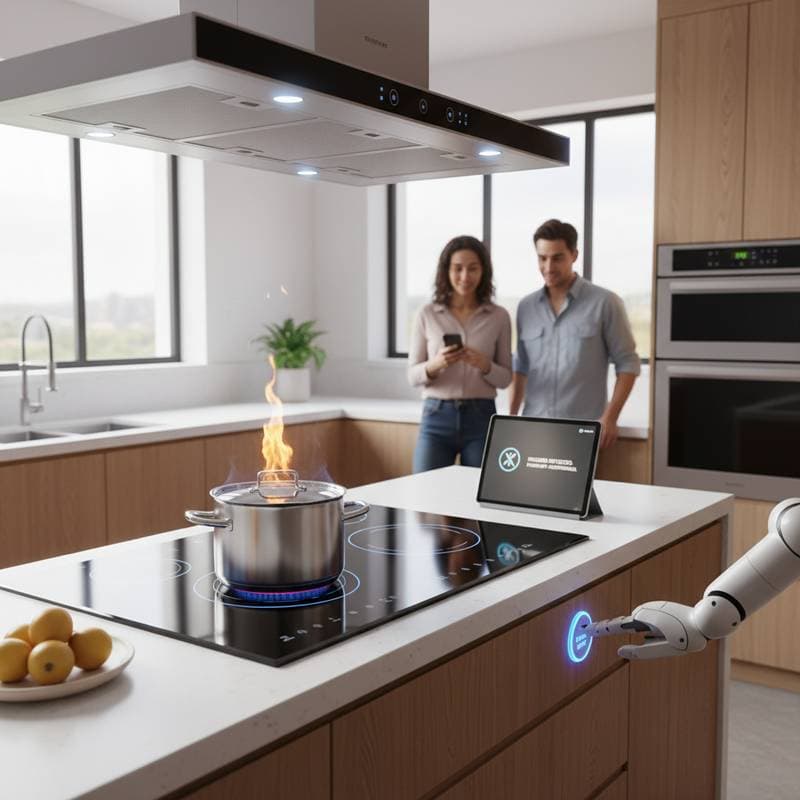
Consider a smart stovetop with thermal imaging: it monitors not only overall heat but also its spread within cookware. Rapid, uneven heating might indicate a boil-over or spark risk, prompting the system to lower power or deactivate the burner. Integration with voice assistants enables verbal confirmations, such as an announcement that a burner has shut off to avoid overheating upon your return.
Such seamless interventions foster a secure atmosphere without disrupting daily routines.
Leading Products Transforming Kitchen Safety
Innovative companies now deliver practical solutions for safer cooking. Plug-in devices from brands like FireAvert and Innohome interrupt stove power upon sensing smoke or excessive heat. The SmartStove system advances further by tracking cooking patterns and refining its responses over time.
These tools link to mobile applications for real-time alerts, notifying users of unattended burners or unusual temperatures even when away from home. Premium kitchen manufacturers embed similar features directly into appliances. Overhead cameras oversee cooking, while built-in sensors gauge heat and moisture levels. Predictive software ensures smooth, protected meal preparation.
Affordable add-ons extend these benefits to standard setups, allowing broad accessibility without full appliance replacement.
Core Mechanisms of AI Fire Prevention
Multiple data streams converge to assess stovetop conditions accurately. Temperature sensors capture surface and ambient levels, motion detectors confirm presence, and visual recognition evaluates food status. Processed collectively, this information enables rapid decisions.
For instance, if a pan heats swiftly without nearby activity, the system infers an unattended task and adjusts settings or powers down. Emerging smoke triggers automatic exhaust fans alongside phone alerts. In severe cases, select models notify emergency responders, though most threats resolve preemptively.
This background vigilance supports normal use while preparing for anomalies. Algorithms improve with extended operation, tailoring to individual routines and techniques for greater precision.
Advantages Beyond Basic Protection
Fire prevention stands as the primary draw, but these systems yield additional gains. They minimize energy loss by deactivating idle appliances, potentially lowering bills. Usage reports detail heat patterns and active zones, guiding more efficient cooking methods.
Families benefit from enhanced independence for younger or older members. App-based oversight allows remote checks, with alerts for irregularities. This reliability eases worries, matching tangible protections with emotional reassurance.
Addressing Challenges to Widespread Use
Implementation faces hurdles, including higher costs for integrated models compared to basic ones. Privacy concerns arise from cameras and data handling, which producers counter through on-device processing and user-configurable privacy options.
Compatibility issues persist across brands, complicating setups. Emerging open protocols facilitate cross-device harmony, simplifying the creation of unified smart kitchens. These developments accelerate accessibility for safety features.
Emerging Trends in Intelligent Cooking
Maturing technologies shift focus from crisis management to inherent prevention. Systems will soon offer cooking aids like readiness notifications or burn-preventing tweaks during multitasking.
Market forecasts indicate robust expansion in smart appliances, driven by demands for ease and protection. As integration becomes routine, fire safeguards evolve from optional enhancements to expected norms.
Integrating AI Safeguards into Your Kitchen
To begin, evaluate plug-in sensors or smart burners for immediate impact. Test their performance in your space before scaling to full systems. These tools not only avert risks but also streamline operations and adapt to your needs, ensuring cooking remains a pleasure free from underlying threats.