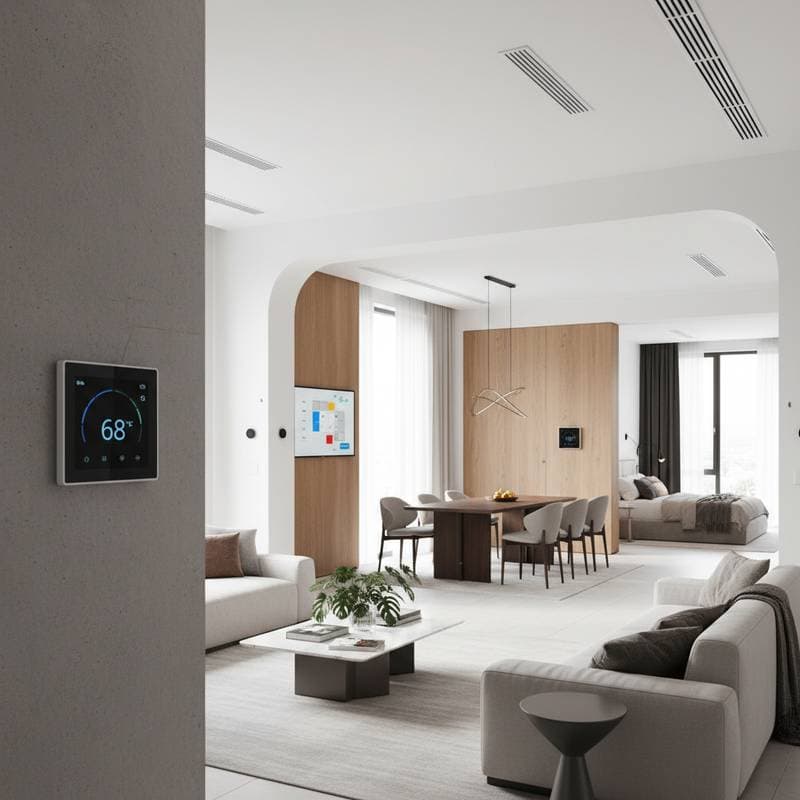
Why Personalized Zones Outsmart Central HVAC
Picture returning home after a demanding day. The living room swelters, the bedroom chills, and the kitchen maintains its own microclimate. Adjusting the central thermostat offers temporary relief, yet family members soon voice discomfort over the heat or cold. This ongoing conflict highlights the shortcomings of standard central HVAC configurations.
Limitations of Centralized Temperature Control
Conventional HVAC units manage the whole house as a uniform area. One thermostat, typically placed in a central spot like a hallway, gauges the temperature there and applies that reading everywhere. Factors such as sunlight exposure, insulation quality, ceiling heights, and appliance operation create significant variations between rooms.
As a result, the system heats or cools unoccupied areas, leading to unnecessary energy consumption and higher utility bills. The inefficiency becomes evident when power goes toward maintaining conditions that fail to deliver actual comfort throughout the space.
The Advantage of Personalized Climate Zones
Zoned HVAC systems reverse this approach. They divide the home into distinct areas, each with its own temperature regulation. Temperature sensors and intelligent vents modulate airflow in real time, guaranteeing optimal conditions in every section.
This method provides targeted control. Warm the bedroom for restful sleep, cool the office during productive hours, and allow seldom-used rooms like guest areas to conserve energy at lower settings.
Core Components and Operation
A zoned HVAC relies on smart thermostats, sensors, and dampers within the ductwork. These elements connect wirelessly to monitor and adjust conditions dynamically across zones.
Follow these steps for implementation:
-
Define Zones: Partition the house based on floors or activity patterns, such as upstairs bedrooms and downstairs common areas.
-
Install Thermostats and Sensors: Choose models like the Ecobee Smart Thermostat Premium, priced at approximately $250, or the Nest Learning Thermostat, around $230. These units sense occupancy and adapt settings accordingly.
-
Add Smart Vents and Dampers: Options including Flair Smart Vents or Keen Home Smart Vents, beginning at about $90 per unit, regulate airflow by opening or closing to direct conditioned air precisely.
-
Integrate a Control Hub: Connect the system to platforms such as Google Home, Amazon Alexa, or Apple HomeKit for remote access via voice commands or mobile applications.
For older homes, technicians can install zoning dampers into existing ducts without a complete overhaul. Proper calibration ensures even airflow distribution, avoiding pressure issues that could burden the furnace or compressor.
Cost and Setup Factors
Expect expenses from $600 for a basic two-zone arrangement to over $3,000 for extensive multi-room configurations in larger properties. If a smart thermostat already exists, incorporating extra sensors represents an economical entry point.
Professional installation by an HVAC specialist usually spans one to two days. Duct modifications may extend this timeline slightly. Verify compliance with local building regulations prior to any duct or electrical changes.
Budget-conscious individuals might begin with smart thermostats equipped with remote sensors in priority rooms. The Amazon Smart Thermostat, at $80, combined with compatible Alexa sensors, enables basic zoning without duct alterations.
For moderate investments, Ecobee room sensors offer balanced control across multiple spaces for roughly $400. Those pursuing comprehensive solutions could opt for the Flair Puck Pro, which includes vents, sensors, and app integration, costing $1,500 to $2,000 based on home dimensions.
Gains in Efficiency and Savings
Zoned systems typically lower heating and cooling expenses by 20 to 30 percent, influenced by home design and occupancy routines. Directing efforts toward used areas shortens runtime and minimizes equipment strain.
Studies from Energy Star indicate that modest temperature reductions in vacant periods yield substantial yearly savings. Automation in zoned setups simplifies these adjustments.
Combining zoning with complementary devices enhances results further. Smart blinds block summer heat influx, and ceiling fans distribute air more effectively, easing the load on the HVAC unit.
Upkeep and Equipment Durability
These systems promote longer HVAC service life. Reduced operation at peak loads decreases component wear. Regular filter replacements and annual inspections stay crucial, with many thermostats providing alerts for maintenance needs or airflow irregularities.
Steps to Implement Zoning
To enhance comfort and efficiency, assess your current HVAC first. Map out warm and cool spots, then determine if thermostat upgrades, sensor additions, or full zoning suit your needs.
Consult a certified professional to verify airflow equilibrium and installation safety. Platforms like HomeAdvisor or Angi allow homeowners to solicit bids from qualified experts at no initial cost.
With a responsive home environment aligned to your routine, thermostat disputes fade, replaced by reliable comfort. Zoned climate control harmonizes advanced technology with practical energy use and everyday well-being.
Frequently Asked Questions
What defines a smart HVAC zoning system?
A smart HVAC zoning system segments the home into separate temperature areas, managed by intelligent thermostats and automated vents for customized control.
How much can zoning save on energy bills?
Zoning often cuts costs by 20 to 30 percent through targeted conditioning of occupied spaces, reducing overall system runtime.
Is zoning suitable for older homes?
Yes, retrofitting dampers into existing ducts makes zoning feasible without full system replacement, provided professional calibration addresses airflow balance.