Smart Mirrors Detect Skin Cancer Right at Home
Smart mirrors extend far beyond simple reflections. The latest models employ imaging technology, artificial intelligence, and integrated health systems to identify subtle skin alterations that may indicate serious conditions. These devices integrate advanced screening into daily bathroom routines, making professional-level detection accessible at home and providing users with early alerts and reassurance.
The Rise of Health-Aware Smart Mirrors
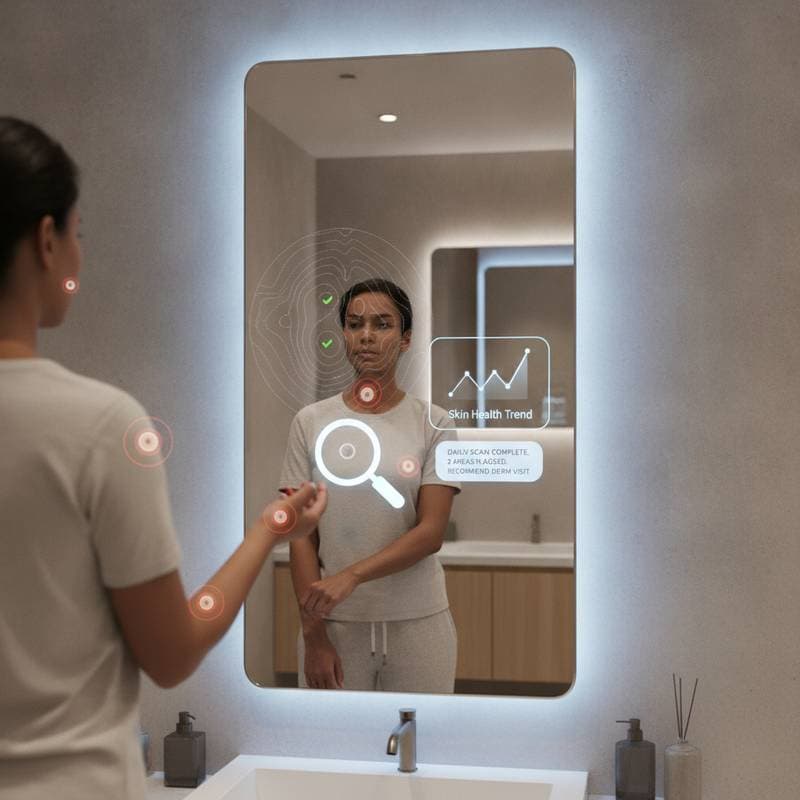
Smart mirrors initially attracted users with practical features such as weather displays, fitness metrics, and personalized beauty tips during morning preparations. Recent advancements prioritize preventive health monitoring. These mirrors now examine skin in real time, highlighting potential issues like irregular moles, lesions, or pigmentation shifts that could signal early skin cancer.
This shift aligns with broader developments in health technology. Individuals increasingly desire devices that deliver actionable wellness insights beyond basic activity tracking. Research indicates rising demand for early-detection tools. Smart mirrors meet this need by offering intuitive interfaces paired with sophisticated data analysis.
How Smart Mirrors See What You Might Miss
The core mechanism involves capturing high-resolution skin images during routine use. The device compiles a longitudinal visual archive, enabling algorithms to identify minute variations. By cross-referencing current scans with historical data, the system detects anomalies and recommends dermatologist consultations when necessary.
Such ongoing surveillance removes uncertainty from self-assessment. Many individuals overlook progressive skin changes, particularly in hard-to-view areas. The mirror provides objective analysis, surpassing human visual limitations in detecting patterns.
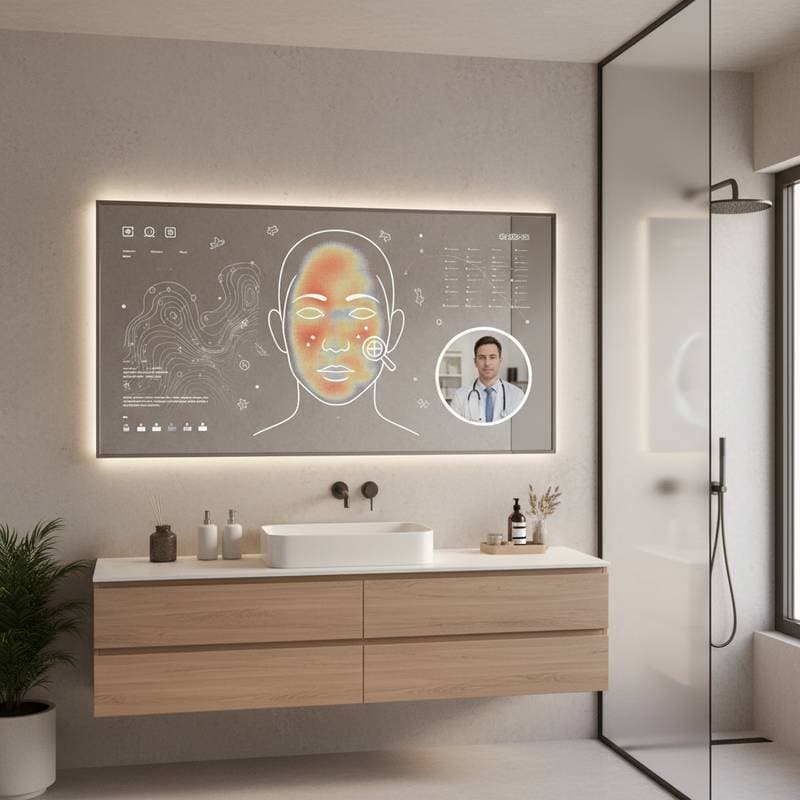
Advanced units incorporate multi-spectral imaging to reveal subsurface irregularities. Integration with health applications or telemedicine services allows immediate professional review. This synergy of capture, evaluation, and linkage forms an efficient pathway from home observation to expert intervention.
Why Early Detection Matters
Skin cancer ranks as one of the most prevalent cancers, yet early identification yields high treatment success rates. Challenges arise from delayed recognition of evolving symptoms. Conventional methods depend on infrequent clinical exams, which users often defer.
Smart mirrors address this gap by embedding checks into habitual activities. Picture a morning glance prompting a discreet alert about a mole's color change or emerging lesion. Users respond promptly, avoiding prolonged waits for appointments. This approach elevates survival odds and simplifies interventions.
In family settings, the device functions as a vigilant monitor, scanning passively without disrupting schedules. It shifts skin care from response-oriented to forward-thinking, empowering proactive health management.
Real-World Examples of Smart Skin Monitoring
Innovative companies have developed prototypes demonstrating these capabilities. One manufacturer offers a mirror that evaluates facial and upper-body skin under varied illumination to spot textural anomalies. A separate venture produces a portable unit with integrated sensors and computer vision for assessing pigmentation and vascular structures.
These tools sync with mobile applications for secure storage of skin profiles. Users access chronological views, side-by-side image comparisons, and consultation-ready reports. Certain designs feature optimized lighting to expose tonal discrepancies, enhancing evaluation precision.
Premium bathroom suppliers collaborate with health-technology providers to infuse sensors into mirror surfaces. This seamless embedding eliminates additional hardware, enabling automatic assessments during natural interactions.
The Technology Behind the Reflection
Machine learning forms the foundation, trained on vast datasets of normal and pathological skin images. Algorithms categorize lesions, assess asymmetry, and gauge risks through color variations and edge definitions. Although not substitutes for medical experts, these systems act as initial screening aids.
Cloud processing boosts reliability in many configurations. Images undergo encryption before transmission to protected servers, where evolving models perform analyses. Select models utilize on-device computing to retain data locally, prioritizing privacy without sacrificing performance.
Precise lighting remains essential for reliable longitudinal comparisons. Sophisticated mirrors deploy adjustable LED systems replicating natural or clinical light sources, standardizing conditions irrespective of ambient factors.
Privacy and Data Protection
Devices handling personal images necessitate robust privacy measures. Producers implement clear policies and on-device processing alternatives. Users select between cloud storage and local retention options.
Standard features include encryption, biometric access controls, and de-identified data transmission. Many platforms permit complete data erasure via simple commands. These elements reconcile monitoring benefits with security imperatives.
Buyers must scrutinize configuration options. Comprehension of data management protocols equals the importance of detection efficacy. User confidence hinges on assured protection of intimate information.
The Human Side of Smart Health
Technological prowess gains significance through behavioral impact. Devices flagging potential issues foster health awareness. They prompt consistent self-examinations and evidence-based choices.
Within homes, smart mirrors serve as gentle instructors. Displays offer customized prompts on sun safety, hydration, or regimen adherence. For shared spaces, they provide collective vigilance, alleviating reliance on frequent medical checkups.
Medical specialists anticipate reduced practice burdens. By triaging routine cases and accelerating urgent referrals, these tools optimize professional efforts.
Challenges Before Widespread Adoption
Obstacles persist despite evident potential. Detection fidelity relies on capture quality, environmental lighting, and dataset inclusivity. Initial iterations risk false alarms or undetected cues, potentially causing distress or oversights.
Affordability poses a hurdle. High-end models target premium markets. Economies of scale and rivalry should eventually democratize access.
Healthcare interoperability advances slowly. Standardized data formats enable physician integration. Collaborations among device creators, developers, and clinicians build credibility and efficacy.
How Consumers Can Benefit Now
Prior to universal certification, smart mirrors support routine skin maintenance. They document UV exposure effects, acne evolution, or regimen consistency. Environmental sensors in some units tailor advice to humidity or temperature.
For skin cancer vigilance, combining with remote dermatology services yields strong results. Mirrors supply visuals; experts provide interpretations. This blended care model enhances accessibility and prevention.
Key selection criteria include:
- High image resolution and stable lighting for dependable monitoring
- Customizable privacy controls for data management
- Compatibility with wellness apps for seamless professional exchange
- Frequent updates to refine analytical capabilities
- Intuitive displays for effortless insights
The Future of Skin Health at Home
Advancing smart mirrors will broaden scope. Prototypes now probe hydration status, stress markers, and circulatory signals via skin cues. Bathrooms may evolve into comprehensive diagnostic hubs linked to home networks.
Envision a mirror detecting UV harm and cueing voice assistants for sunscreen restocking. Or linking with fitness trackers to associate skin state with rest and diet patterns. Interlinked systems will personalize health oversight to individual habits.
Steps to Integrate Smart Monitoring
Responsible advancement requires stakeholder commitment. Producers refine precision, cut expenses, and disclose data practices. Providers forge alliances merging domestic tools with clinical expertise.
For users, installation signifies commitment to vigilance. Consistent engagement heightens skin familiarity, enabling swift, assured responses to anomalies.
Smart mirrors mark a convergence of self-care and diagnostic prowess. They elevate the mirror to an engaged wellness ally, heralding eras where routine reflections safeguard health.