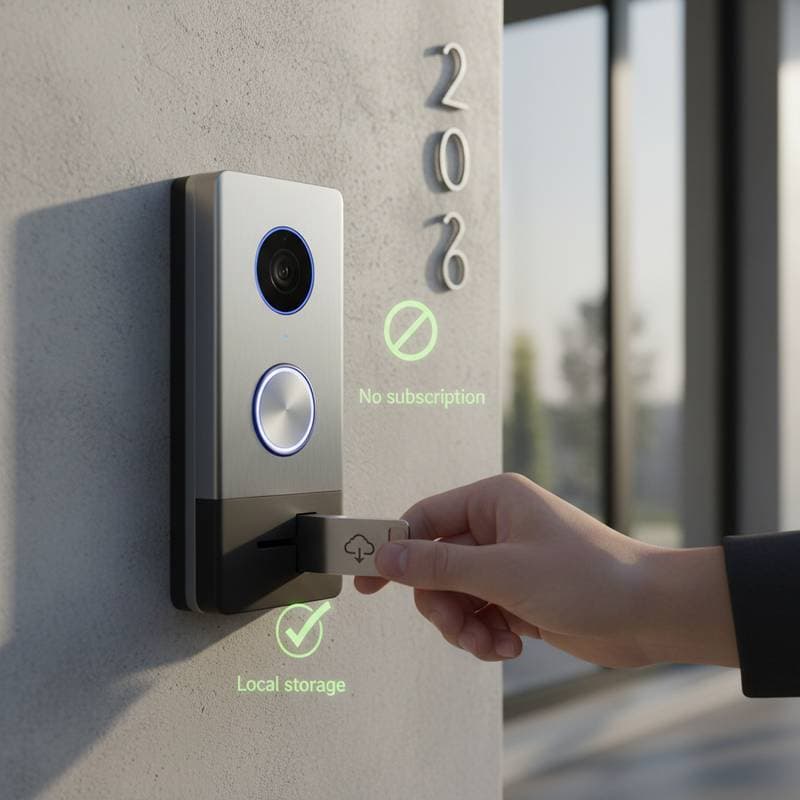
The Rise of Subscription-Free Smart Doorbells in 2026
Smart homes have transitioned from novelties to essential components of daily life, with one of the most evident changes occurring at the front door. The traditional doorbell has transformed into a connected security device that enables homeowners to view, communicate with, and record visitors remotely. However, as the market for smart doorbells expanded, subscription fees for video storage and premium features created significant barriers. A emerging category of subscription-free smart doorbells now addresses these issues by providing local storage and complete functionality without recurring expenses. This development extends beyond financial savings; it empowers homeowners with greater control, enhanced privacy, and enduring value.
Reasons Homeowners Reject Subscription Models
Early smart doorbells relied exclusively on cloud storage for recording and retrieving footage, which required monthly or annual payments to unlock recordings, clip storage, or intelligent detection capabilities. Surveys among users of connected home devices indicate that these ongoing costs rank among the primary factors deterring further adoption of smart technology. Numerous individuals perceive these fees as indefinite commitments for functionalities inherent to the device itself.
The popularity of subscription-free alternatives mirrors an evolving consumer perspective. People seek products that maintain value over time without supplementary charges. Moreover, they prioritize data ownership. Local storage solutions allow homeowners to retain recordings on internal memory cards or secure in-home hubs, eliminating monthly obligations and reducing reliance on cloud services that may compromise privacy.
Benefits of Local Storage and User Control
Central to this trend is the implementation of local storage, where video footage remains on the device or a connected hub rather than being uploaded to remote servers. Homeowners gain complete authority over their video archives and can access them instantly, even during internet outages.
Leading manufacturers incorporate expandable storage features into their designs. Certain models support encrypted SD cards with capacities up to 128GB, while others link to base stations offering up to 16TB of secure space. This setup ensures that footage stays on the premises unless the user opts for personal backups to external drives or private clouds.
Reliability improves markedly with this method, as video playback occurs directly from local sources, minimizing delays or interruptions. Security strengthens because the risk of data breaches decreases without involvement from external servers.
Leading Models Prioritizing Privacy and Performance
Prominent brands have adopted the subscription-free approach, developing devices that rival or surpass subscription-dependent options in capability. Eufy stands out with doorbells that utilize an encrypted home base for local video retention, supporting 2K resolution and AI-driven person detection. Reolink and Lorex similarly emphasize privacy-centric designs, integrating features such as customizable motion zones and infrared night vision without cloud dependencies.
These doorbells process all analytics on-site, delivering prompt notifications and safeguarding personal information from off-device analysis. For homeowners seeking advanced security without compromises, this blend of sophistication and autonomy positions subscription-free models as compelling upgrades.
Long-Term Financial Advantages
The value of a single upfront purchase proves substantial. Subscription-based doorbells often impose fees that accumulate to surpass the device's original price within two to three years, with plans starting at $5 per month. Subscription-free alternatives provide clear, one-time costs that avoid such escalations.
Across multiple years, these savings can total $200 or more per device. For households with several cameras or multiple properties, the cumulative impact becomes pronounced. This preference underscores a wider demand for technology that sustains utility without perpetual payments or ecosystem lock-in.
Privacy as a Core Feature
Privacy concerns propel the adoption of subscription-free doorbells beyond mere economics. Heightened awareness of data collection practices has made consumers wary of offsite storage for home surveillance footage, which often includes intimate glimpses of daily routines.
Local storage mitigates these risks by confining data to the home network, allowing users to manage access permissions precisely. Many brands incorporate end-to-end encryption protocols, guaranteeing that only authorized individuals can review recordings. This strategy appeals to those who desire robust security while preserving personal boundaries.
Seamless Integration with Smart Home Ecosystems
A frequent concern involves compatibility with broader smart home setups. Subscription-free doorbells increasingly support integration with voice assistants like Amazon Alexa and Google Assistant, as well as smart displays and electronic locks.
For instance, these devices can activate pathway lighting upon detecting motion or display live feeds on connected televisions. Reliance on open protocols facilitates brand-agnostic combinations. Advancements in standards such as Matter further narrow any usability differences between subscription and local-storage options.
Restoring Genuine Device Ownership
Subscription-free doorbells reinstate a profound sense of ownership. Cloud-reliant models risk functionality loss if subscriptions lapse, potentially rendering historical footage inaccessible. Local-storage variants maintain all features from purchase onward, independent of service changes.
This autonomy fosters reliability and trust. Homeowners enjoy consistent performance regardless of manufacturer policy shifts. In regions with unstable internet, such as remote areas, the reduced connectivity dependence proves particularly advantageous.
Accelerating Market Trends
Industry analysts observe a sharp increase in demand for subscription-free security solutions. Retailers allocate more inventory to local-storage products, while consumer reviews and forums express enthusiasm for their fusion of intelligence, privacy, and cost efficiency.
Even dominant market leaders respond by introducing hybrid options with partial local storage. This evolution affirms consumer priorities: options, clarity, and autonomy in smart home choices.
Practical Improvements in Daily Security
The true impact of these doorbells lies in their enhancement of routine experiences. Homeowners access door views without fear of data loss or extra fees for downloads, with alerts arriving in seconds and recordings readily available.
Renters benefit from simplified transitions between residences, avoiding account migrations or data forfeitures. Parents gain reassurance through reliable monitoring of children's arrivals. Travelers secure properties via dependable local systems, independent of distant servers.
Steps to Adopt Subscription-Free Doorbells
Upgrading entryway security with a subscription-free doorbell balances innovation and self-reliance. Select models featuring onboard encryption, scalable storage from 32GB to 2TB, and compatibility with Wi-Fi networks or assistants like Siri.
Evaluate current usage patterns and simplification needs. If managing multiple apps or cloud fees frustrates, transition to a local-storage solution. Initial costs align closely with subscription models, yet deliver superior long-term control and savings.
Advancing Equitable Smart Home Innovations
Subscription-free smart doorbells herald a transformation in connected residences. They champion privacy respect, expense reduction, and dependable operation free from concealed charges, paving the way for more inclusive home technology.