Predictive HVAC Systems Reduce Heating Costs in Advance of Winter
Nearly half of homeowners possess at least one smart home device, and heating systems rank among the fastest-growing categories. As winter nears, however, even advanced thermostats typically respond to temperature changes rather than foresee them. Predictive HVAC systems alter this dynamic by preparing homes for cold weather, minimizing energy loss, and maintaining steady comfort levels.
Understanding Predictive Climate Control
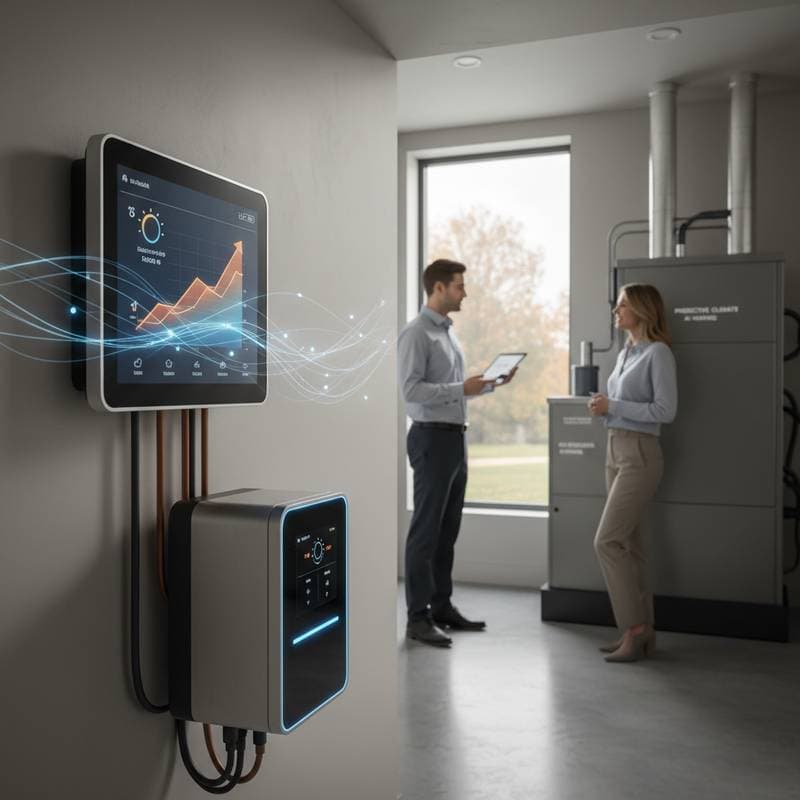
Predictive climate control builds upon the foundation of smart thermostats by incorporating sophisticated forecasting capabilities. Rather than activating the heater only after a temperature decline, the system analyzes historical patterns, user behaviors, and external data to initiate adjustments proactively. It draws on weather forecasts, occupancy patterns, and utility pricing variations to optimize operations without human intervention.
This method addresses inefficiencies in conventional heating, where systems often operate at maximum capacity to recover from sudden drops, leading to unnecessary energy expenditure. Predictive HVAC mitigates these peaks and valleys, delivering consistent warmth and reduced utility expenses with minimal oversight.
The Learning Process of Advanced Thermostats
Contemporary smart thermostats go beyond basic timers and motion detectors. They gather data on heating and cooling dynamics, the time required to achieve target temperatures, and typical occupancy schedules. When integrated with regional weather data, this intelligence enables the system to predict and preempt comfort needs.
Consider a scenario where a cold front approaches during the night. A predictive system could commence subtle heating in the evening, averting a harsh morning drop. This gradual approach consumes less energy than abrupt full-power operation. As usage continues, the thermostat refines its algorithms, identifying rooms that require additional warmth or those that hold heat effectively.
Innovations Driving the Evolution
Leading manufacturers advance predictive climate control through strategic integrations. For instance, thermostats now synchronize with energy suppliers to activate preheating during off-peak rate periods. Certain models link to air quality sensors, balancing ventilation with targeted heat distribution for optimal indoor environments.
Adaptive scheduling represents a key advancement, replacing rigid timetables with dynamic routines that adjust daily. The system might detect increased time spent in a home office during winter and allocate more heating resources there. Such adaptability transforms automation into an intuitive extension of daily life.
Benefits for Energy Efficiency and Comfort
Energy conservation extends beyond financial savings to encompass environmental responsibility and enhanced livability. Heating constitutes a significant share of residential energy consumption, and predictive systems achieve reductions of 10 to 20 percent, as evidenced by various energy efficiency analyses.
The practical advantages manifest in everyday routines. Homeowners awaken to ideal temperatures without adjustments, or return from travel to a welcoming space, as the thermostat anticipates their arrival based on location data. This automation eliminates the effort of manual climate management, allowing focus on other priorities.
Core Technologies Enabling Predictive Performance
Predictive HVAC combines machine learning algorithms, cloud analytics, and multi-sensor networks. Each thermostat functions as a data collection point, monitoring temperature variations, humidity levels, and human presence to inform real-time decisions.
Standards such as Matter facilitate interoperability across devices, enabling thermostats to coordinate with lighting, window treatments, and air filtration units. For example, closing shades ahead of evening temperature dips preserves warmth, easing the load on heating equipment. These coordinated actions accumulate into substantial efficiency gains.
Addressing Common Adoption Hurdles
Despite evident advantages, barriers like perceived complexity and data privacy concerns deter some users. Many also believe installation demands a complete system overhaul. In practice, most predictive thermostats install compatibly with existing HVAC setups, and security features include end-to-end encryption alongside options for on-device processing.
Initial costs pose another obstacle, though utility rebates for efficient devices often mitigate this. Long-term energy savings typically recoup the investment within one to two years. With rising awareness, predictive technology transitions from an optional upgrade to an essential home feature.
Integrating Predictive Heating into Daily Routines
After setup, predictive systems operate unobtrusively, performing updates and learning in the background while responding to environmental cues. Users frequently observe smoother temperature stability, improved air quality, and decreased bills, all while preserving desired comfort.
Many interfaces offer voice commands or mobile app dashboards for monitoring. Individuals can review weekly energy savings or timelines of preemptive heating events. These features promote transparency and user control, ensuring the system enhances rather than complicates home management.
Advancing Toward Proactive Home Environments
Predictive HVAC heralds an era of residences that anticipate resident needs, much like mobile devices that adapt to personal patterns. Systems that warm spaces before discomfort arises contribute to a larger movement in intelligent automation.
Future enhancements will refine prediction accuracy, delivering customized comfort that harmonizes efficiency and convenience. Homes will intuitively manage heating cycles, conserve resources, and maintain readiness across seasons, fostering sustainable living with effortless precision.