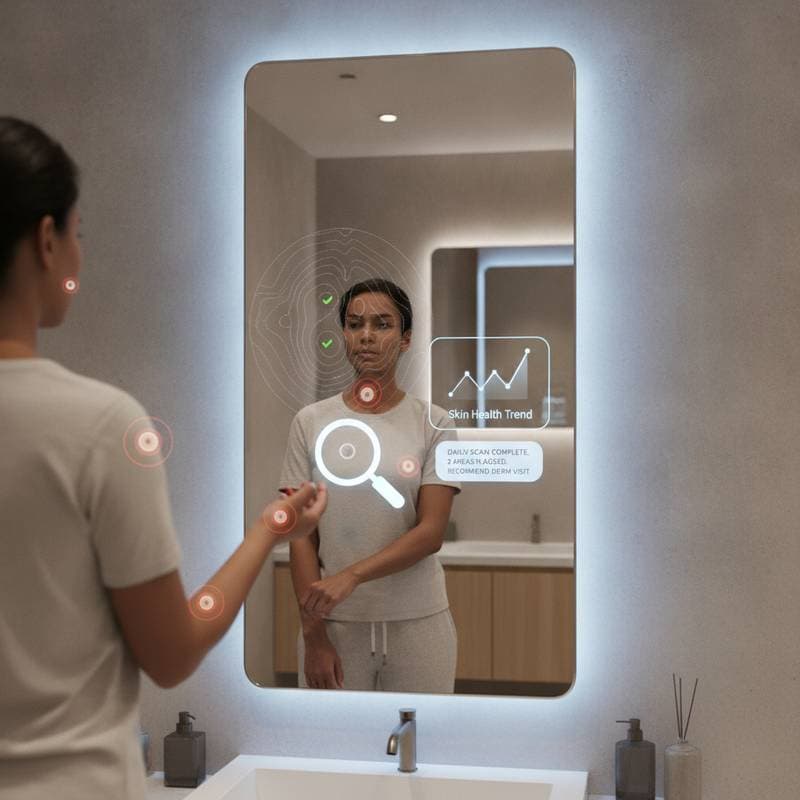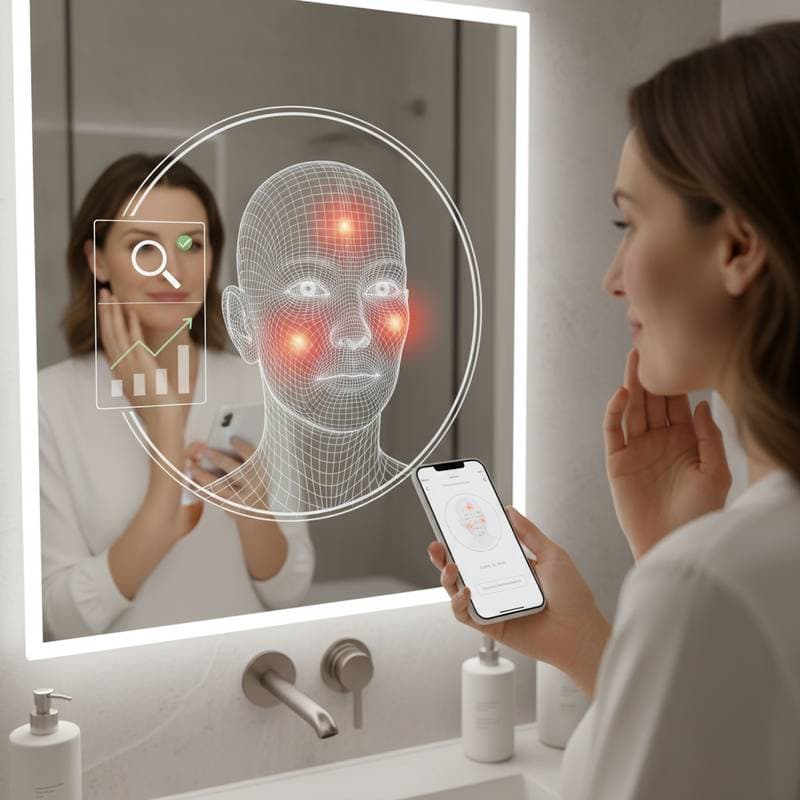
Imagine stepping out of the shower and glancing at your bathroom mirror, only to realize it has noticed something unusual on your shoulder. Instead of simply reflecting your image, this smart mirror has analyzed your skin tone, texture, and moles, then suggested a dermatologist visit. Smart mirrors equipped with advanced imaging and AI-driven diagnostics are now becoming part of modern home wellness routines.
For many people, skin care often ends with moisturizer or sunscreen. Early detection of skin cancer rarely enters the conversation until a doctor mentions it. The quiet power of smart mirrors is changing that narrative, making early screening both accessible and private.
The Problem You Did Not Know You Had
Skin cancer ranks as one of the most common and treatable cancers when found early, but self-exams prove unreliable. It is hard to notice subtle changes in small moles or lesions, especially in places you cannot easily see. Regular dermatologist visits remain critical but often get skipped due to cost, time, or simple forgetfulness.
Even for those who stay diligent, lighting and memory can betray you. What looked fine a few months ago might have darkened or grown slightly, and you might not remember it. Smart mirror technology steps in to help you track, compare, and understand your skin condition over time.
How Smart Mirrors Are Transforming Skin Health at Home
Smart mirrors, originally created for beauty and fitness tracking, are now evolving into powerful health companions. They combine high-resolution imaging, spectral analysis, and machine learning to detect potential changes in skin pigmentation or texture that deserve professional attention.
The mirror captures detailed images under consistent lighting, then compares them with previous scans stored securely in the companion app. Some models even suggest whether a spot change in color, border, or symmetry resembles early warning signs recognized by dermatology research databases.
Many of these mirrors use near-infrared imaging to look slightly below the skin surface. This allows them to detect vascular changes or irregular cell clusters before they become visible to the naked eye. That level of detail is what makes them so valuable for early detection.
Step-by-Step: Turning Your Mirror Into a Health Ally
- Choose the right smart mirror for your space. Look for models that include medical-grade imaging or partnerships with dermatology platforms.
- Set up consistent lighting. Natural white LED lighting ensures the mirror captures accurate skin tones and shadows.
- Scan regularly. Weekly or monthly scans help build a strong data history of your skin over time.
- Use the companion app for analysis. Most systems flag changes automatically, but you can also tag areas manually for comparison.
- Consult professionals when prompted. A smart mirror is not a doctor, but it can help you decide when to visit one.
Product Options for Every Budget
Smart mirrors vary widely in cost and capability. You can start small or invest in a full diagnostic system depending on your wellness goals.
- Budget Option: HiMirror Slide, around $120. This model focuses on basic skin analysis such as pore size, dark spots, and fine lines. It is compact and connects via Wi-Fi, making it ideal for smaller bathrooms or vanity setups.
- Mid-Range Choice: CareOS Themis Smart Mirror, around $600. It includes facial recognition, ambient light sensors, and AI-driven skin scanning. It also stores multiple user profiles, perfect for households where everyone wants their own wellness feed.
- Premium Selection: Poseidon Smart Mirror Pro, around $2,000. This advanced system integrates high-definition multispectral imaging and cloud-based dermatology analytics. It even connects to telehealth portals for scheduling virtual consultations directly from the mirror.
When choosing, consider compatibility with your smart home ecosystem. Mirrors that sync with Google Home or Alexa can tie into your daily routine, providing reminders for sunscreen or hydration goals.
What to Expect During Setup and Use
Setting up a smart mirror usually takes less than an hour, but calibration is critical. The mirror must capture your skin in consistent conditions. Avoid bright overhead lights or direct sunlight that could distort image data.
Most mirrors come with wall mounts or countertop stands. For bathroom installations near water, ensure that electrical outlets are GFCI-protected and that humidity levels do not exceed the product specifications. If you are installing a wired mirror, hire a licensed electrician.
Expect an initial learning curve. The first scans may feel like selfies, but the more data you feed the mirror, the smarter it becomes at recognizing subtle variations. Over a few months, you will begin to see charts showing your skin progress and alerts about any changes worth rechecking.
Balancing Cost, Privacy, and Accuracy
Smart mirrors with diagnostic features are medical-adjacent devices, meaning privacy and data security matter. Always review how your data is stored and whether it is shared with third parties. Look for systems that use encrypted storage and anonymized analytics.
Prices vary widely, so think about longevity. A $120 mirror may offer convenience, but it will not match the imaging precision of a $2,000 system. The best value often lies in the mid-tier range, where you get strong imaging, app support, and regular software updates without overspending.
From a practical standpoint, investing in one high-quality mirror may reduce long-term dermatologist visits for routine checks, saving both time and money. Still, treat these mirrors as supplements, not replacements, for professional medical advice.
Pro Tips from the Field
Years of working with connected health devices have revealed a few small but powerful tactics for getting accurate readings:
- Consistency beats frequency. Scanning once a month under identical lighting conditions yields more reliable comparisons than scanning daily with inconsistent lighting.
- Use a neutral background. Avoid colorful shower tiles or wallpaper reflections that can distort image data.
- Clean lenses regularly. Even a thin film of dust or moisture can affect image clarity.
- Pair with wearables. Some mirrors sync with smartwatches, helping you correlate UV exposure, hydration, and skin changes.
Upcoming mirror models are experimenting with ultraviolet reflectance imaging. This captures early UV damage before it becomes visible, giving you actionable feedback long before a dermatologist might notice an issue.
Making It Happen
If you are thinking about adding a smart mirror to your bathroom, start by clarifying your goals. Are you focused on early skin cancer detection, general skincare, or health tracking? From there, match your budget and setup capabilities.
You can find certified installers or tech specialists through home improvement marketplaces that match you with vetted professionals for free. This ensures your mirror is mounted safely, connected securely, and calibrated correctly.
Once installed, let the mirror become part of your daily rhythm. A quick scan while brushing your teeth or applying makeup can keep you informed about subtle changes that matter. Over time, those few seconds can translate into life-saving early detection.
Frequently Asked Questions
How accurate are smart mirrors for detecting skin cancer? Smart mirrors provide reliable preliminary scans based on AI algorithms trained on dermatology data, but they are not diagnostic tools. Always follow up with a healthcare professional for confirmation.
Do smart mirrors work for all skin types? Yes, most models are designed to analyze diverse skin tones using advanced spectral imaging. Check product specifications to ensure compatibility with your skin type.
How often should I scan my skin with a smart mirror? Aim for monthly scans to track changes effectively. More frequent scans, like weekly, can be useful if you have risk factors such as high sun exposure.
Are there any privacy risks with smart mirrors? Reputable models use encryption and local storage options. Review the privacy policy before purchase to understand data handling practices.
Can smart mirrors replace dermatologist visits? No, they serve as early warning systems. Use them to identify when professional evaluation is needed, not as a substitute for medical care.