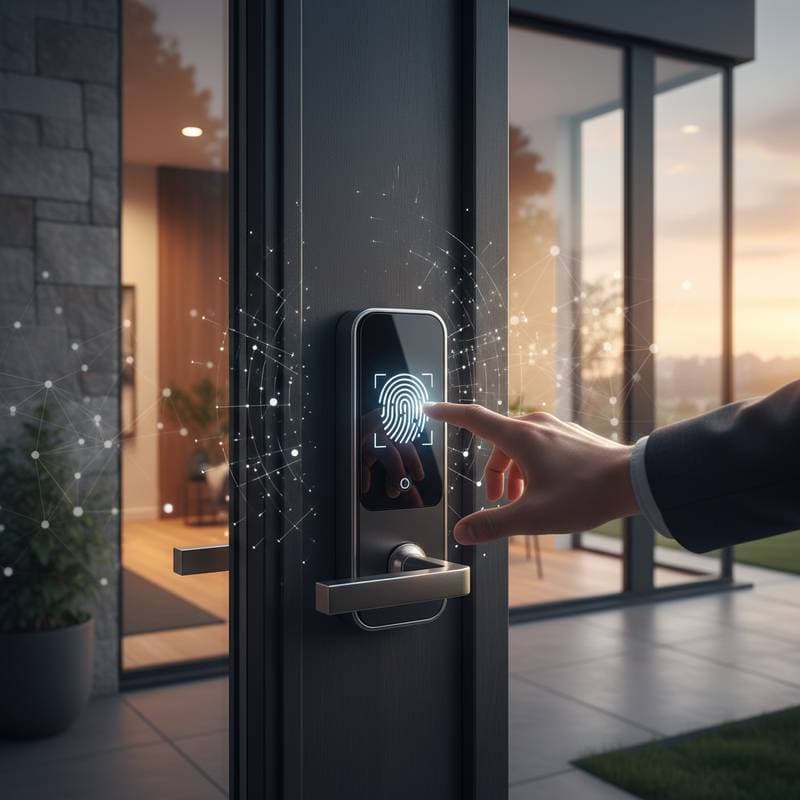
Imagine Walking Up to Your Door and It Already Knows You
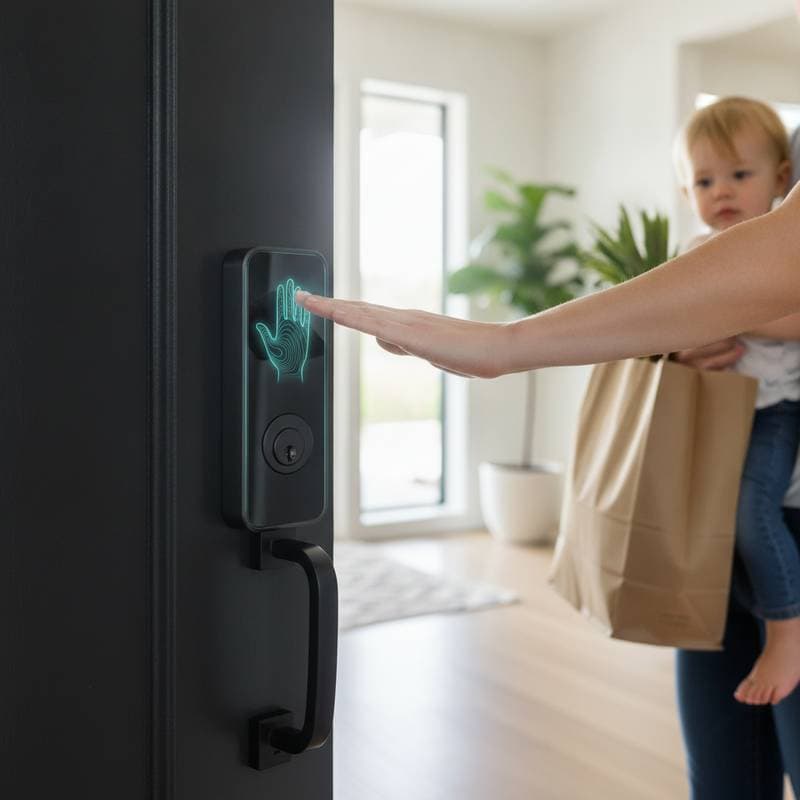
You step onto your front porch with arms full of groceries. Before you reach for your keys, the door clicks open. No phone, no key fob, no fingerprint press is necessary. The lock recognizes you from several feet away and unlocks automatically. This moment feels like magic, but it is becoming reality with the newest generation of biometric smart locks that identify fingerprints from up to six feet away.
The appeal rests in effortless, touchless entry that maintains home security while saving time. These locks integrate advanced sensors, infrared mapping, and machine learning to detect your unique fingerprint pattern in midair. You approach the door naturally, and the system ensures full security. For families seeking hands-free entry or individuals desiring high-tech convenience, this technology reshapes smart home security.
The Technology Behind Touchless Fingerprint Recognition
Touchless fingerprint scanning employs optical sensors, depth mapping, and short-range imaging. The system projects near-infrared light to capture the unique ridges and valleys of your fingerprint from a distance, rather than requiring you to press your finger onto a surface. Proprietary algorithms reconstruct a 3D fingerprint model in real time and compare it to encrypted profiles stored locally within the lock.
These systems extend beyond visual imaging through multi-spectral analysis. They read surface features as well as sub-dermal details, such as capillary patterns. This approach renders them significantly more resistant to spoofing than traditional optical readers. The sensor adjusts based on distance and angle, enabling recognition from up to six feet away in typical lighting conditions.
Time-of-flight (ToF) sensors make this distance feasible. They measure the duration light takes to reflect back from your hand, producing a precise depth map. This map verifies both identity and proximity prior to unlocking the door.
Setting Up a Touchless Biometric Smart Lock
Installation of these locks proves simpler than many anticipate, though precise setup ensures optimal performance. Follow these steps for a seamless process.
- Select a compatible lock model. Verify it matches your existing deadbolt and door thickness specifications.
- Assess power needs. Most units feature rechargeable lithium-ion batteries with USB-C ports; others use removable packs. Battery life typically spans six months per charge.
- Register fingerprints at varied distances. The setup process guides you to enroll patterns across different ranges, adapting the sensor to lighting and approach angles.
- Connect to your smart ecosystem. Confirm support for assistants like Alexa, Google Home, or Apple Home to enable voice commands and remote access.
- Configure guest access. Assign temporary codes or limited biometric profiles for family, cleaners, or delivery services.
Professional installation may not be essential, but consult an expert for non-standard latches or wiring to a smart hub.
Insider Tip: Optimize Lighting for Maximum Accuracy
Ambient lighting influences these locks more than users often realize. Although sensors rely on infrared light, intense brightness or reflective surfaces can interfere with readings at greater distances. Install a small entryway shade or apply a matte finish near the lock to enhance reliability.
For fingerprint enrollment, capture each finger at multiple angles and distances. This method trains the system on your natural approach, minimizing false rejections and accelerating recognition.
Integration With Broader Smart Home Systems
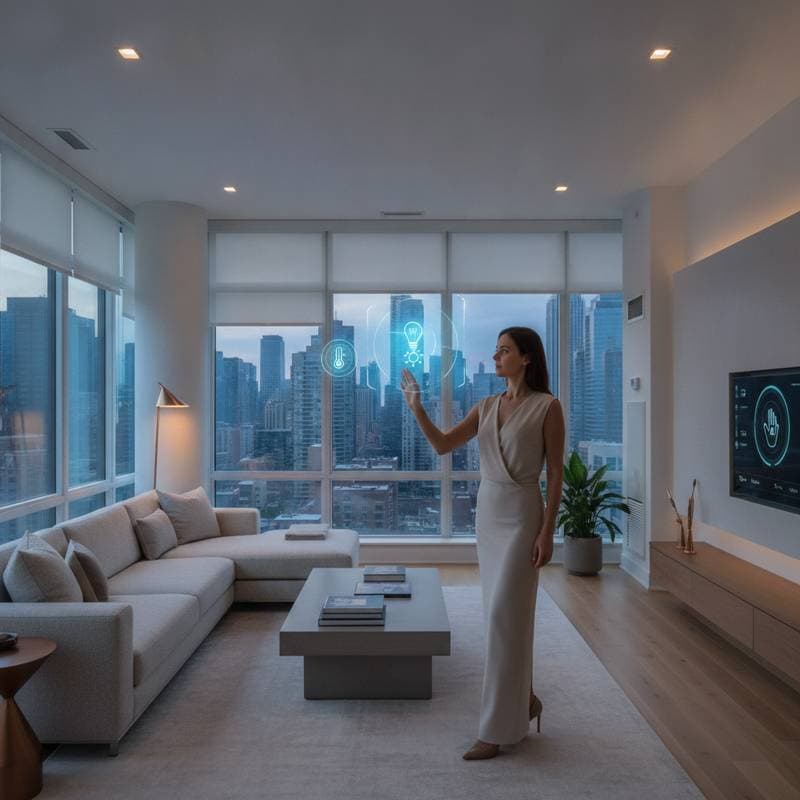
A smart lock performs best when linked to your entire home network. Integration activates complementary devices upon your arrival, such as lighting, climate controls, or security cameras.
Consider this scenario: The lock detects you and unlocks the door. Simultaneously, porch lights illuminate, hallway temperature shifts to your preferred setting, and an indoor camera powers down. Platforms like Matter and Thread facilitate this coordination across brands.
Prioritize compatibility when selecting a lock. Ensure it aligns with your smart hub's protocol. Matter-enabled devices integrate effortlessly with major ecosystems, safeguarding your investment against future changes.
Who Benefits Most From Touchless Biometric Locks
These locks excel in environments prioritizing convenience, accessibility, and hygiene. Families with young children eliminate worries over lost keys. Seniors or those with mobility challenges access their homes without retrieving a phone. In vacation rentals or shared spaces, they streamline guest management while enforcing entry controls.
High-traffic smart homes benefit greatly from their automation features. Pair them with daily schedules to secure the door when occupants depart and unlock only for authorized returns.
Practical Safety and Installation Tips
Incorrect installation undermines even advanced locks. Adhere to these guidelines for enduring safety and performance.
- Verify door alignment. Misaligned latches stress the motorized bolt and reduce lifespan.
- Opt for manufacturer-recommended batteries. Inferior options risk leakage or insufficient power to the motor.
- Fortify your Wi-Fi security. Use robust passwords and perform regular firmware updates for connected locks.
- Retain a physical backup key. Most models include a mechanical override; store it in a secure location.
- Shield sensors from direct sunlight. Excessive heat impairs accuracy; an awning protects the unit's finish and internals.
Frequently Asked Questions
How secure are touchless biometric locks?
These locks employ encrypted local storage and multi-spectral analysis, making unauthorized access difficult. They resist common spoofing attempts better than traditional systems.
What if the battery dies?
Most models provide low-battery alerts via app notifications. A backup key ensures entry, and recharging restores full function without professional intervention.
Can multiple users enroll fingerprints?
Yes, locks support profiles for up to 10-20 individuals, with options for temporary access that expire automatically.
Do they work in all weather conditions?
Performance remains strong in rain or moderate temperatures, though extreme cold may slightly reduce range. Indoor testing during setup confirms reliability.
Steps to Upgrade Your Home Security
Adopting a touchless biometric lock brings futuristic convenience to everyday life. Evaluate your door configuration and network compatibility first. Choose between Bluetooth simplicity or Wi-Fi for advanced features, then select a model aligned with your budget and vision. This upgrade delivers lasting security and ease for your household.