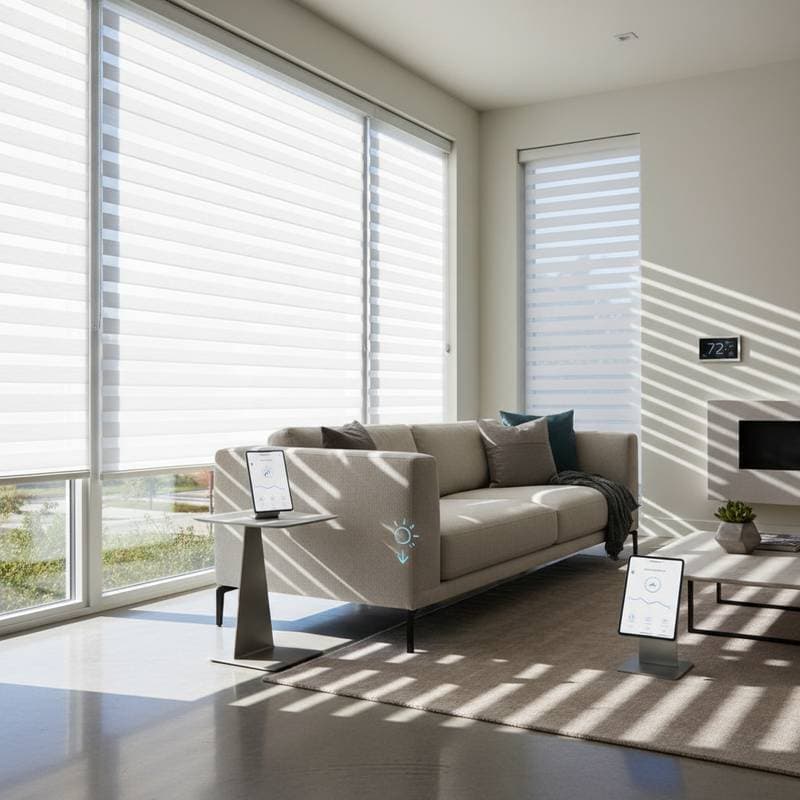
Imagine the Afternoon Sun Working for You, Not Against You
You walk into your living room and feel it instantly. The bright afternoon sun has turned your space into a miniature greenhouse. The air conditioner runs hard, your energy bill climbs, and the glare on your TV makes relaxation impossible. This scenario is common in homes that face west or feature large windows. However, imagine if your blinds could detect that heat before you notice it, adjusting automatically to maintain perfect comfort without any effort from you.
Smart blinds achieve precisely that function. They represent more than a stylish upgrade. They form part of a broader movement toward proactive climate control that analyzes your home's patterns and responds before discomfort arises.
The Hidden Cost of Passive Windows
Traditional blinds respond only when you remember to adjust them. By the time you lower them, sunlight has already heated the glass, elevated the room temperature, and compelled your cooling system to work harder. This delay incurs financial and comfort penalties.
Smart blinds remove that delay. They incorporate sensors and automation systems that monitor temperature, sunlight intensity, and occupancy. Upon detecting rising heat, the system closes the shades automatically. As temperatures drop, it reopens them to admit natural light. The outcome is a balanced home environment without ongoing manual intervention.
Their strength resides in anticipating heat before it registers. This predictive capability distinguishes a truly connected home from one equipped with isolated smart devices.
How Smart Blinds Work Behind the Scenes
Smart blinds merge three essential technologies: motorized shades, wireless connectivity, and environmental sensors.
- Motorized Mechanism: The blinds or shades house a compact, quiet motor that raises or lowers them via remote or app commands.
- Wireless Connectivity: They connect to your home Wi-Fi, Bluetooth, or a smart hub like Amazon Alexa, Google Home, or Apple HomeKit.
- Automation Logic: Data from temperature or light sensors informs the system when to open or close the blinds automatically.
Homeowners often overlook sensor placement, yet it proves as crucial as the blinds themselves. A light sensor positioned too near the glass may trigger premature reactions, whereas one situated farther into the room captures a truer comfort reading. Optimal placement minimizes excessive movements and prolongs motor durability.
Choosing the Right System for Your Home
The market for smart window coverings has grown rapidly, offering choices for every budget and technical proficiency level. The following examples span investment tiers.
Budget Option: SwitchBot Blind Tilt (~$70 per window)
This retrofit device attaches to existing blinds and links via Bluetooth or a hub for Wi-Fi functionality. It suits those seeking automation without full replacement. The optional solar panel accessory sustains its charge, minimizing upkeep.
Mid-Range Choice: IKEA Fyrtur Smart Shades (~$180 per window)
Battery-powered, these shades pair seamlessly with the IKEA Home Smart app and voice assistants. They deliver fluid automation, effective light blocking, and dependable scheduling. Renters or newcomers to smart shading find them particularly suitable.
Premium Selection: Lutron Serena Smart Shades (~$600 per window)
Lutron's system provides virtually silent operation, customizable fabrics, and robust integration with Apple HomeKit, Google Assistant, and Amazon Alexa. The precision engineering of the Lutron motor excels in multi-room setups or homes with expansive windows.
Each option integrates with platforms such as SmartThings or Home Assistant, facilitating future expansions into thermostats, fans, or smart vents.
Creating a Smarter Climate Strategy
Smart blinds alone enhance your setup, but pairing them with complementary devices maximizes benefits.
- Link to a Smart Thermostat: Connect blinds to models like the Ecobee Premium or Nest Learning Thermostat. The system then adjusts based on sunlight, allowing the thermostat to dial back cooling as heat gain diminishes.
- Use Scenes and Schedules: Develop routines for mornings and evenings. For instance, open blinds at sunrise for natural warming, then close them during peak afternoon sun.
- Add a Light Sensor: For blinds lacking built-in sensors, add a Zigbee-compatible unit. It supplies real-time brightness information for refined control.
- Integrate Voice Commands: Beyond convenience, voice activation enables swift changes during unexpected light shifts, bypassing phones or remotes.
Experienced installers recommend partial tilting on hot days over full closure. This approach preserves some ambient light while deflecting most direct rays, harmonizing visibility and comfort.
Practical Considerations Before You Buy
As an investment, smart blinds demand thoughtful preparation. Consider these factors prior to purchase:
- Power Source: Battery models simplify installation but require periodic recharging. Hardwired versions involve higher initial costs yet demand no ongoing maintenance.
- Window Size and Shape: Oversized or non-standard windows often necessitate custom fittings, increasing expenses.
- Fabric Type: Light-filtering options permit daylight with glare reduction, whereas blackout varieties offer superior insulation.
- Installation: Numerous models support DIY assembly, though professional services guarantee alignment, motor tuning, and hub compatibility.
- Budget Range: A complete home upgrade might span hundreds of dollars for basic retrofits to thousands for advanced multi-room automation.
For efficiency, submit your project to a home improvement platform to connect with certified specialists in smart shading. This method streamlines the process and prevents future integration challenges.
Energy and Comfort Payoff
In sunny regions, smart blinds reduce cooling expenses by as much as 20 percent. Savings arise from obstructing direct heat and easing HVAC demands. Many owners observe reduced air conditioner cycling, which prolongs equipment life.
Comfort benefits extend further. Automated shading maintains steadier room temperatures, eliminating hot spots and drafts. Visual enhancements benefit screens and surfaces, fostering relaxation. Over time, alignment with natural light cycles supports improved sleep.
Living with Smart Blinds Every Day
After installation, smart blinds operate unobtrusively, handling heat and light without daily oversight. Manual overrides remain available via app or remote, though most users intervene infrequently. The system adapts to routines, forecasting adjustments from historical data.
Maintenance stays simple. Clean sensors regularly, monitor batteries if equipped, and recalibrate seasonally for precision. Within a larger smart network, routine firmware updates via your hub preserve seamless operation.
Making It Happen
Smart blinds provide a practical entry into advanced climate and comfort technology, whether for a single sun-exposed window or a comprehensive home overhaul. The impact becomes evident the moment shades descend preemptively, averting warmth buildup.
Frequently Asked Questions
What is the average lifespan of smart blinds?
Most models last 5 to 10 years with proper care, depending on motor quality and usage frequency.
Do smart blinds work with all window types?
They adapt to standard sizes, but custom solutions handle irregular shapes or historic frames.
How much energy do they save annually?
Savings vary by climate and home size, typically 10 to 20 percent on cooling bills in warm areas.
Can I control them remotely while away?
Yes, app-based access allows monitoring and adjustments from anywhere with internet connectivity.
Are they compatible with solar power?
Many include solar charging options, reducing reliance on batteries or wiring.